

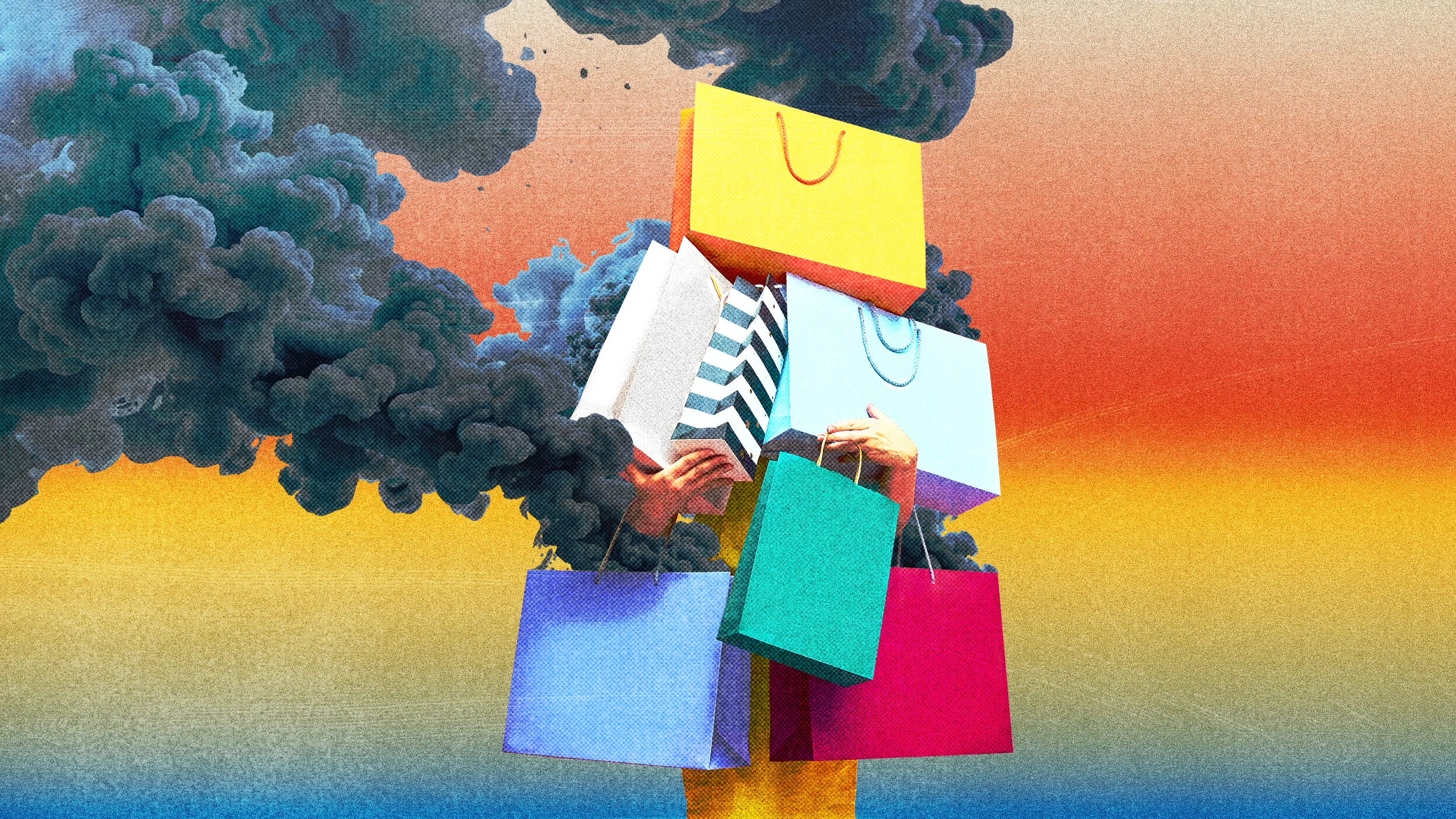
Researchers from the University of Leeds in the U.K. found that up to 80% of items bought on that day, along with the plastic packaging they come in, end up in a landfill, incineration, or at best, low-quality recycling. All this after a very short time of use, sometimes as little as a few weeks. Shipping contributes to the damage; emissions from trucking spike 94% during the week including Black Friday.
The term “Black Friday” goes back to the 1950s, when the police in Philadelphia used the term for the chaos after Thanksgiving when suburban shoppers flooded the city. In 1961, the city’s merchants tried and failed to rename it “Big Friday.” In the 1980s, the retail industry tried to reconceptualize it as the day that they go from being in the red to being in the black.
Today, however, Black Friday is no longer a day. It’s an entire season stretching from late October to early December. And as a marketing ploy, it works well: Americans spent a record $11.8 billion online on Black Friday last year. The urgency of shopping these deals often leads to regret: 42% of shoppers in one survey conducted by Self Financial, a credit building company, said they wished they hadn’t made at least one Black Friday purchase. According to the National Retail Federation, retailers expect 17% of holiday sales to be returned, and roughly 9.5 billion pounds of returned merchandise goes into U.S. landfills every year.
Source link





