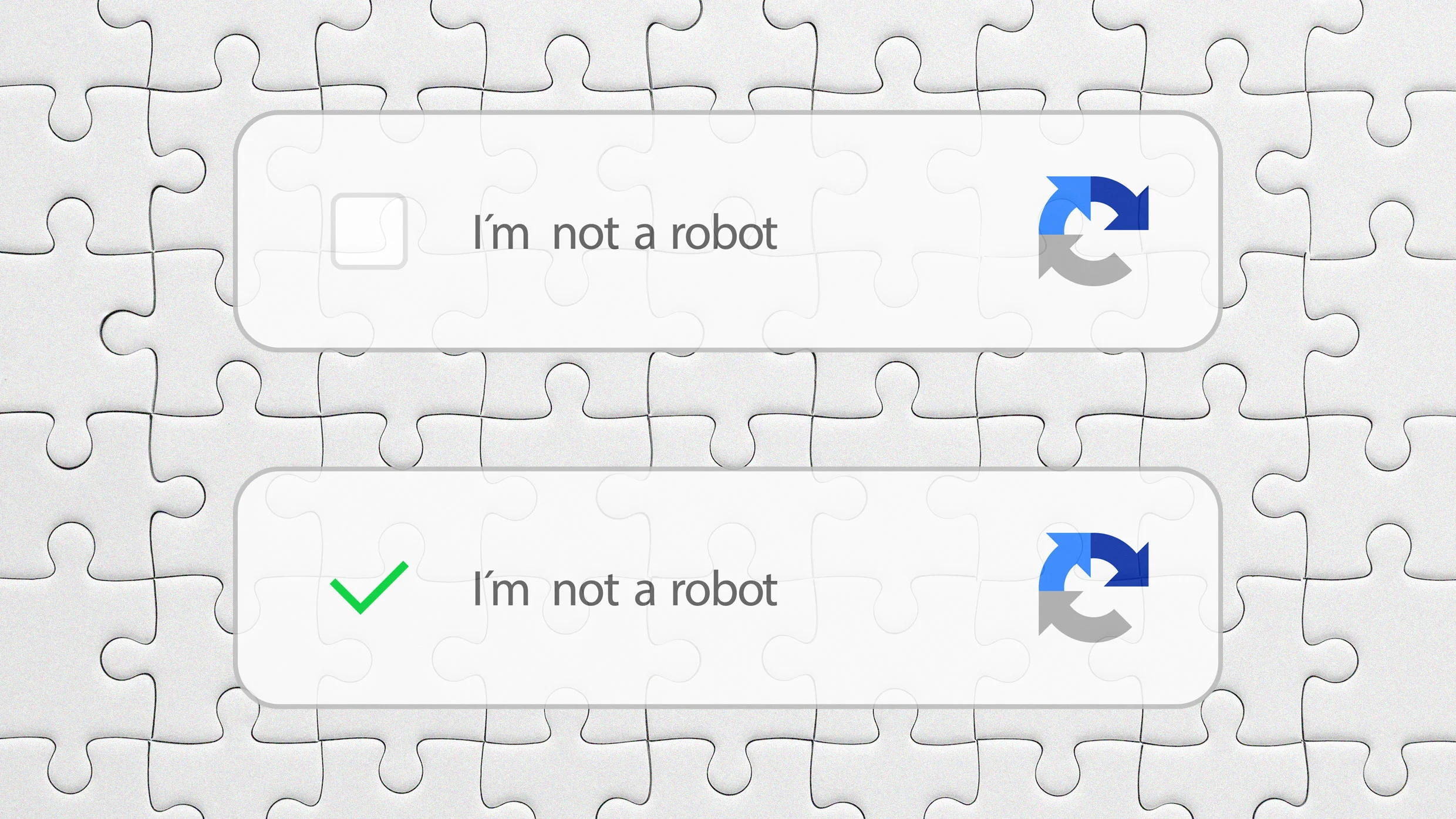
CAPTCHAs are one of the great annoyances of the modern internet, yet they play an important role in keeping the web secure. These tests, which usually involve solving simple puzzles or deciphering distorted text, help websites determine whether a visitor is human, thus helping prevent malicious bot attacks.
But now scammers are using the ubiquitous test to attack the humans—and if you fall victim to a CAPTCHA scam, all your data could be up for grabs.
To understand what a CAPTCHA scam is, you first need to understand what a CAPTCHA is. You’ve certainly seen one even if you don’t know what it was called. A CAPTCHA is that little box that sometimes appears on a web page that asks you to type out text it has purposefully distorted or click images that are all alike in someway—such as ones that feature buses or bridges—displayed in a 3×3 grid.
CAPTCHAs—acronym for “Completely Automated Public Turing test to tell Computers and Humans Apart”—help website owners ensure that a human, and not a bot, is accessing the site’s information. This helps protect against automated scraping and denial-of-service attacks.
The ubiquity of CAPTCHAs has conditioned people to expect them—and that’s enticing to scammers, who now use fake CAPTCHAs to get unsuspecting users to install malicious code on their Macs and PCs, designed to steal their data. Fake CAPTCHAs are becoming so prevalent that the Federal Trade Commission (FTC) released an alert earlier this year warning consumers of the tactic.
com. But instead of asking you to enter the distorted text you see on screen or solve a simple image puzzle, the fake CAPTCHA tells you to press certain keys on your keyboard, ostensibly to help verify that you are human or to verify your account.
Source link