

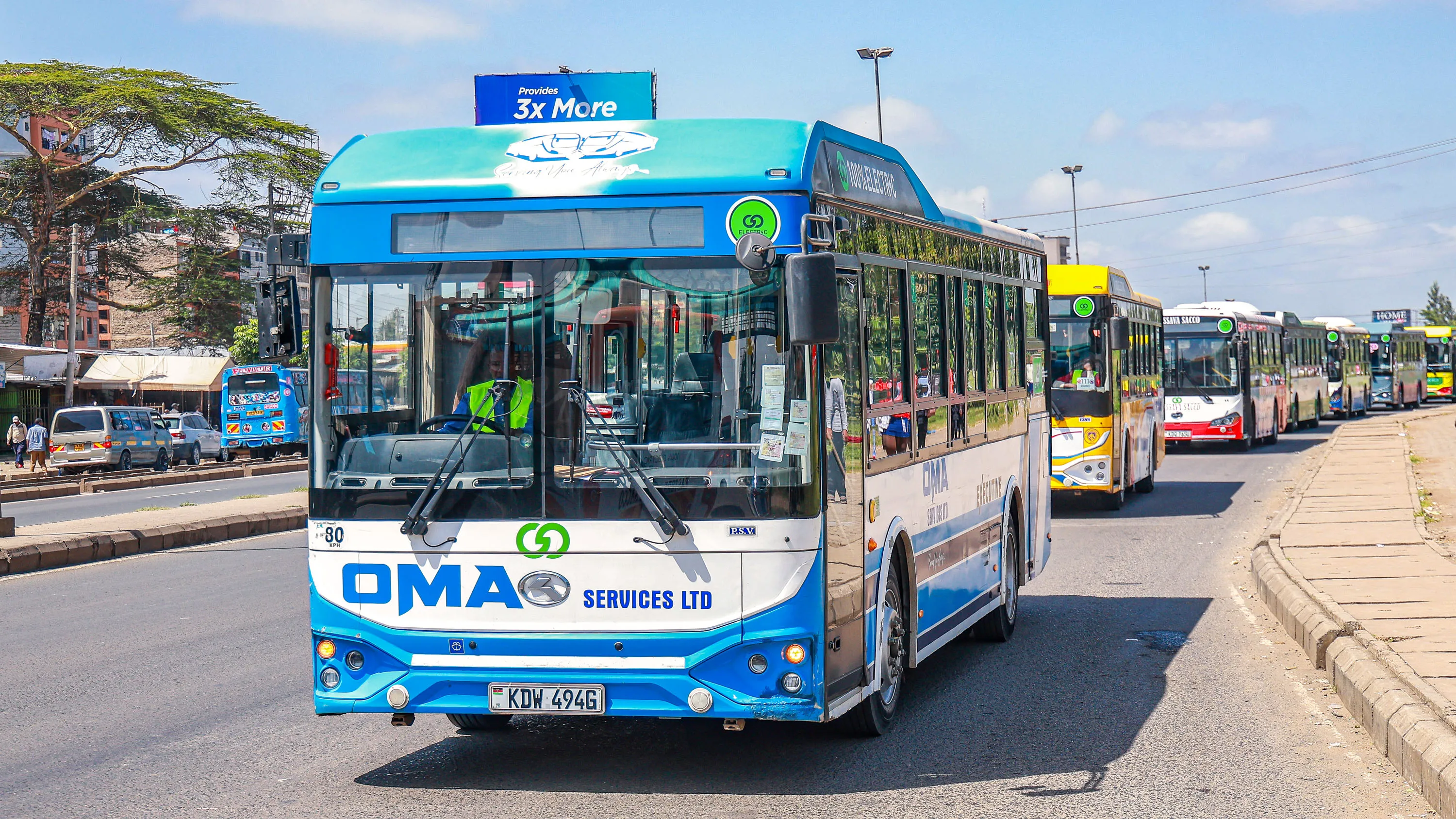
BasiGo aims to replace the tens of thousands of diesel-powered buses on sub-Saharan African roads with electric ones that generate far fewer emissions. The company’s pay-as-you-drive business model has helped make EVs more attainable and is changing the way public transport operates.
In a bid to contain the covid-19 pandemic in 2020, the Kenyan government temporarily suspended public transportation. The suspension lasted only three days, yet the change in air quality was dramatic. The air was so clear that Mt. Kenya—Africa’s second-highest peak—was visible in Nairobi, roughly 175 kilometers away. Some could even spot Mt. Kilimanjaro, the continent’s highest mountain, even farther in the distance.
This reprieve from smog sparked the idea for BasiGo’s electric bus business. The company’s founders glimpsed what could happen to the air if diesel buses and trucks were cleaned up. Since then, they’ve built a fleet of more than 100 electric buses to lease to customers who are operating them in Kenya and Rwanda. These buses have ferried 15 million passengers since BasiGo’s founding.
The company doesn’t manufacture its own buses—the vehicles come from China and are assembled in Kenya. BasiGo’s innovation lies in offering a full range of services that make its electric buses more competitive with internal combustion engine (ICE) buses, says Jit Bhattacharya, co-founder and CEO. Instead of simply selling its buses to operators, as other bus companies do, BasiGo leases them out, offers maintenance services and insurance, and provides a charging network for its customers. Those customers are primarily individual operators or bus cooperatives, of which there are more than 300 in Kenya.
Source link





