Rome’s grip on modern-day France loosened around the 5th century CE. But traces of Roman influence persisted for much longer—particularly in the way wealthy communities built their homes.
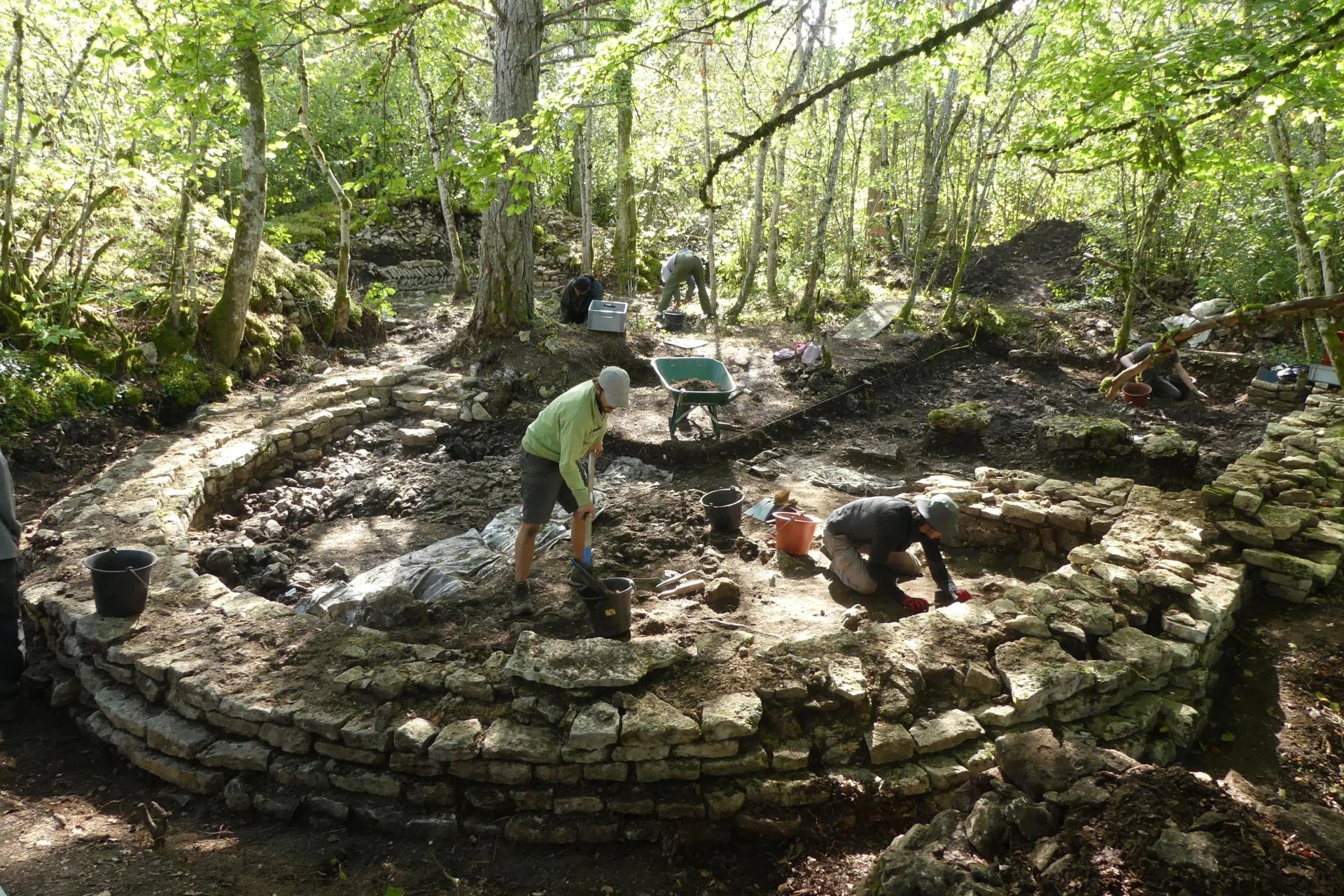
During the latest rounds of excavations at Mount Saint-Laurent, French archaeologists uncovered a small hilltop settlement containing multiple buildings with distinct Roman elements, one of which was dated to between the 6th and 7th centuries. The site hosted multiple masonry buildings, glass fragments likely from lamps and tableware, and suspended floors indicative of a hypocaust—a Roman underfloor heating system. Taken together, the evidence suggests that high-ranking individuals lived at the site, which is also consistent with early medieval texts noting the importance of Mesmont, France, where the hill is located.
The findings were announced in a recent statement (translated via Google) from the French National Institute for Preventive Archaeological Research (Inrap), whose experts led the research.
According to Inrap, humans have occupied Mount Saint-Laurent as early as the Neolithic (between 6,000 and 2,200 BCE), but it appears to have been abandoned during Roman times. People clearly returned soon after, however, as early medieval texts refer to Mesmont as the “chief town” of the region. The city also frequently comes up in hagiographies—Christian biographical works—that detail the lives of notable saints from the era.
For instance, Bishop Gregory of Langres reportedly appointed his grandson, Eustace, to head the monastic community in Dijon. But before that, Eustace was a priest at Mesmont, according to the statement. These individuals “belonged to the highest senatorial aristocracy of Late Antiquity and the early Middle Ages,” Inrap explained, and the Gregorii family was just one of many others said to have some connection with Mesmont.
Source link