Homer’s Iliad and Odyssey have made Troy one of the most famous cities of antiquity. And while real historical events may have inspired the account of the Trojan War, two recent archaeological discoveries provide further proof that the ancient site is much more than its association with the epic poems.
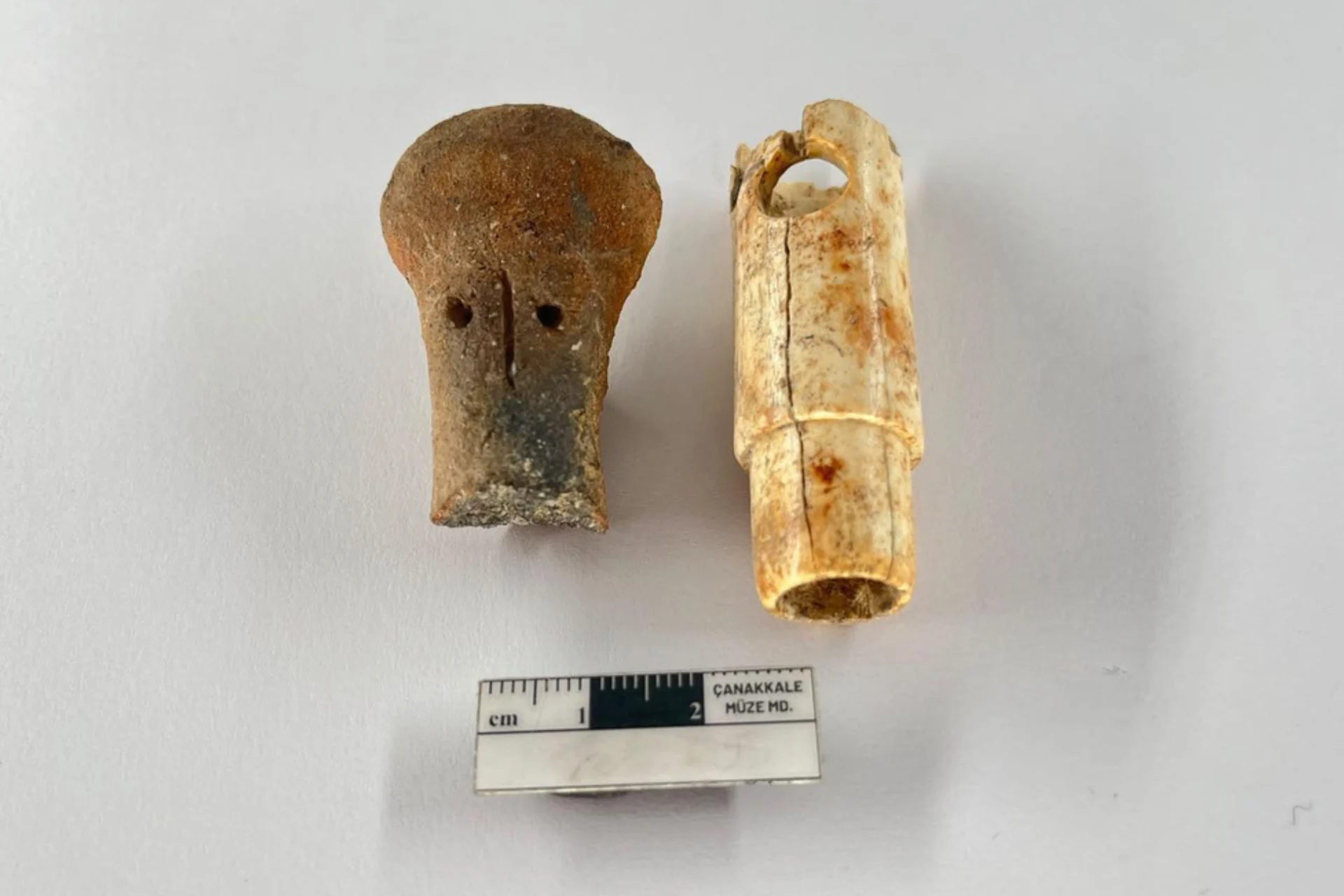
Archaeologists working at the archaeological site of Troy in modern-day Türkiye have discovered an approximately 4,500-year-old idol head and a roughly 2,700-year-old bone flute fragment. The two notable artifacts hail from periods before and after the era usually associated with the Troy depicted in Homer’s works, representing communities that unknowingly contributed to a now legendary city.
“Troy was not simply the setting of a legendary war. It remained an important settlement for many centuries, and its archaeological remains continue to reveal new aspects of the lives of the people who inhabited it,” Reyhan Körpe, deputy director of the Troy Excavations and an archaeologist at Çanakkale Onsekiz Mart University, told Gizmodo in an email.
Troy was first inhabited in 3600 BCE. And while we speak about one “Troy,” archaeological work has actually revealed nine distinct levels of occupation (Troy I–Troy IX). Experts usually set Homer’s Troy in the Late Bronze Age, especially the late 1200s BCE. At this time, actual Troy was likely the prosperous capital of a regional kingdom the neighboring Hittites called “Wilusa.”
The idol head was made much earlier. It dates back to the Early Bronze Age, around 2500 BCE in Troy II. Troy was likely already the capital of a small kingdom at the time, and the city was experiencing technological and economic developments, such as a greater reliance on wheel-made pottery, according to Körpe.
Source link