

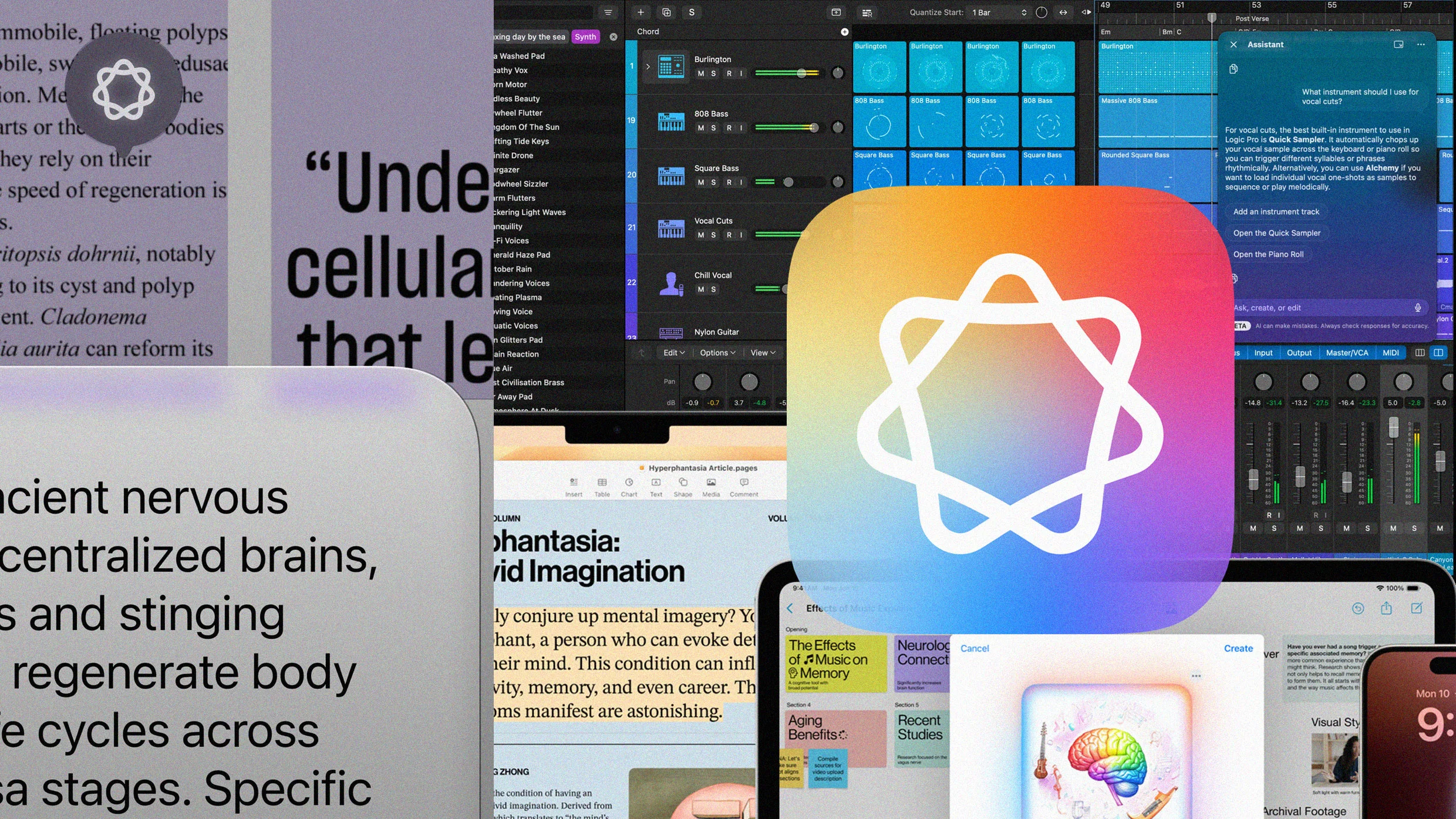
Apple has received much criticism for being late to the AI game. While OpenAI helped define the AI boom beginning in late 2021, and Google and other tech giants quickly jumped on the AI train the following year, Apple didn’t make its first real foray into artificial intelligence until 2024 with Apple Intelligence.
Though the initial capabilities of Apple Intelligence were rather lackluster compared with its peers, Apple spent the next two years rapidly refining its offerings. In 2026, Apple made its AI system much more capable and expansive by introducing more advanced AI tools, including the Siri AI chatbot and Audio Intelligence. And just last month, Apple also debuted an additional AI tool dubbed “intelligent assistant.”
The thing is, Apple now has so many AI offerings that it’s getting hard for the average consumer to keep track of what each one does, which devices support which AI tool, and which tools require a fee to access. So, here’s a cheat sheet for making sense of Apple’s increasingly confusing AI lineup.
Apple Intelligence is the oldest of the company’s modern AI offerings, introduced in 2024. Think of Apple Intelligence as the foundational artificial intelligence layer integrated into Apple’s operating systems, including iOS, macOS, and watchOS.
Apple Intelligence includes a suite of smaller AI tools tailored to specific tasks. For example, Apple Intelligence powers Visual Intelligence, which lets Apple’s AI see and understand what’s on your screen or through your camera and take action on it; for example, it can tell you the nutritional information of the food on your plate.
Source link





