
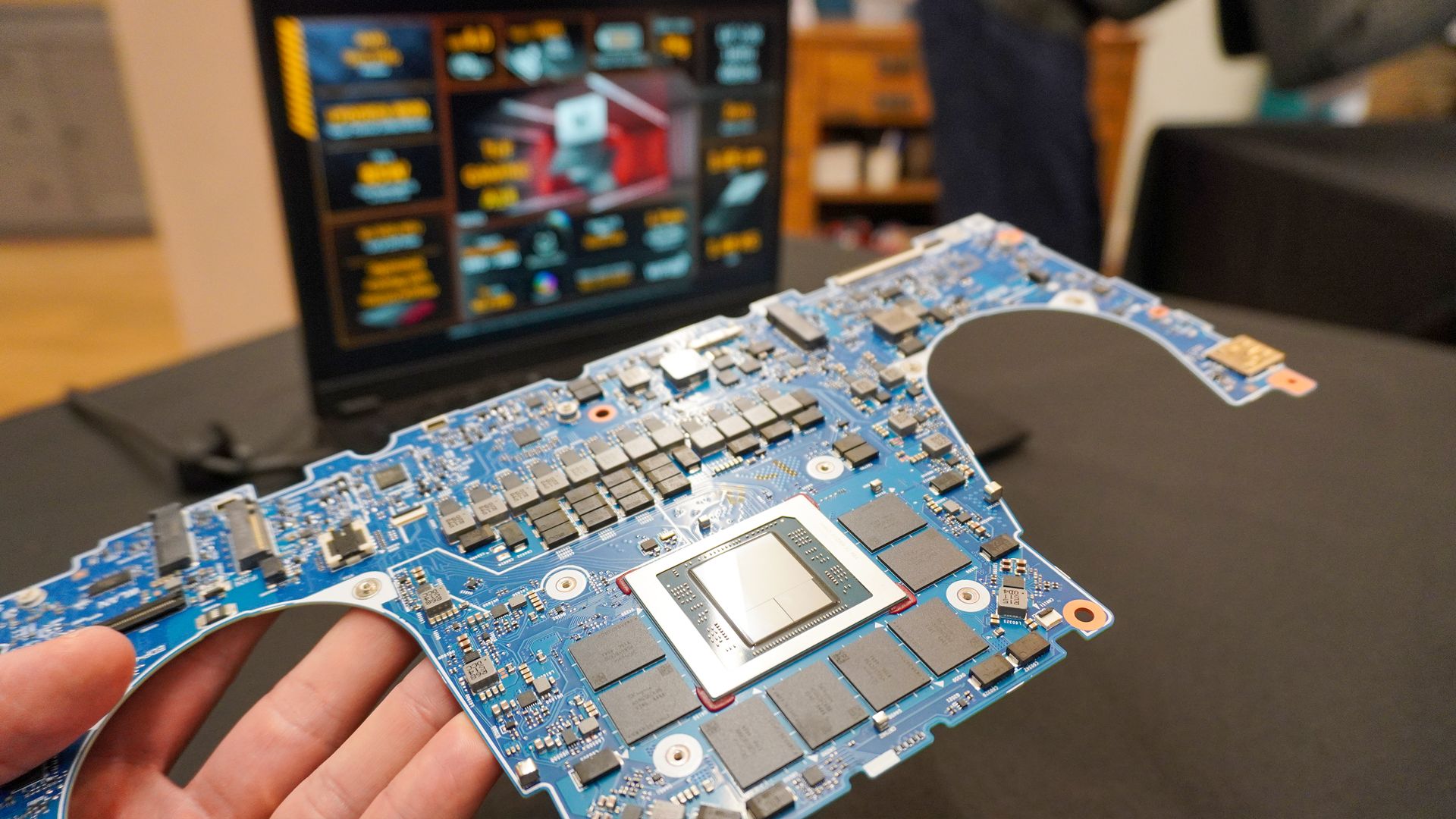
With Nvidia widely rumored to unleash RTX Spark alongside Microsoft on October 7, AMD decided it couldn’t wait. Team Red executed a preemptive strike to not just show off its shiny new (and expensive) Ryzen AI Max+ Pro 495 silicon, the company cheekily rebranded itself as “Agentic Micro Devices since 2025.”
Is this classic counter programming to plant a flag before Nvidia? Yes. But beneath the rush lies a piece of hardware with specifications so absurd they demand attention. Packing 16 desktop-class “Zen 5” cores and up to 192GB of unified memory, AMD’s built a brute-force x86 weapon designed to kill cloud AI subscription fees, take on Team Green and even make Apple a little nervous too.
To understand why AMD is sweating, look at what Nvidia is trying to pull off with RTX Spark. The team is aiming to make local AI agents accessible by pairing Arm-based compute cores with Blackwell graphics (a similar amount of cores that you find in the company’s desktop RTX 50-series GPUs) and unified system memory.
Apple, of course, wrote this playbook years ago with Apple Silicon in the MacBook Pro — proving that fusing a CPU and GPU around a giant pool of memory is the ultimate setup for intense tasks and heavy local models. And while Apple built the sandbox that Nvidia’s trying to take over, AMD just decided to dump a truckload of concrete into it.
If you want to run massive AI models locally on traditional laptops, the amount of memory means you simply cannot.
Source link





