
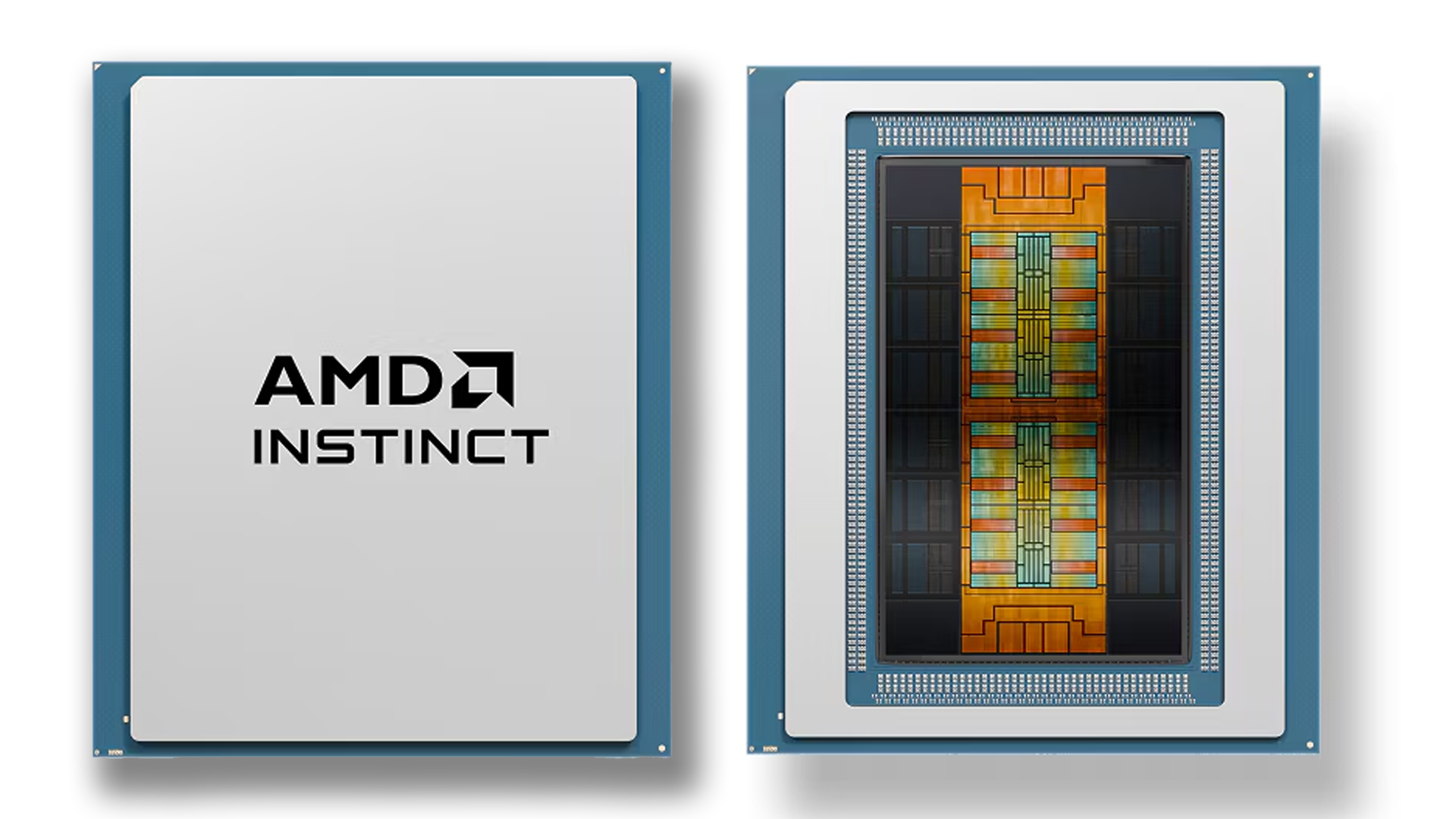
As Supercomputing 2026 (SC26) opens in Chicago this week, AMD is indirectly needling Nvidia about the lack of native FP64 data type support in its data center GPU products. FP64, or double-precision floating-point math, is widely used in the high-performance scientific computing and simulation fields that are the focus of SC26. For those customers, AMD is trumpeting the value of its latest Instinct MI430X accelerator for customers that still need native FP64, like national laboratories and supercomputing centers.
Over the past few years, Nvidia has reallocated die area on its data center GPUs to favor the lower-precision matrix math that boosts the operations needed for much of modern AI inference. That reallocation only makes business sense, as the total addressable market for AI compute has exploded while the demand for double-precision math in large supercomputing installations has remained flat by comparison.
To make up for the lack of native FP64 support, Nvidia has turned to techniques that allow it to emulate FP64 operations using methods like the Ozaki schemes. But AMD claims this kind of emulation is nowhere close to a replacement for native double-precision processing for a few reasons—hence continued development of specialized products like the MI430X.
For one, AMD notes that Ozaki emulation assumes that the workload in question resembles a dense general matrix multiply (GEMM). In its own application profiling, the company says "less than 10%" of HPC workloads perform dense GEMM operations, so this emulation is a good replacement for native compute. Dense linear algebra is the one common workload for which AMD says Ozaki emulation is a natural fit.
Source link





