
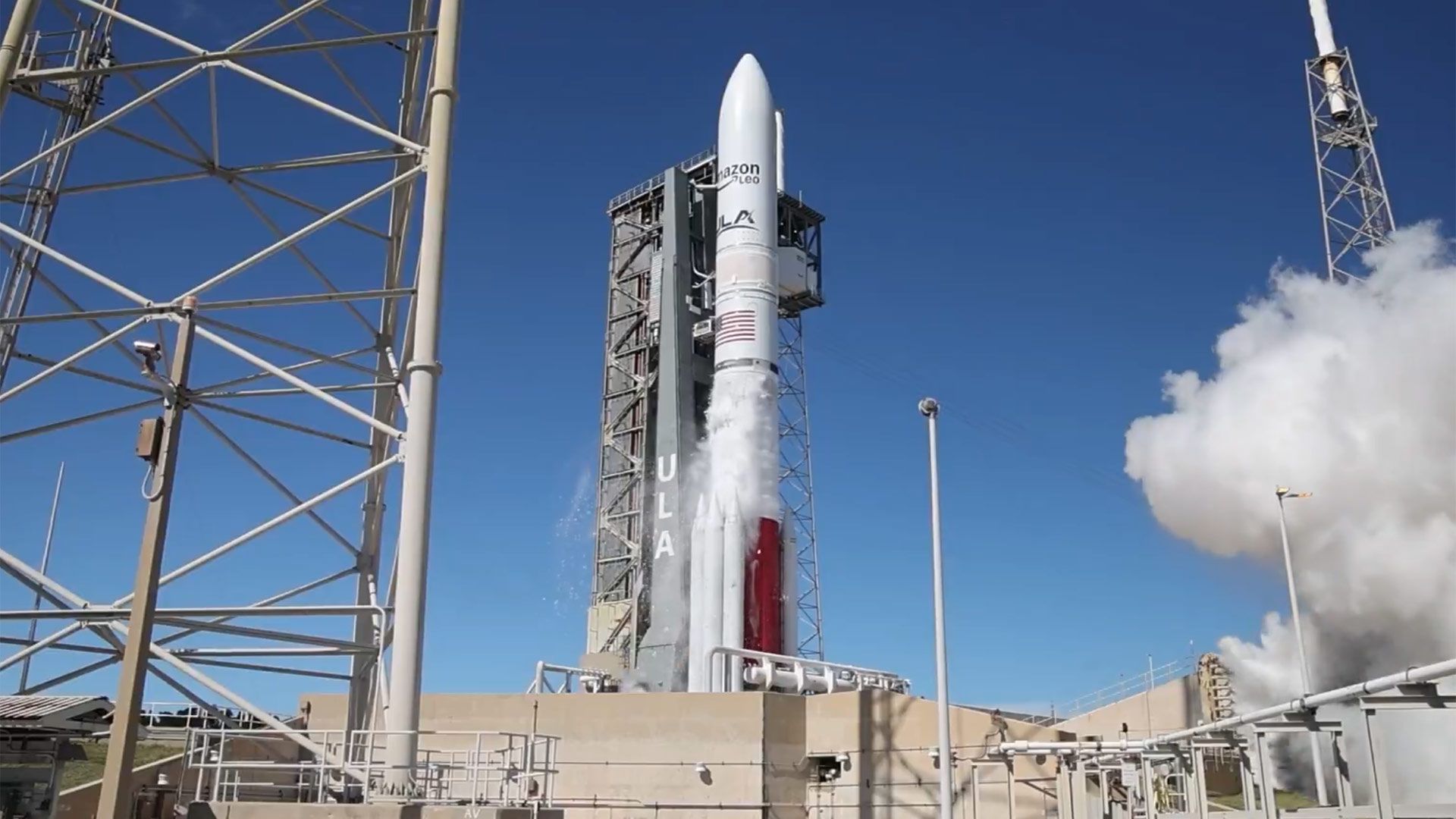
Amazon has suffered a major setback in its plans to offer a viable Starlink rival, after 40 satellites destined for low Earth orbit (LEO) were destroyed. Just ten minutes after the Vulcan vehicle launched from Space Launch Complex 41 in Cape Canaveral, Florida, on Sunday, there was an “anomaly,” meaning that the rocket “failed to deliver the Amazon mission to orbit.” The language seems quite vague, but the United Launch Alliance (ULA) says that data needs to be analyzed “to understand what occurred today.”
And LIFTOFF of the first Vulcan Amazon Leo mission, carrying 40 broadband satellites to low Earth orbit! https://t.co/dv1MSjJUMFNovember 15, 2026
Shortly after the triumphant takeoff clip was shared by the ULA, above, the space tech firm updated its X feed with a confirmation that its mission on behalf of Amazon failed.
Based on data received by our Launch Director, we confirm that the Vulcan vehicle launched from Space Launch Complex 41 suffered an anomaly 10 minutes into the flight and failed to deliver the Amazon mission to orbit. Every flight generates data, and every flight teaches us something. Since the anomaly just occurred, we don’t have any specific data yet to understand what occurred today. ULA exists to provide assured access to space for our nation and for the customers who depend on us. That purpose is why we take on some of the hardest missions in spaceflight, and why we hold ourselves to the standard of mission success. We will provide further updates when new information becomes available.
Source link





