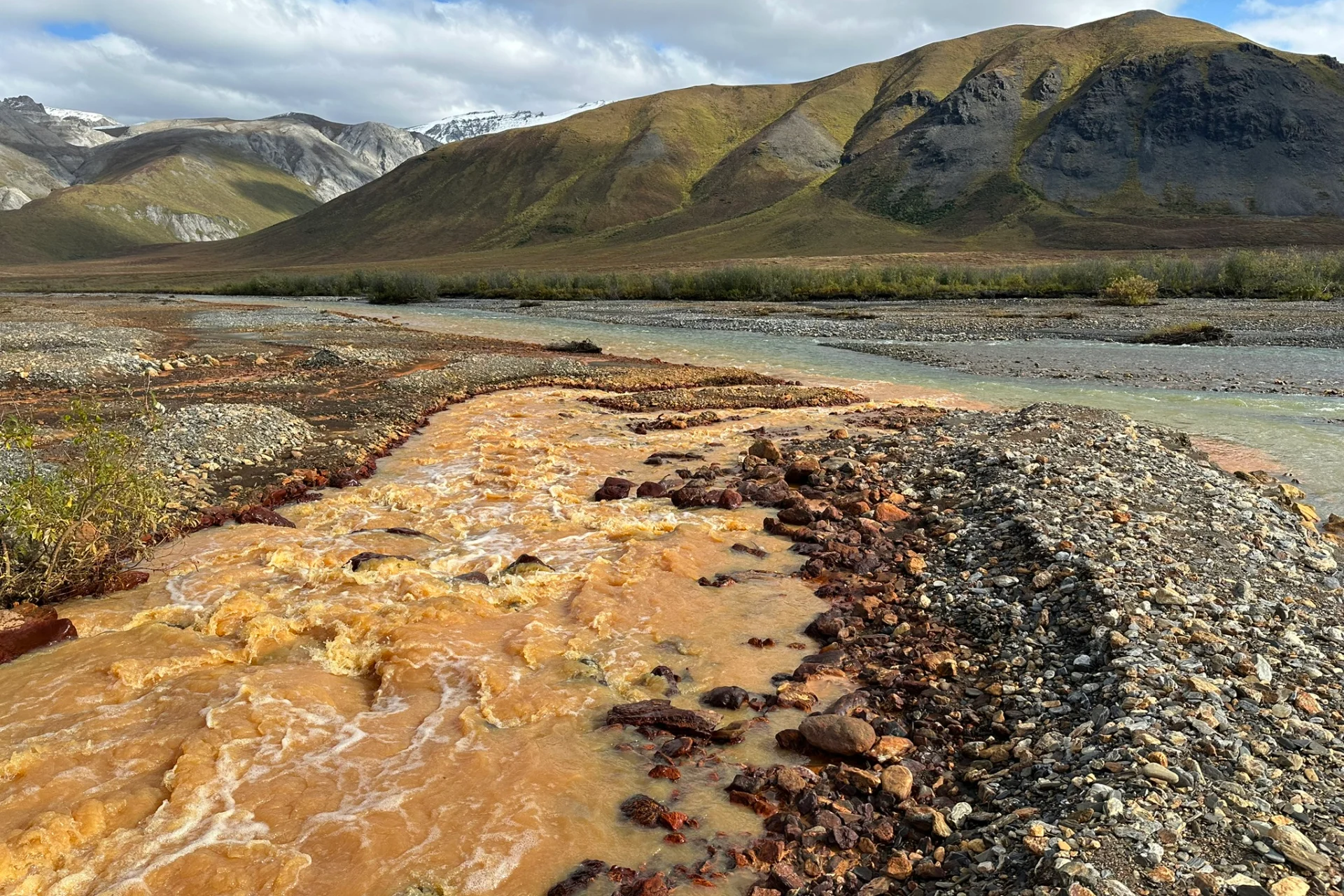
The Arctic’s rivers are turning a vibrant shade of orange, which scientists have attributed to thawing permafrost from—you guessed it—rising temperatures. Here’s the latest in this depressing saga: The rivers are now spreading plumes of metal and acid far downstream.
An analysis of six watersheds in Alaska’s Brooks Range revealed that the tributaries and seeps feeding into the park’s rivers are extremely acidic and metallic, with levels comparable—and sometimes even higher—than water drainage from rivers located near metal mines. While the rivers’ main waterstems weren’t as acidic, the region’s drainage system has been transporting contaminated water over 60 miles (100 kilometers) downstream. As the tributaries and seeps dump more water into the river, metal concentrations can increase by roughly 70 times compared to their initial entry. The findings were published yesterday in AGU Advances.
“This is very acidic, metallic water,” Brett Poulin, the study’s senior author and an environmental scientist at the University of California (UC) Davis, said in a statement. “The good news is the river’s mainstem did not become more acidic. It’s buffering the pH, indicating there is some resiliency in this system. But there are metals that increased downstream, and those can be transported very long distances.”
In 2024, Poulin and colleagues were among the first to seriously investigate the connection between the Arctic’s orange rivers and thawing permafrost. As the name suggests, permafrost should be permanently frozen. But as temperatures rise, permafrost thaws, exposing reservoirs of carbon, nutrients, and other minerals to oxygen, according to the study.
Source link