Imagine handing AI 80,000 files and getting back a presentation with charts, images and a clear narrative. Or asking it to build a detailed 3D scene using code, without dedicated rendering software. These are examples of AI moving beyond answering prompts to taking on complex tasks.
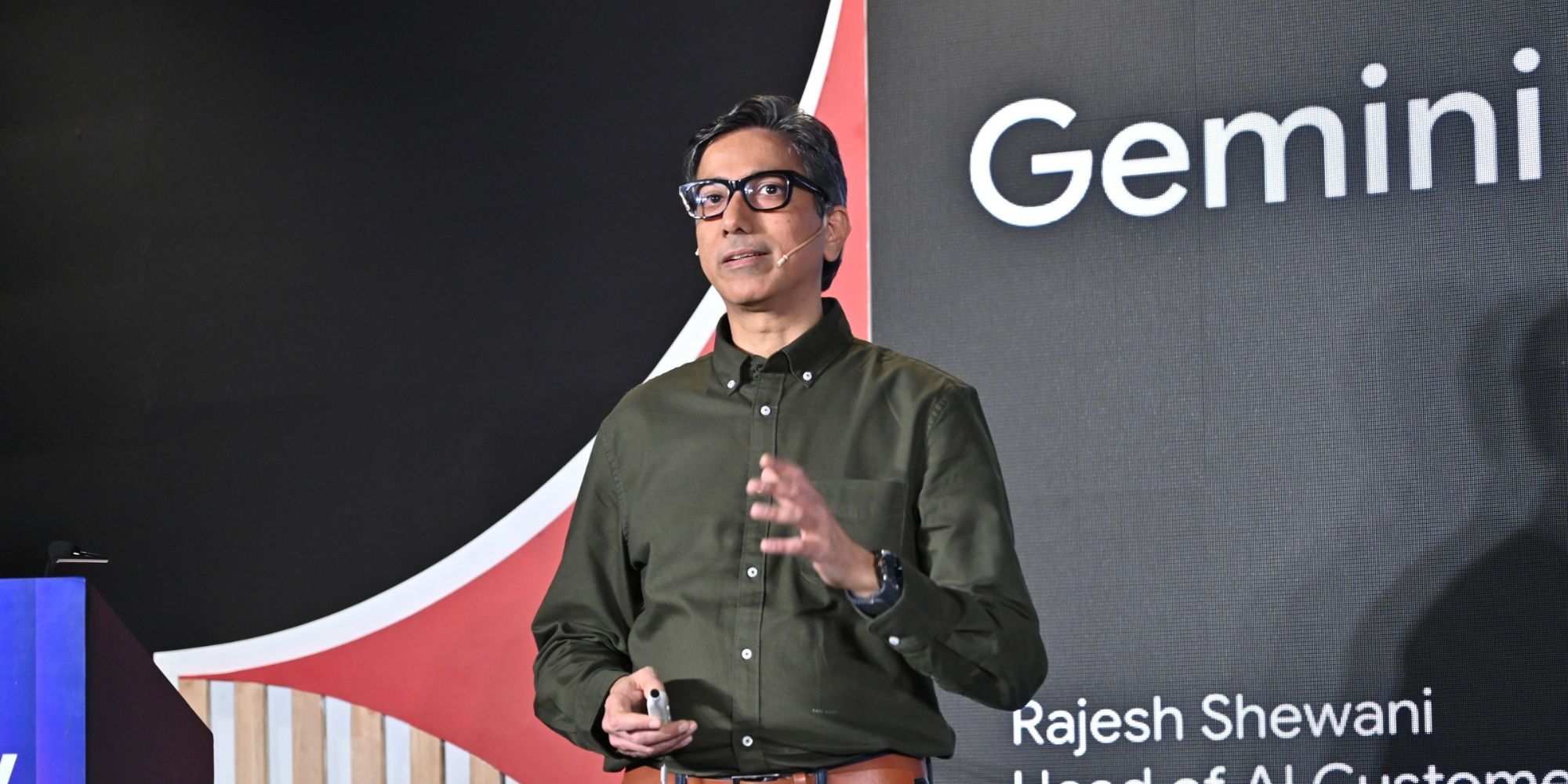
At TechSparks 2026, Rajesh Shivani, Head of AI Customer Engineering for Digital Natives, Startups and ITES at Google Cloud, demonstrated how Gemini is being used across voice AI, autonomous agents and software development.
His masterclass explored how businesses can move from using AI for answers to delegating work to it.
AI tools initially gained traction through chat interfaces that answered questions. The next stage is agentic AI, where systems can plan tasks, access information, and use tools to act on a user’s behalf.
“An agent is nothing now but a model plus a harness,” Rajesh said, describing the infrastructure around a model that manages memory, context, permissions and task execution.
Building useful agents requires four elements: a goal, clear instructions, relevant knowledge and tools to act on that knowledge. A company’s internal data is particularly important because general-purpose models may not have access to its specific processes or customer information.
Shivani also discussed Google’s Open Knowledge Format (OKF), which aims to give organisations a structured way to make information accessible to AI agents.
Voice was one of the key demonstrations. A system developed for Singapore-based Grab helped passengers and drivers coordinate airport pickups despite language barriers. The demo highlighted how voice AI could support interactions across more than 85 languages.
Source link