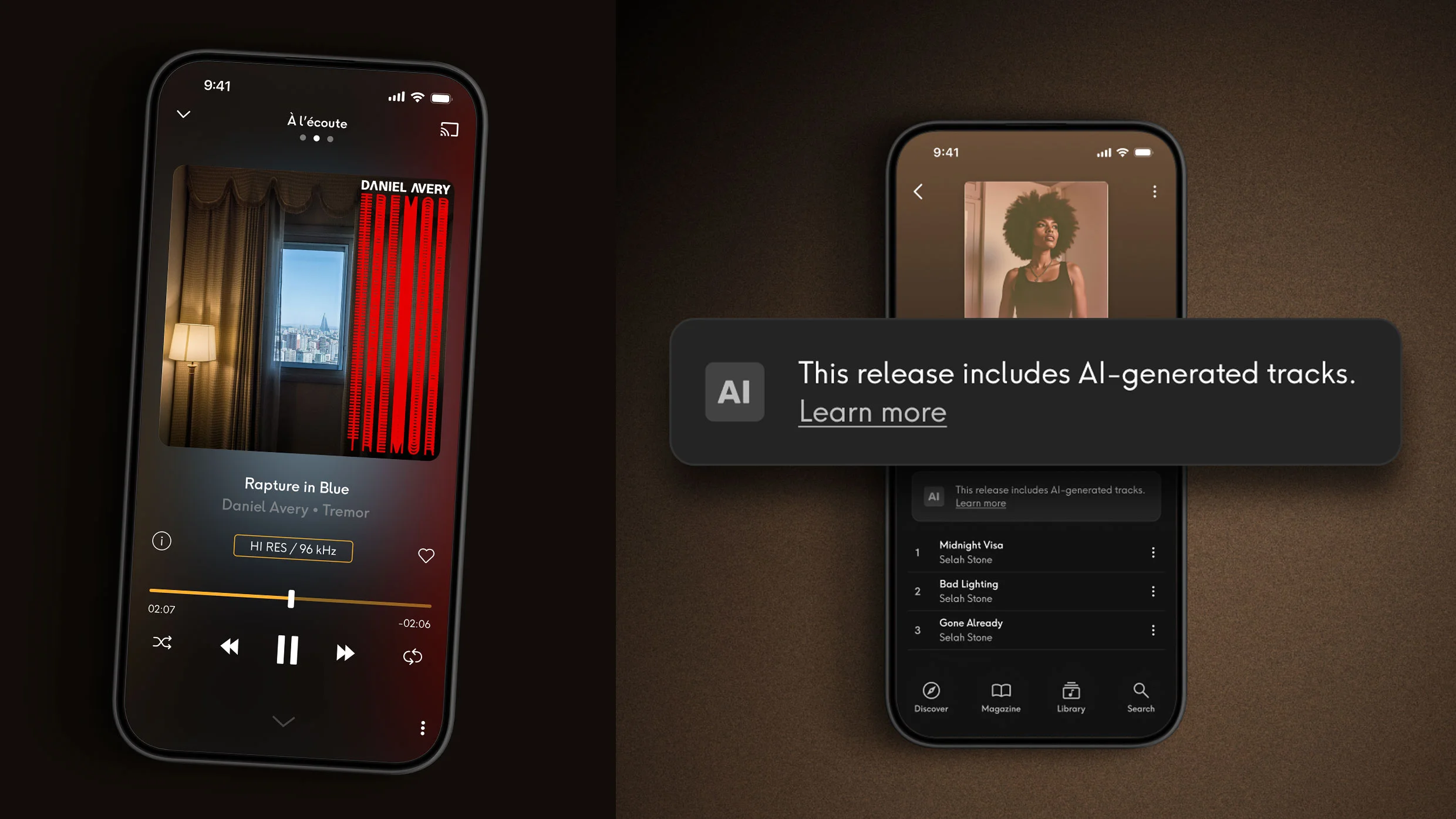
Like every other music streaming service, Qobuz has been enduring a sudden and violent surge of AI-generated audio, but Dan Mackta, Managing Director at Qobuz, refuses to use the term “AI music.”
“I’ll call it music-esque content,” Mackta says of the tens of thousands of AI-created songs that hit music platforms daily. “Music goes straight to people’s emotions. It’s not something to fool around with.”
Deezer, another prominent streamer, recently shared that it’s receiving 90,000 AI-generated songs per day. Mackta doesn’t care to find out the exact number coming to Qobuz, but he knows it’s a lot.
“Who asked for this? It’s all just fraud,” Mackta says. “It’s a shame that we have to put so much energy and resources into combating it. But of course we do. We have to. It’s an industry-wide problem.”
And yet, from a certain perspective, “music-esque content” might actually be a blessing in disguise for Qobuz. Since AI slop has been flooding platforms, Qobuz has seen massive growth. The company saw a 45.7% revenue increase in 2025 compared to 8.8% for the overall streaming market with their monthly active users reaching 1.2 million .
These kinds of spikes can involve numerous factors such as increased brand awareness, product endorsements, and, in 2026, viral internet moments. Qobuz has benefited from all three of late. Its viral moment came when Spotify was running ICE ads, leading to a land rush towards Qobuz.
But something Qobuz has kept at its center as it has grown is its focus on authentic creativity.
Source link