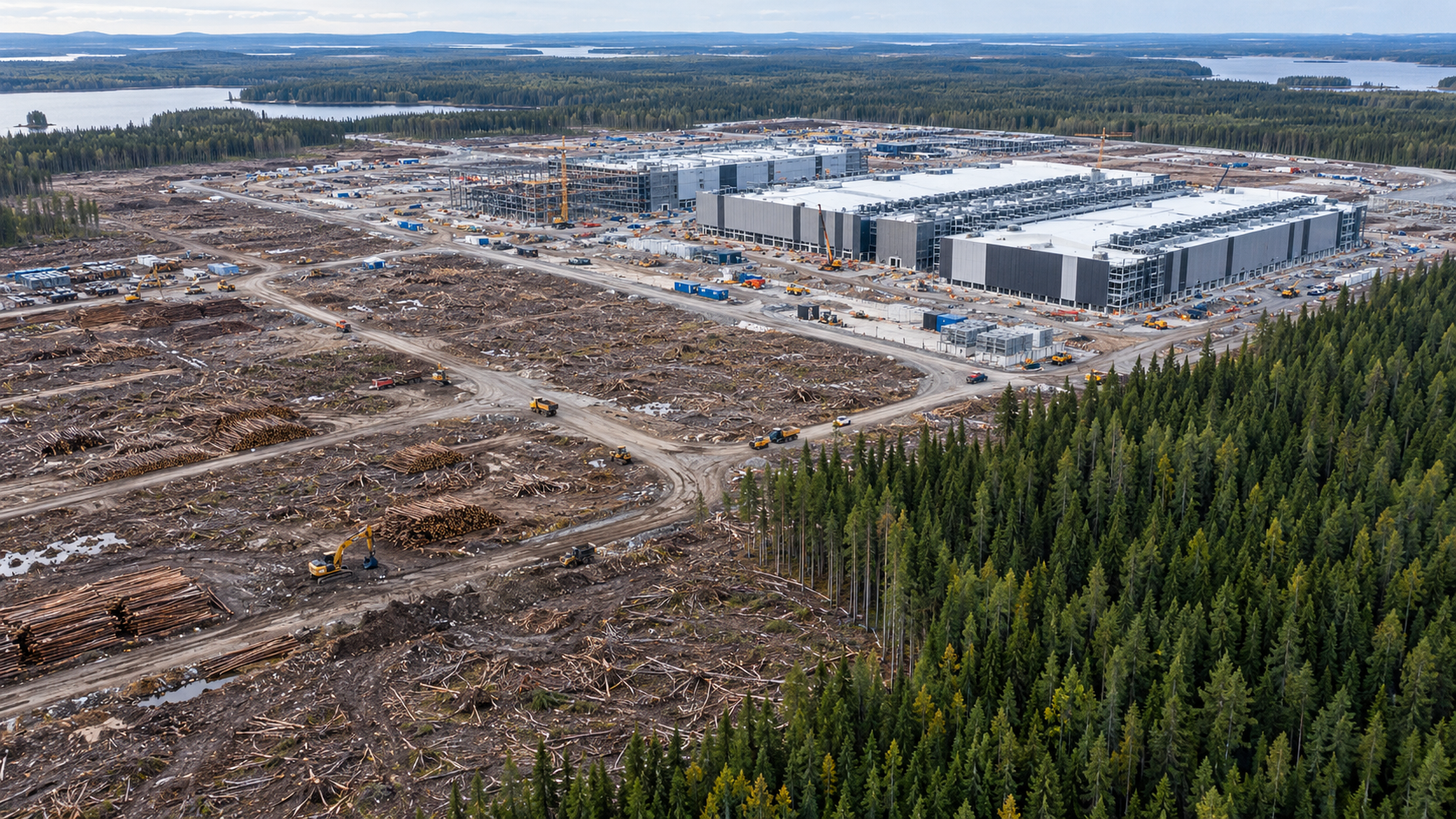
The buildings are windowless, fenced, and often bigger than a shopping mall, and more of them are landing in American communities every month to feed the AI boom. The computing power behind chatbots, image generators, and the AI features now baked into your phone has to live somewhere, and that somewhere is an increasingly hungry network of data centers drawing enormous amounts of electricity from the same grid that powers your home.
Data centers consumed about 4.4% of all U.S. electricity in 2023, up from 58 terawatt-hours in 2014 to 176 terawatt-hours in 2023, and the Department of Energy’s Lawrence Berkeley National Laboratory projects that share could reach between 6.7% and 12% of the country’s total electricity consumption by 2028. When that much new demand shows up near your town, the cost of meeting it rarely stays with the company that created it.
The part that should concern homeowners is that a data center doesn't have to be anywhere near your house to affect your electric bill. You could live miles away from the nearest facility and still end up helping pay for the electricity infrastructure it needs.
Here's why. When a massive data center connects to the power grid, utilities may need to build new power plants, substations and transmission lines to keep up with demand. Those projects cost billions, and depending on local regulations, some of that expense can be passed along to everyone who pays an electric bill.
As Ari Peskoe, director of Harvard's Electricity Law Initiative, explained to NPR , those costs can be spread across businesses and households throughout the region.
Source link