
AI is making it easier to build software. Product managers, designers, and domain experts can now turn ideas into prototypes without necessarily knowing how to code. But turning those prototypes into reliable products that solve real problems remains a challenge.
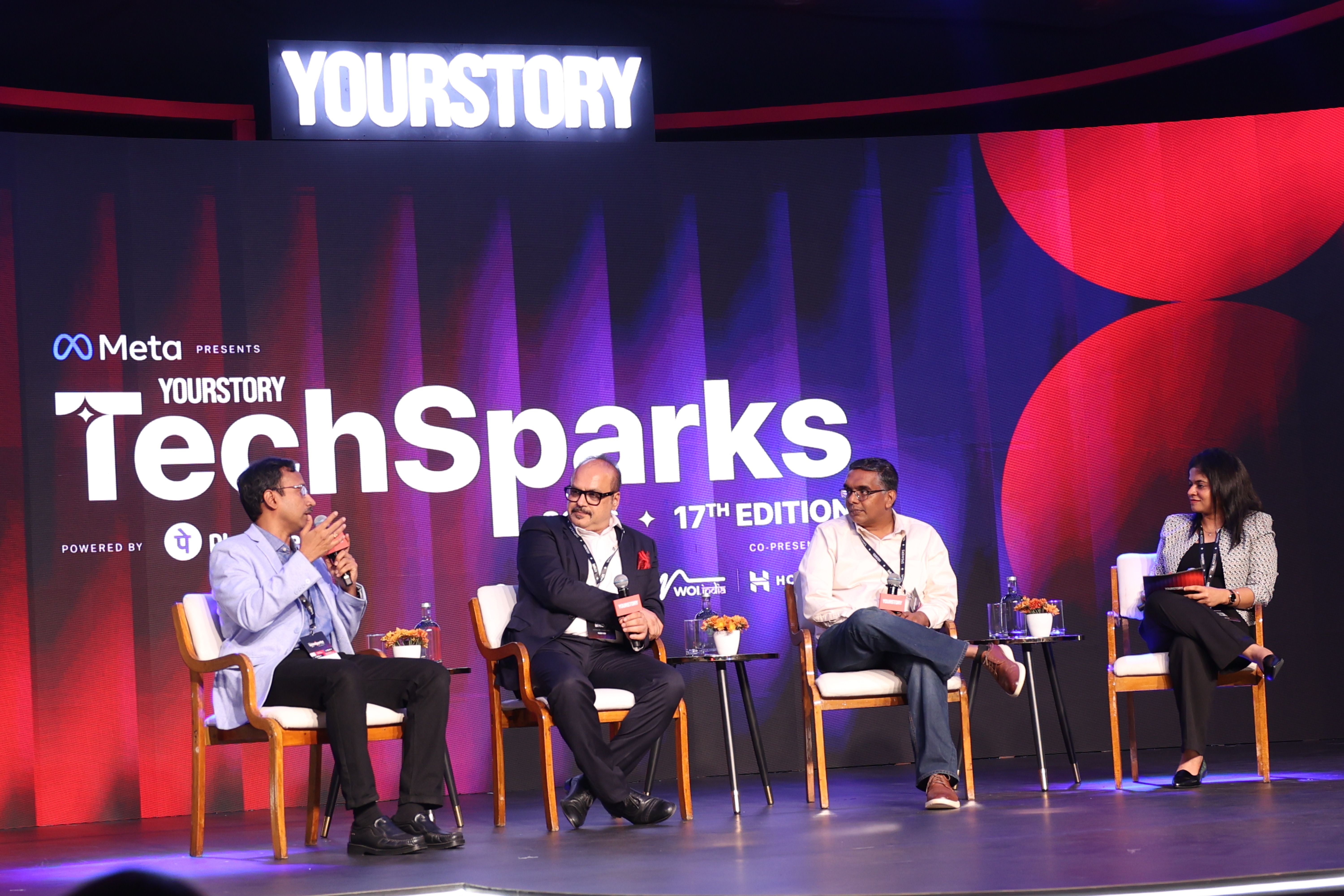
At TechSparks 2026, Srinivas Chamarthy, Senior Vice President of Engineering, Site Lead and Country Head at Diligent India; Madhusudan N. Murthy, Digital Engineering and Tech Strategy Leader at EY GDS; and Arun Kalyanaraman, VP of Engineering at Target in India, discussed these changes during a panel titled ‘From Who Can Code to Who Can Build’.
The discussion was moderated by Chhavi Mahajan, Chief Content Officer at YourStory.
AI-assisted development allows business teams to test ideas, demonstrate concepts, and gather feedback much earlier. However, a prototype that shows an idea can work is not necessarily ready for production. Applications still need to meet security, scalability, and reliability requirements.
Murthy said that AI is making experimentation easier, but companies must distinguish between a proof of concept and a production-ready application. Engineering teams still need to identify vulnerabilities, put safeguards in place, and ensure systems can handle real-world use.
“It's good, it's a very positive development, but it also has to have its guardrails,” he stated.
Kalyanaraman said AI can do more than help developers write code faster. It can also speed up the entire development process, from defining a problem and testing a solution to getting stakeholder approval. However, strong engineering fundamentals, architectural thinking, and technical depth will remain essential, even as AI changes how solutions are built.
Source link





