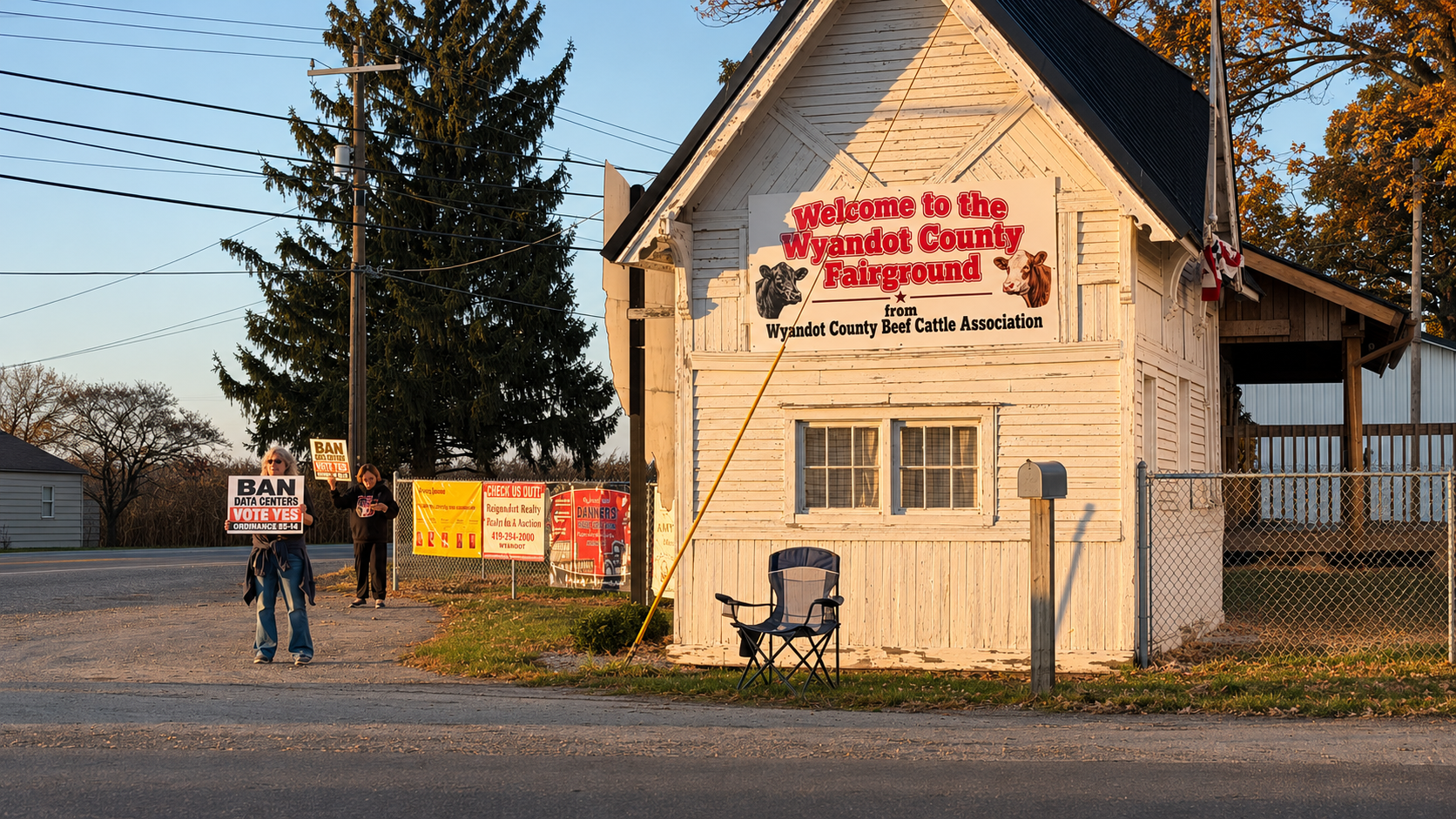
A small Ohio town with just 6,600 residents has become an unlikely example of how communities can push back against the massive infrastructure powering the AI boom.
On November 3, voters in Upper Sandusky, Ohio, overwhelmingly approved a measure prohibiting the construction of large data centers within city limits. Nearly 77% voted in favor, following months of opposition to a proposed $900 million data center and natural gas power plant.
Organizers initially believed they needed 155 signatures to put the proposed ban on the ballot. They collected 301, only to discover that the actual requirement was higher and that many of their signatures had been rejected. With hours remaining before the deadline, they were still 20 valid signatures short, as accounted in substack post from the president of the national nonprofit Farm Action, Angela Huffman.
I spoke to Ms. Huffman, one of the residents who helped organize the campaign, about how her community challenged a nearly billion-dollar development and what other towns facing similar proposals can learn from the experience.
Upper Sandusky sits in northwest Ohio, surrounded by farmland. Huffman's family has farmed about 10 miles outside town for six generations.
In June, Smartland Energy proposed developing approximately 146 acres near the northern edge of the city. The roughly $900 million project would have included data centers and a 150-megawatt natural gas power plant.
For residents, the proposal raised questions about electricity, water, infrastructure and the long-term future of their community.
Upper Sandusky was already dealing with infrastructure questions surrounding a major new soybean processing plant.
Source link