
“for some reason, I woke up at 5:30, and the first thing I did was go to the New York Times website to check the headlines,” Juan Carlos Díaz Vélez recalls of the previous morning. “To my great surprise, there was a breaking news story: Francis Halzen had just been awarded the Nobel Prize in Physics. I immediately started sending messages, only to discover that my colleagues in Europe had found out long before I did.”
Juan Carlos Díaz Vélez works at the Wisconsin IceCube Particle Astrophysics Center at the University of Wisconsin–Madison. The new Nobel laureate is his boss.
“When I arrived at the WIPAC offices, everyone was smiling and congratulating one another,” Díaz Vélez says. “We gathered in the conference room to watch the press conference with Francis Halzen, who was in Italy at the time attending a conference. We’ll wait for his return to celebrate, and in the meantime, we’ll keep working on the neutrino study, because this work never ends.”
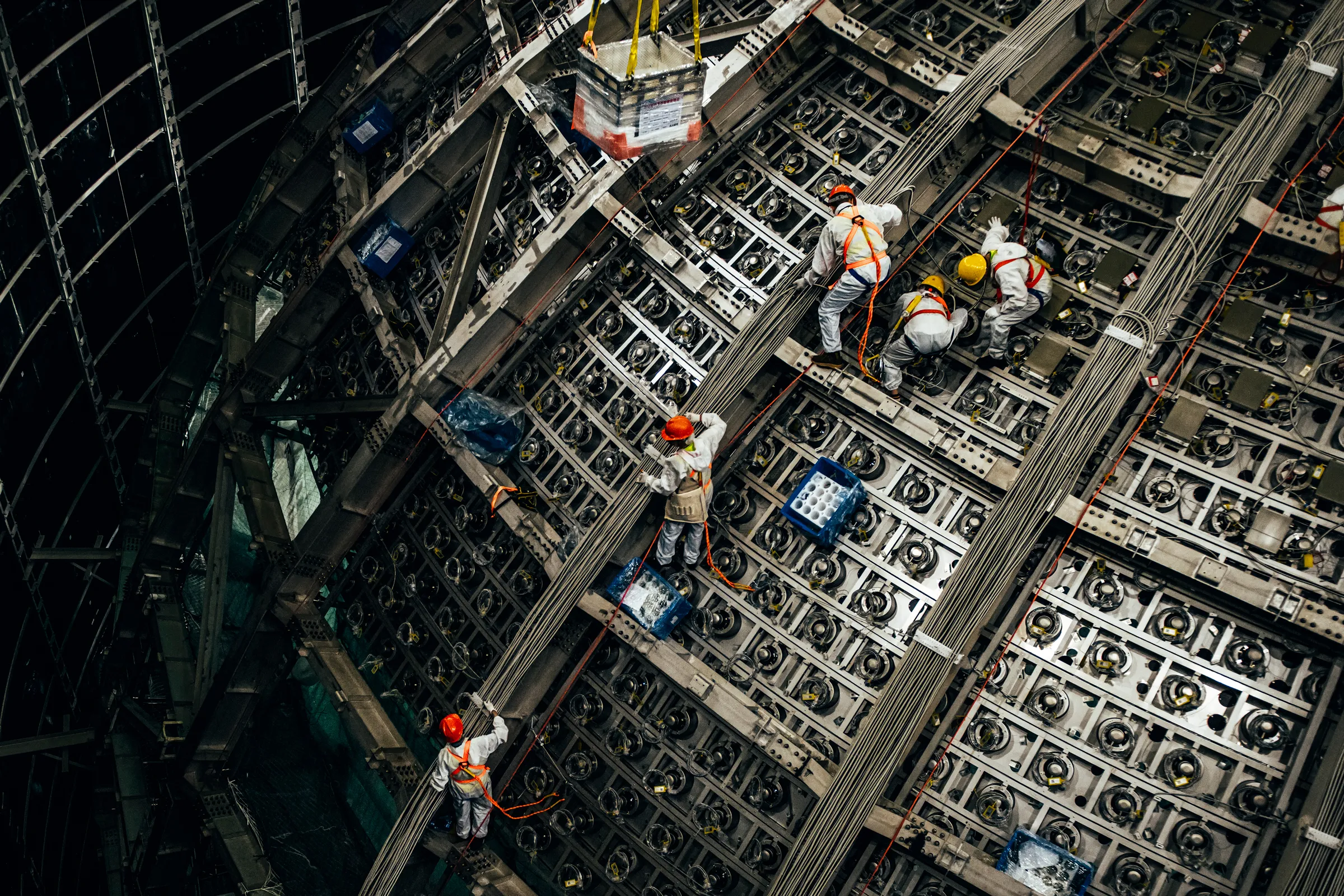
That work is detecting an elusive particle using detectors inside a big block of ice.
Professor Francis Halzen of the University of Wisconsin–Madison joined virtually from Italy to share the news that he had won the 2026 Nobel Prize in Physics.
“Neutrinos are subatomic particles that participate in reactions within the nuclei of atoms,” Díaz Vélez explains. “They are produced by radioactivity on Earth—and even in watermelons and bananas, due to their potassium-40 content—as well as in our own bodies.”
Source link





