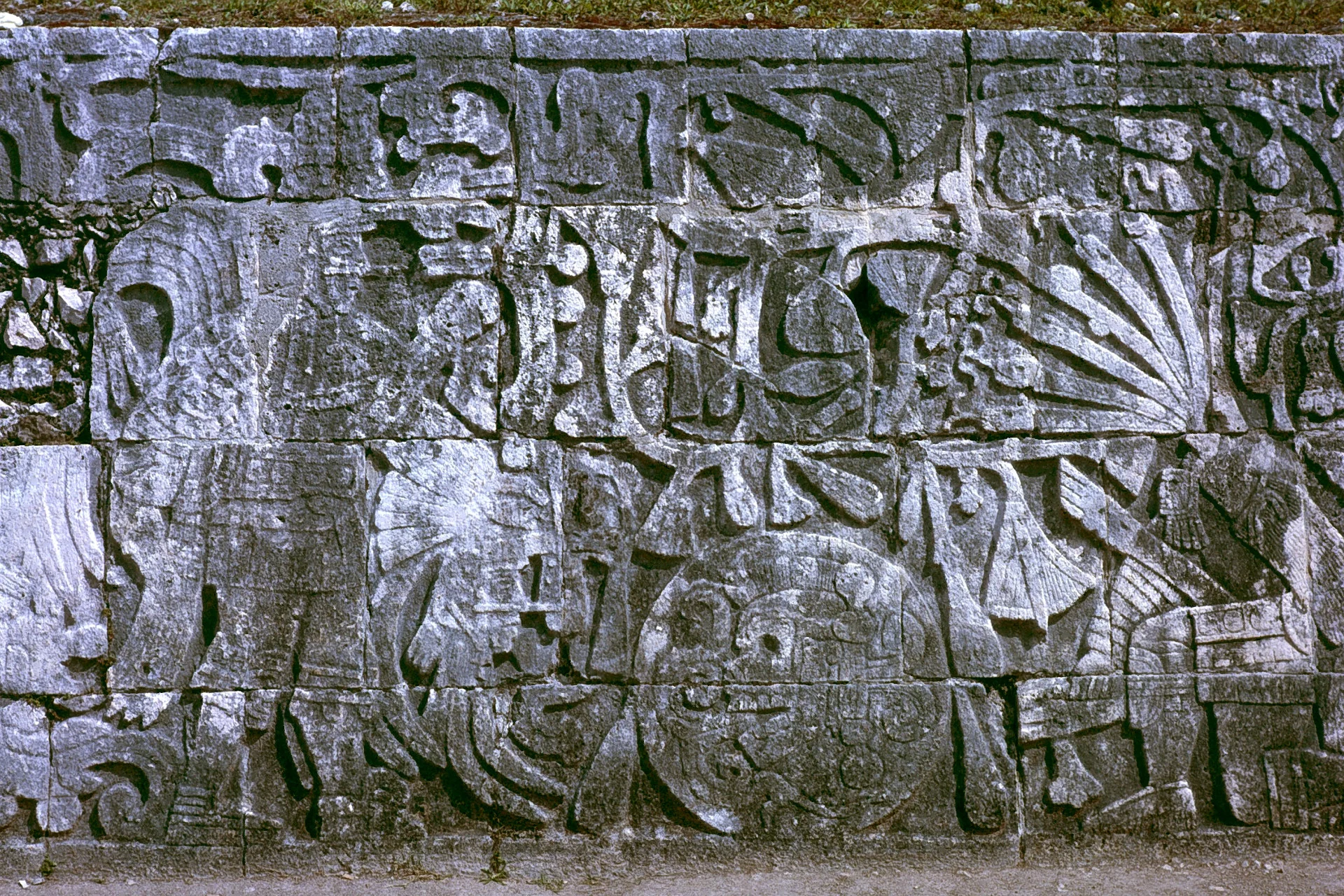
The Maya liked to keep their dead close. That was how they believed they could interact with their ancestors, who had ascended to the heavens to become deities. And it seems they had a very literal interpretation of “close”—namely, depositing their relatives’ body parts near long-dead ancestors.
An international team of researchers conducted a genetic analysis of 430 human skeletal and tooth samples retrieved from known Maya tombs and caves with human remains. This included an elite Maya woman who died and was interred in a cave sometime between 250 and 400 CE. What made this burial site stick out to researchers were 226 human teeth scattered around her pelvis and upper spine—teeth that, as the team’s analysis found, belonged to generations of her distant ancestors buried elsewhere in tombs more than 16 miles (26 kilometers) away.
Of course, one doesn’t need to be a geneticist to guess that all those teeth didn’t belong to the woman. However, the genetic connection reveals fascinating insights into Maya burial practices and social structures, according to the team’s study, which has yet to be peer-reviewed and is currently available as a preprint on bioRxiv. Keith Prufer, an archaeologist at the University of New Mexico who co-led the study, presented the work at the Society for American Archaeology’s (SAA) annual meeting earlier this year.
Like many of its contemporaries, the Maya cared deeply about the afterlife. They had very specific ideas about what happened after death and how best to prepare people for their ascent to the heavens.
Source link