
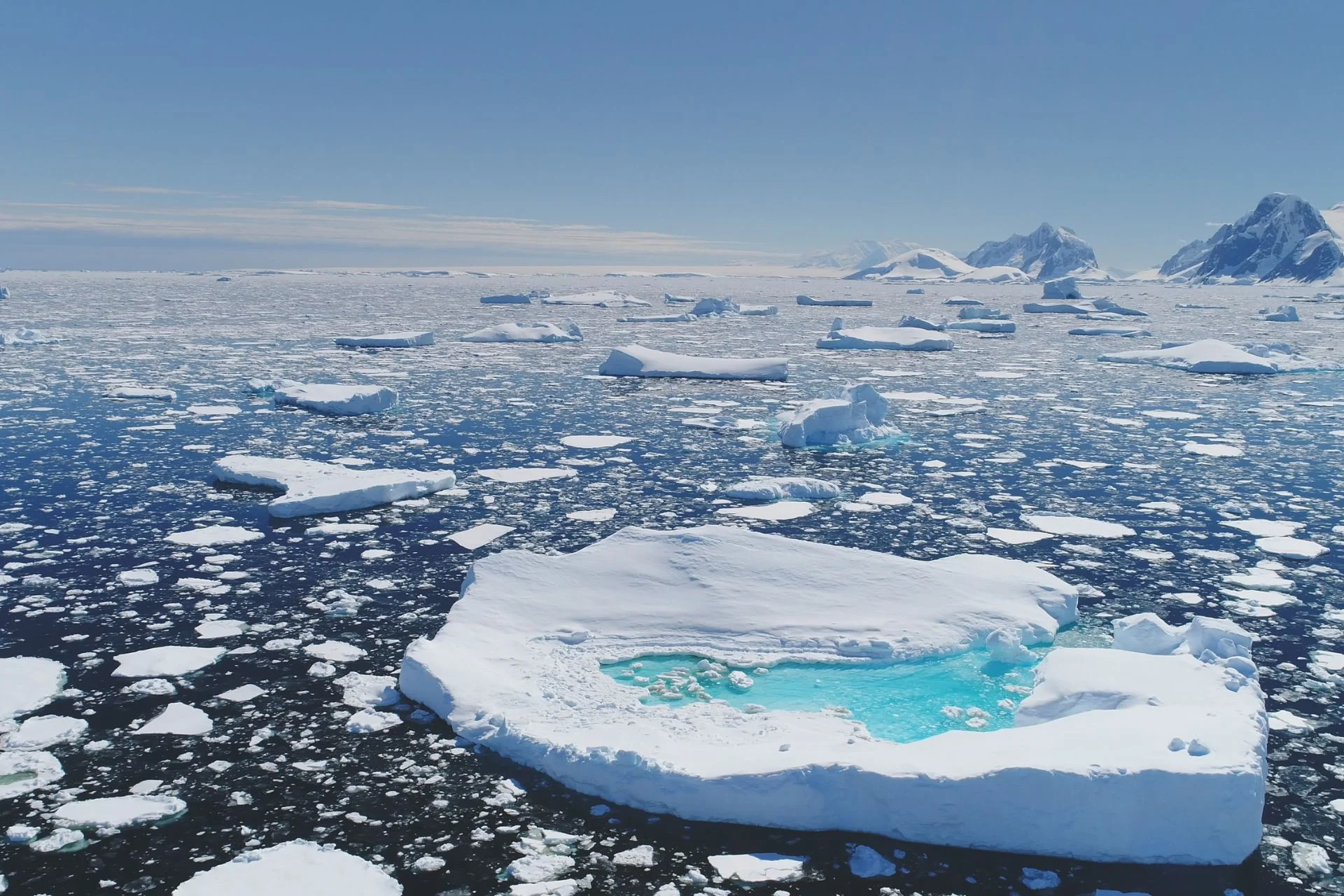
In August 2024, something extraordinary appeared in the middle of Antarctica’s winter sea ice: a vast expanse of open ocean where there should have been a frozen surface. The reason for the anomaly long remained unknown, but now scientists believe they finally have an answer.
New research suggests the hole was not the result of a single freak event but of an extraordinary convergence of atmospheric and oceanic conditions. In a paper published in Geophysical Research Letters, a team of researchers identified a series of extreme weather conditions that took place simultaneously, bringing relatively warm deep water toward the surface.
The massive hole in the ice was first spotted from space. Satellite observations showed a huge polynya—an area of open water surrounded by sea ice—emerging in Breid Bay, off East Antarctica. At its peak on August 8, 2024, the opening stretched across roughly 34,400 square miles (89,100 square kilometers). It then rapidly shrank and refroze in mid-August that same year.
It was an especially puzzling sight because Breid Bay had remained covered by sea ice during July and August throughout the satellite record dating back to 1979.
The researchers behind the new study suggest that the unusual event was caused by a number of factors. A succession of six intense atmospheric rivers—narrow corridors of warm, moisture-laden air sometimes described as “rivers in the sky”—swept toward Antarctica during July and August 2024. Those atmospheric rivers brought unusually warm air, heavy snowfall, strong northerly winds, and large amounts of heat toward the region, weakening the sea ice and making it harder for new ice to form.
Source link





