
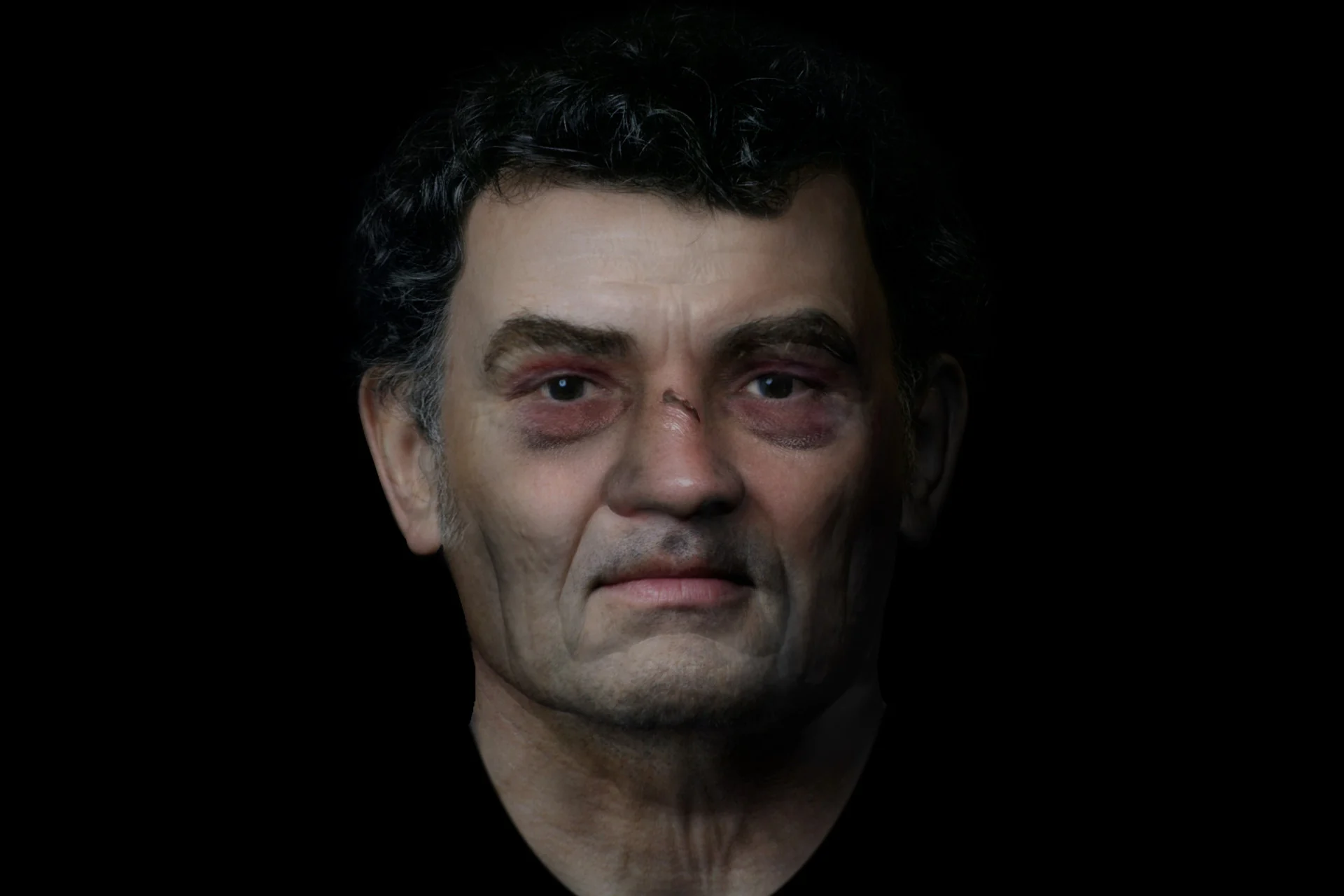
It’s not easy to visualize the past. What’s typically available is a fractured skull or, if we’re lucky, paleoart depicting an artist’s imagined version of times long gone. I’m a real connoisseur of paleoart, but even I must admit: a “real” face truly goes a long way in making the past feel so much more intimate—like this one of a man found in a strange grave.
In a recent statement, National Museums Scotland shared the striking image you see above. This is what scientists believe was the face of a man who lived in Roman Scotland 2,000 years ago. Notably, he was buried in a grave where four of the six individuals were decapitated after they died, although the announcement doesn’t specify whether he was among those four. However, the man’s skeleton pointed to injuries to his nose and right arm that he sustained while alive—overall, signs that the team interpreted as hardships that may have made him look older than his age (most likely his early 50s at the time of death).
“Taking an interdisciplinary approach to the analysis of human remains allows us to understand the physical attributes of these individuals as well as their life stories,” Jess Thompson, a curator of osteoarchaeology at the museum, said in the statement. “We can investigate where these men had travelled from to reach the frontier, what they were doing there and what became of them.”
The grave was dug around a Roman fort at Inveresk in eastern Scotland. In a 2021 commentary , Cambridge archaeologist Rob Wiseman explained that around 2 to 3% of Roman burials in Britain were found with decapitated bodies.
Source link


