

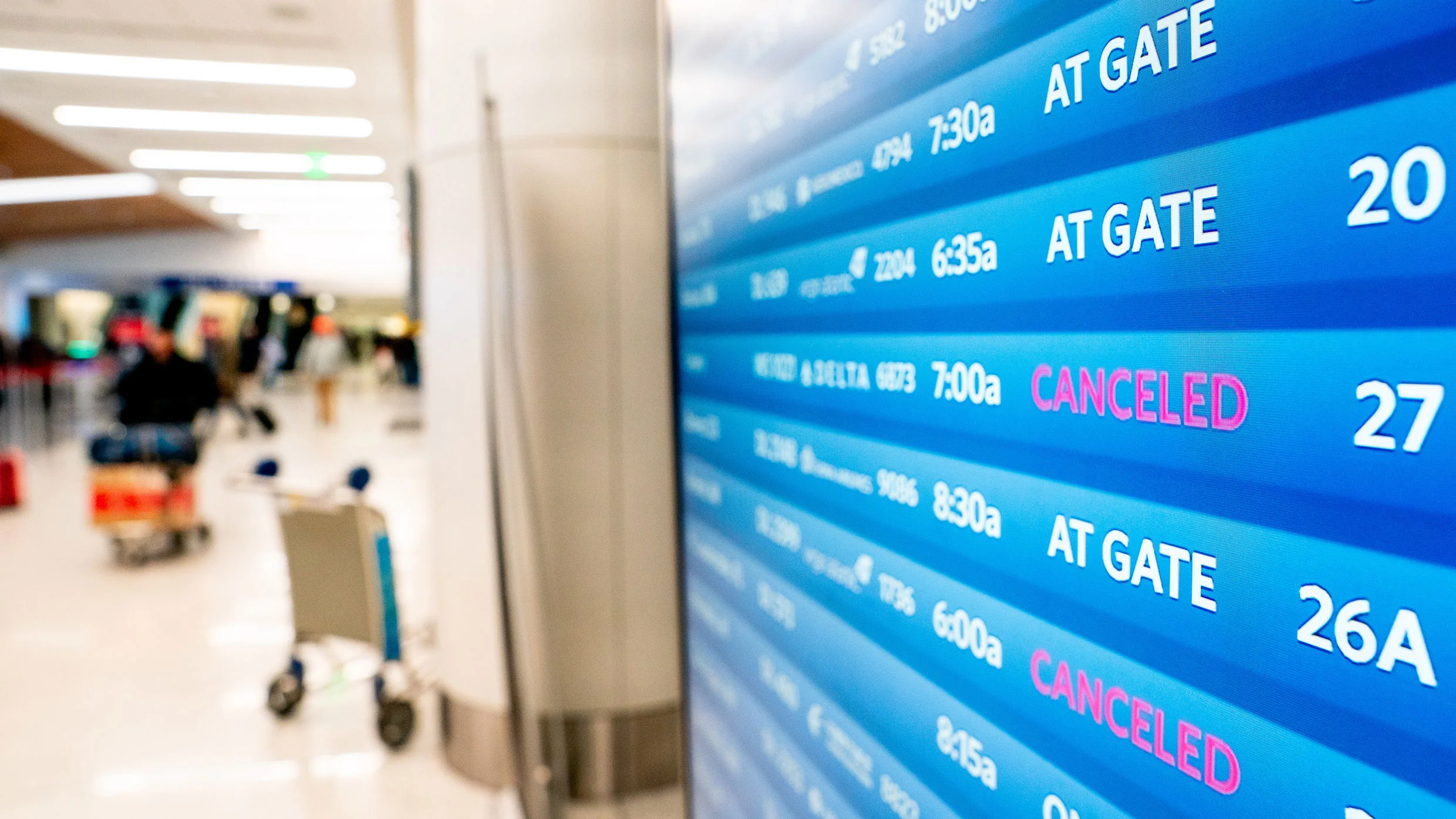
Like millions of other Americans, I was stuck at an airport on the infamous Friday the 13th in November when air traffic in the U.S. came to a halt. From where I sat at Fort Lauderdale airport, the panic was obvious. Crowds overflowed at gates. Hotel rooms disappeared quickly. I got one of the last ones available in the city. It was chaos.
That’s what happens when big networks go down: chaos. And it’s only just beginning unless organizations fix how they change their network infrastructures.
Of course, the ground stop would have made news by itself. But what really got people talking was that it was one of a series of major outages that occurred over just a few days’ time. Shortly before the ground stop, a Microsoft Outlook outage left businesses unable to send email. Our company had contracts held up by it. And on Monday, November 16, customers at several major banks found they couldn’t reach their accounts.
Email, air travel, banking—three essential elements of the American economy, not to mention people’s daily lives—crashed in the span of just three business days. Suddenly, people who don’t know a router from a switch were talking about network infrastructure. Conspiracy theories multiplied on social media and in the dark corners of the internet.
I spend my working life close to the networks behind failures like these, and I can say with complete confidence that there is no conspiracy here. The root cause of all the outages might sound less satisfying than a complex conspiracy theory, but it is daunting nonetheless: The infrastructure that runs the world is changing faster than ever, and change always brings risk.
Source link





