
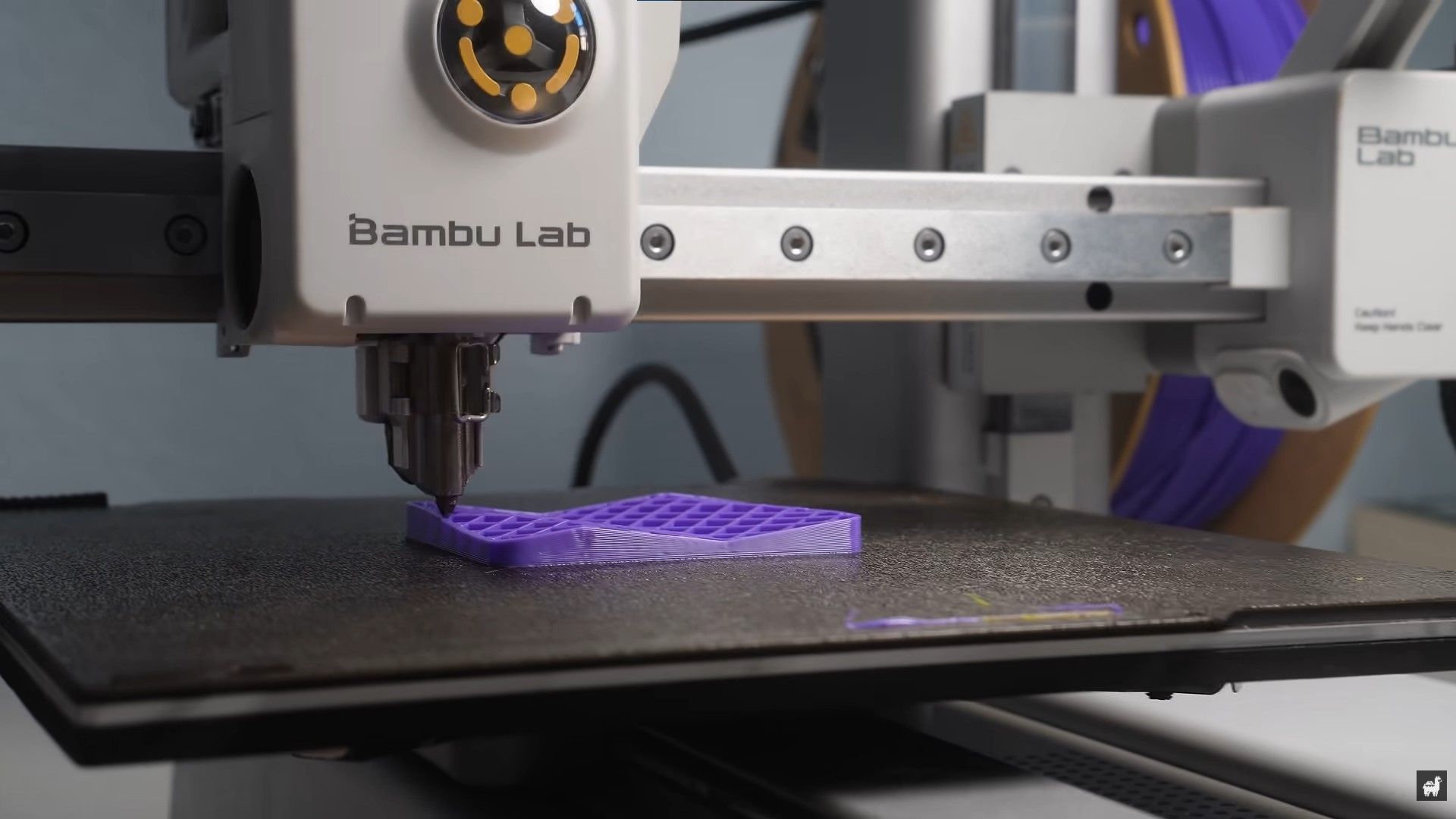
Alpaca Engineering posted a YouTube video yesterday showcasing his self-hostable non-planar slicer. He explains that most non-planar 3D printing — printing across all three axes, rather than in 2D horizontal layers — demonstrations are usually for research purposes, for demonstration and experimentation, with no easy way for most 3D printer owners to try out non-planar 3D printing. His project, named PancakeSlicer, aims to fix this by making his non-planar slicing algorithm as easy to implement as existing slicing workflows, even improving upon it with 3D printer management features.
Alpaca Engineering explains that every few months, a non-planar 3D printing demonstration goes viral, but is rarely adopted practically by most 3D printer owners. Most non-planar experiments are for research, with half-abandoned GitHub projects. He further explains that non-planar isn’t widely adopted not because there aren’t any general-purpose non-planar slicers, but because it’s not accessible and easily implemented in a familiar workflow, with 3D printer owners spoiled by modern workflows and not needing to manually run G-code directly from an SD card.
Commercially available 3D printers are also not optimized for non-planar 3D printing. The challenge with printing at various angles is the clearance angle needed to bring a print head up and down without crashing into its own print. The slicer uses 3D models of various print heads from different 3D printer models to know how to slice the object to avoid collisions, thus having limited support; but Alpaca Engineering has listed a large number of supported 3D printers from Bambu Lab, Prusa, Creality, Voron, and many others.
Source link





