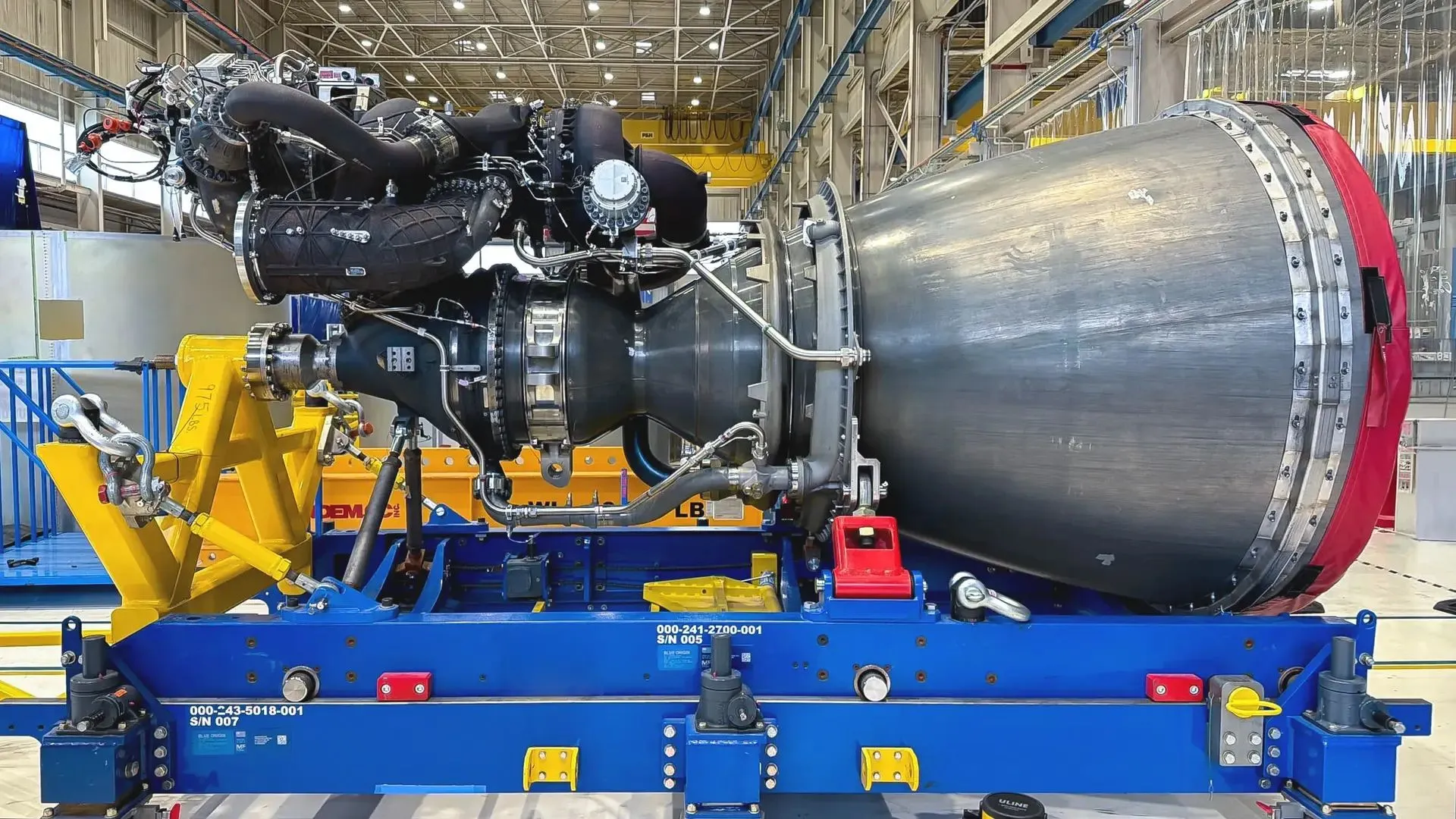
Blue Origin has developed a new rocket engine that delivers more thrust with significantly less hardware. Called Northstar, the liquid oxygen and liquefied natural gas-fueled booster engine produces 715,000 pounds-force of thrust. It also weighs 30% less than the company’s BE-4 engine, despite delivering greater power.
The new engine marks Blue Origin’s second booster propulsion system. Its development also demonstrates how advanced manufacturing techniques can simplify rocket engine production. More than 65% of Northstar’s components use additive manufacturing, reducing the number of individual parts and assembly time.
Northstar could strengthen Blue Origin’s propulsion portfolio as the company expands its launch capabilities. The announcement also included a major upgrade to its New Glenn rocket, which gains a new third stage for demanding orbital missions.
Northstar produces 715,000 pounds-force of thrust, compared with 640,000 pounds-force from the BE-4. That represents a substantial increase in output without adding unnecessary mass. Blue Origin says the new engine cuts overall mass by 30%.
The engine also contains 50% fewer parts than its predecessor. Additive manufacturing accounts for more than 65% of its production. This approach allows engineers to consolidate components that traditionally require separate manufacturing and assembly processes.
Production speed represents another significant improvement. Blue Origin says technicians can assemble Northstar in less than a day. The company has not disclosed its complete manufacturing process or the engine’s intended launch vehicle.
Northstar retains several established elements of Blue Origin’s propulsion architecture. It burns liquefied natural gas and liquid oxygen through an oxygen-rich staged combustion cycle.
Source link