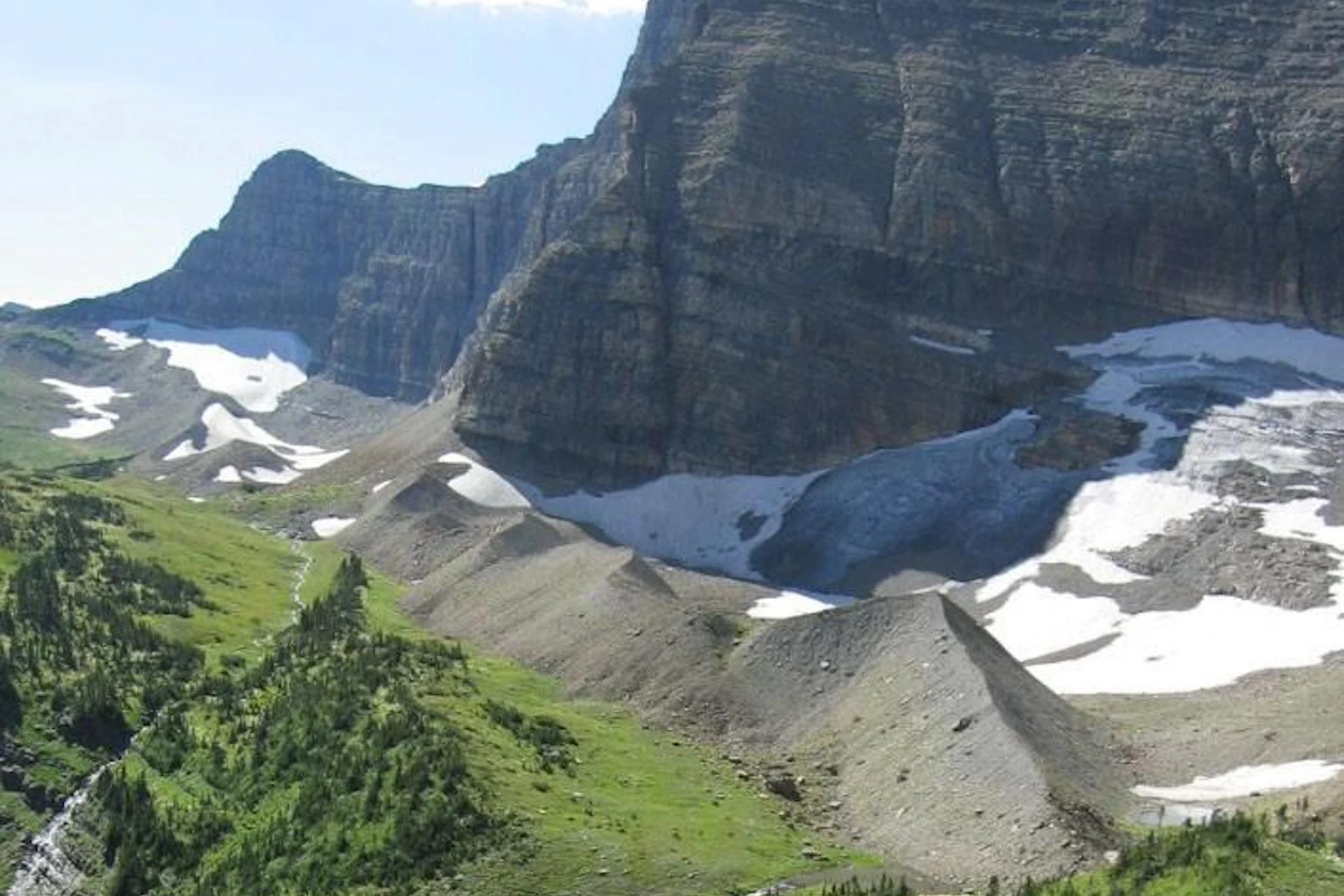
In the middle of the 20th century, roughly 1,450 glaciers could be found across the western United States. Today, their combined area has shrunk by 35%, and the ice continues to retreat, reshaping a landscape long defined by snow-capped peaks and frozen reservoirs of freshwater.
A recent report revealed that a little more than 300 glaciers have disappeared from the lower 48 U.S. states due to rising temperatures, while the rest are rapidly shrinking. The findings, published in the Proceedings of the National Academy of Sciences, offer the first comprehensive look at just how vulnerable mountain glaciers have become under a warming climate.
Glaciers in the western half of the country are found in six states, with Washington state being home to the most extensive concentration that spans across roughly 114 square miles (295 square kilometers). Although these glaciers occupy a relatively small area, they have an outsized influence on rivers, ecosystems, landscapes, and water supplies.
Most of these glaciers, however, have been retreating over the past century. Rising temperatures increase summer melt, while warmer winters can reduce the fraction of precipitation falling as snow.
The recent study found that glaciers in the western U.S. are melting at a quicker rate than ones found elsewhere around the world. That’s because the glaciers in the lower 48 states, with the exception of a few large ones in Washington, are much smaller, which can cause them to disappear faster.
Glaciers are constantly being replenished and melted. A glacier survives when it gains enough snow and ice to replace what it loses.
Source link