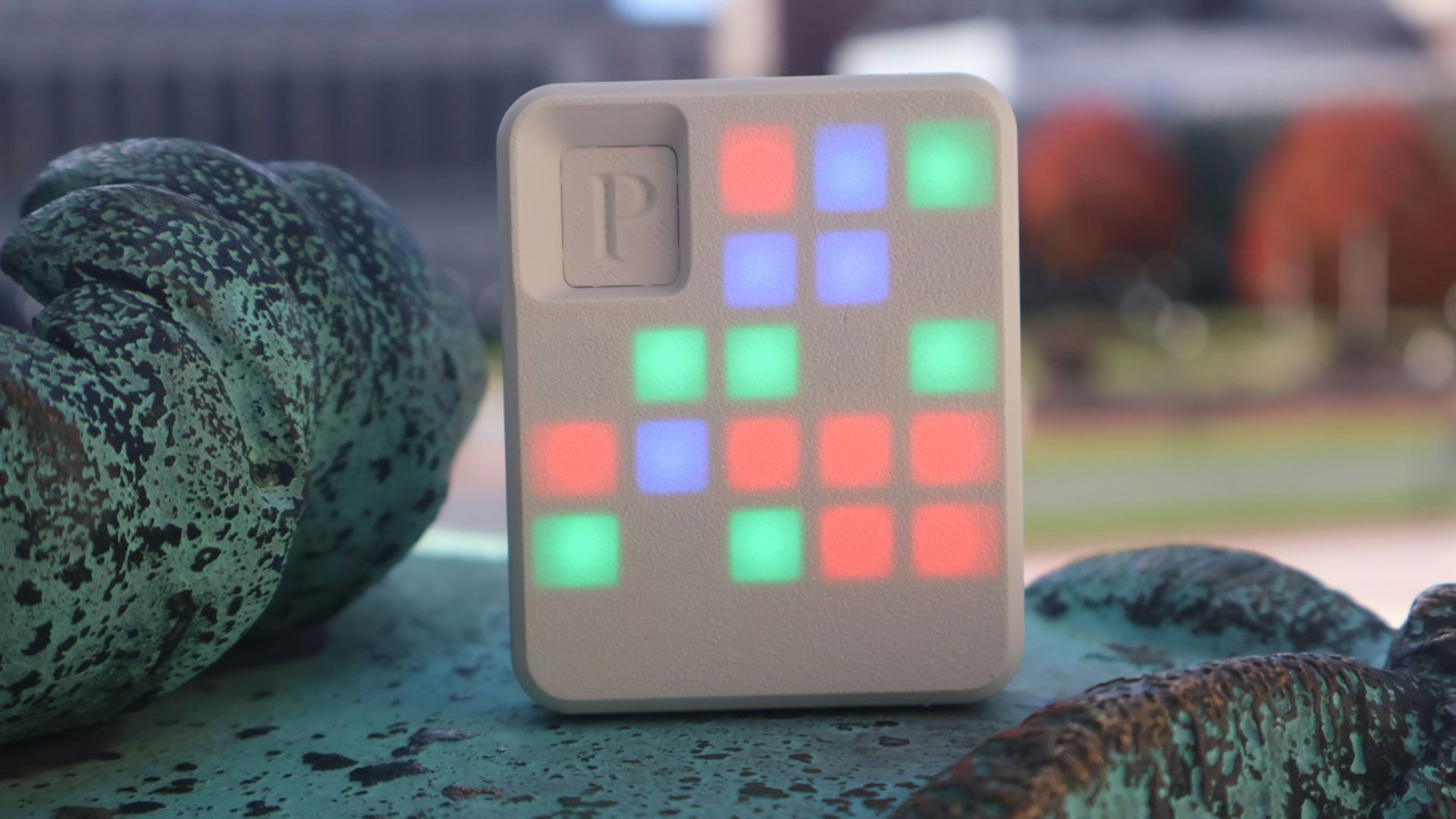
The Protector, a wearable ESP32-S3-powered pin packed with an LED matrix, is designed to be a "watermark for humans" who regularly appear in video recordings. Hardware researcher David Kramer says inspiration from the watermarking of currency led to this modern wearable, which pulses with an 'unpredictable' light sequence. "It flashes a light pattern every second that's generated from a secret key and the time, so nobody without the pin can fake it," explained the inventor in a communication with Tom's Hardware. Deepfake checkers can upload any suspicious video featuring a subject wearing a Protector pin to the iamnotfake.com website to verify whether the video is genuine.
Kramer has been working on The Protector for the past year as a solution to the growing deepfake and AI-fake problems in tech. He soon latched onto the idea of using color-pulsing LEDs as a video watermarking system. However, a solution involving implanted subdermal LEDs (in people's foreheads) was quickly shelved. Thankfully, a less painful, less permanent, and more investor-friendly wearable LED matrix pin was decided upon to commercialize this product.
Subjects should wear this deepfake-busting device conspicuously whenever they might be recorded on video, or whenever they want others to be able to verify their message independently. The Protector contains a secret private key and a precise clock. Its ESP32-S3 microcontroller takes these inputs and generates what is claimed to be a unique and unpredictable sequence of flashing color lights. If, for whatever reason, someone wants to check whether a video of a subject wearing The Protector has been deepfaked, they can upload it to a dedicated website for verification.
Source link