Every electric vehicle owner knows the quiet anxiety of watching a battery’s peak performance slowly fade over years of charging.
Scientists have long chased a promising fix: lithium-rich layered cathodes that store far more energy than conventional cells. But these high-capacity materials come with some issues. Repeated charge-and-discharge cycles scramble their internal architecture and steadily drain operating voltage.
A research team in South Korea has now solved that problem by rethinking how atoms are stacked inside the battery. Led by Professor Kisuk Kang of Seoul National University’s Department of Materials Science and Engineering, the team uncovered a structural design rule that keeps high-energy cathodes stable over time.
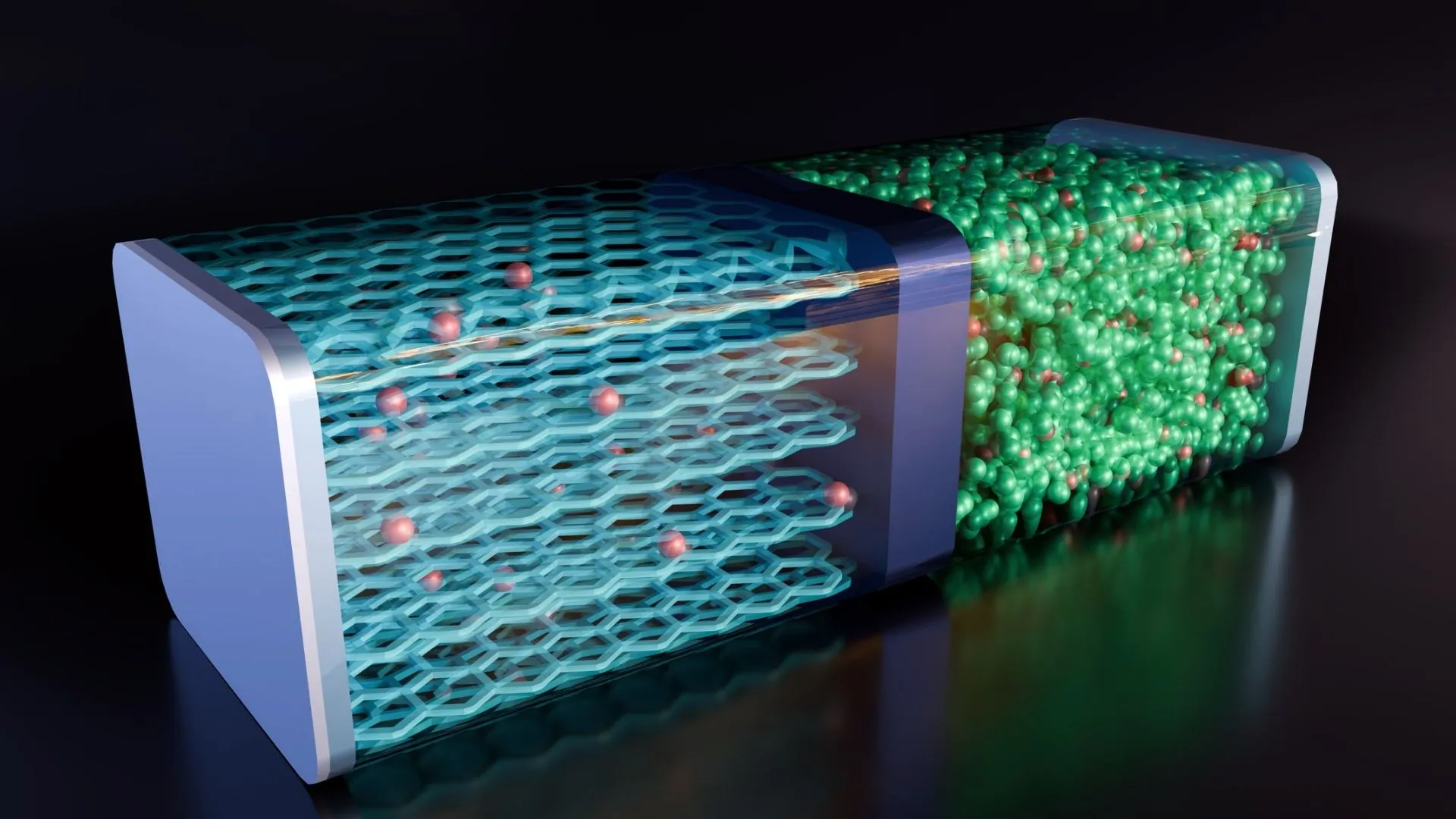
Standard batteries depend mainly on transition metals like nickel to move electrons; lithium-rich cathodes place extra lithium inside their transition-metal layers. This structural tweak lets oxygen atoms participate in the chemical reaction too, unlocking greater energy storage capacity.
That extra capacity comes at a steep structural cost. During repeated cycling, transition-metal ions drift from their original spots and get stuck, while pairs of oxygen ions fuse into unwanted “oxygen dimers.” Once those atomic shifts accumulate, the battery’s discharge voltage drops, leaving drivers and grid operators with less usable power.
Earlier attempts to fix this relied on surface coatings or chemical additives, which often curbed the very oxygen reactions that made the materials attractive in the first place
Professor Kang’s group explored cathode structural stability by altering vertical atomic stacking sequences, treating the material like interlocking blocks. They studied lithium-rich oxides featuring an O6 crystal arrangement.
Source link