
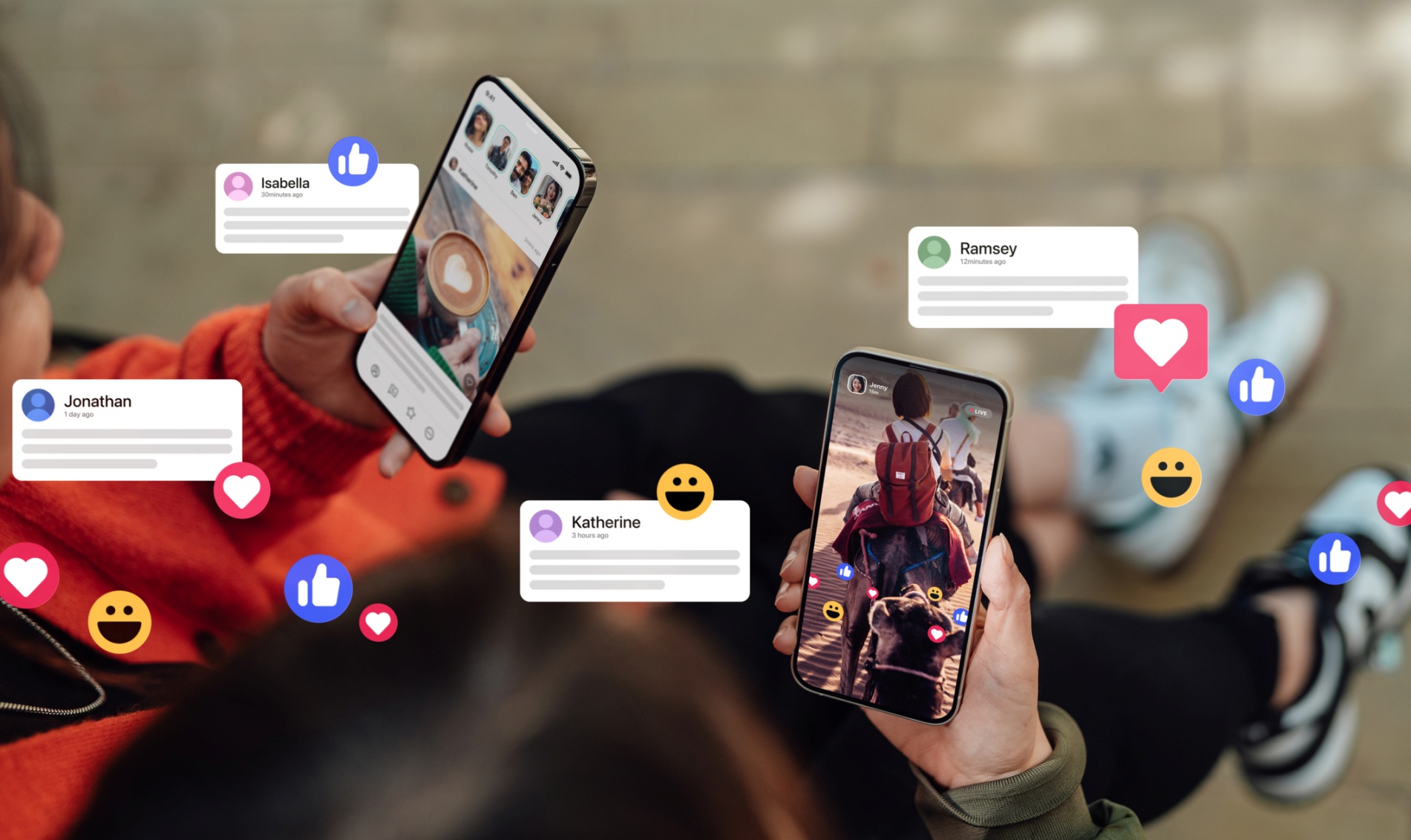
The Pew Research Center has delivered its annual report on U.S. social media usage, and as per usual, there are some revealing trends lurking within the demographic data. YouTube is still the most ubiquitous social platform among Americans, but beyond the top spot, the rankings differ depending on factors like age, gender, household income, and political orientation.
In last year’s Pew report, the top-ranked finishers were the platforms that best reached older Americans, and in 2026, that trend has essentially held true. YouTube, Facebook, and Instagram went 1-2-3 in the overall ranking and were the most-used social hubs in the 65-and-older age bracket.
The platforms on the rise include some apps focused on communication. Adoption of both Snapchat and WhatsApp rose 1% year-over-year, but those companies are making gains within different communities. Snapchat’s user base still skews toward female users — it reaches 30% of U.S. women and 21% of U.S. men — while WhatsApp now reaches a higher percentage of U.S. men, which wasn’t the case a year ago.
Stats related to household income are also noteworthy. Snapchat is more common in U.S. households that make less than $70,000 per year, while WhatsApp reaches its highest percentage of Americans (40%) in households that eaern at least $100,000 per year.
In general, social media use seems to be stratifying. Platforms like Facebook and TikTok tend to be more common in lower-income households. LinkedIn, as you would expect, appeals to Americans who are more well-off.
S. social media can best be seen by examining the adoption of Nextdoor , which is a relatively new addition to Pew’s annual reports.
Source link