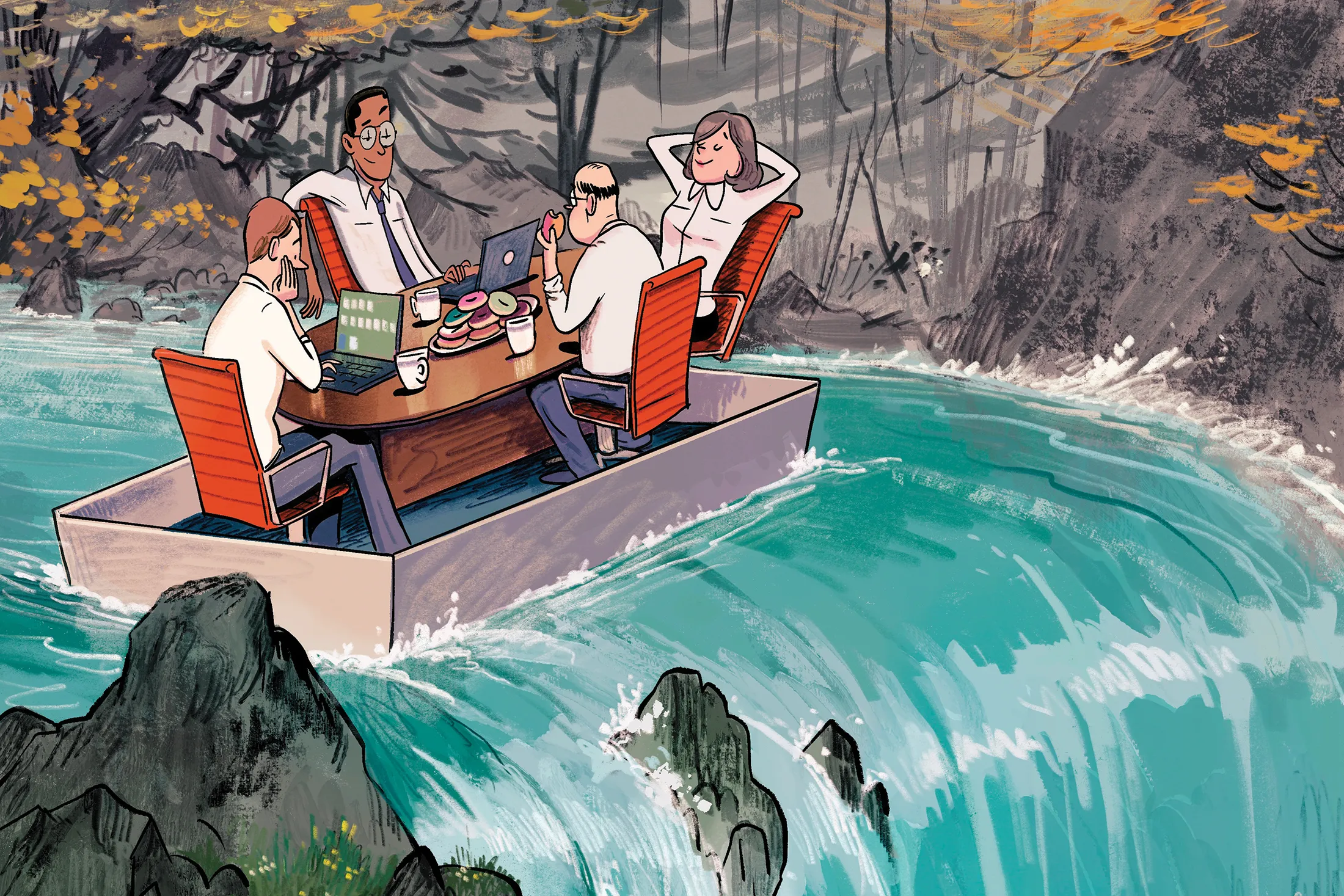
Good leaders learn to handle crises by keeping a strategic eye on the future. Here’s how to calm your brain and carry on.
This story appears in the November 2026 issue of Entrepreneur. Subscribe »
It was the nightmare scenario for any restaurant chain: In just over a week, two customers at different locations fell sick after eating raw oysters. Then they died.
The press was all over the story, and the company was in a panic. What happened? Who was to blame? What should they say? Nobody knew, but everyone was demanding action.
I’m an executive coach, and I was working with the restaurant’s CEO at the time. So I was in the team’s conference room as they figured out their response. The place was buzzing with urgent activity as everyone hurled themselves into immediate damage control. The PR advisers were drafting a statement for the CEO to apologize, take responsibility, and promise to do better in the future. The lawyers were discussing a strategy to reach quick settlements with the bereaved families before lawsuits made things even worse. The idea was to acknowledge accountability as fast as they could so that they get out of the heat and move on.
But I immediately thought, Wait! Time out! Because I’ve seen these situations many times. This was a classic dilemma that every business owner will face at some point:
When we’re in a moment of crisis , we experience what I call an amygdala hijacking. Our brain’s emotional center begins to take charge, and its goal is to reduce our stress as fast as possible.
Source link