Mohammed Ashim has been cutting hair and trimming beards for four years in Bengaluru.
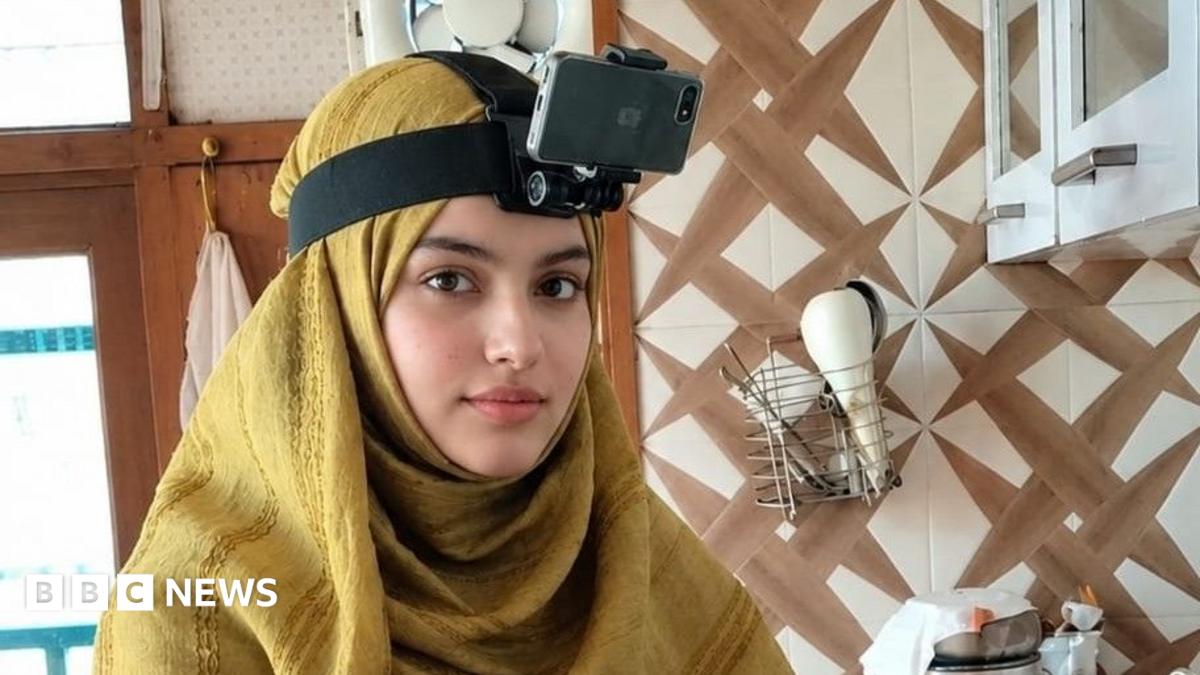
But recently the 22-year old has been strapping a camera to his head to record his work.
The camera only records his hands and fingers - his client's faces are blurred out.
"The routine is simple, but you have to be disciplined about how you move. The operations team taught me that my hands always have to stay cleanly inside the frame, the lighting has to be sharp, and I can't tilt my head too abruptly while working."
"It's good money, but honestly, the feeling of doing something this futuristic is what keeps me excited. I never imagined my razor techniques would be useful to a global tech company," says Ashim.
He is one of hundreds of thousands of workers across the world paid to record their activities.
Ashim's footage is collected by a local company, which might have hundreds of people filming their work.
That video is then sold on to technology companies and research organisations who use it to train artificial intelligence - in particular so-called physical AI, a type of artificial intelligence that can control robots in the real world.
"Every robotics company, every frontier AI lab, has a specific kind of data they want: industrial tasks, agriculture, household chores, small business work like pottery, garment-making, embroidery, candle-making. We go wherever the task is," says co-founder and CEO Shahil Baig.
47) for eight to 10 hours of recorded work.
Source link