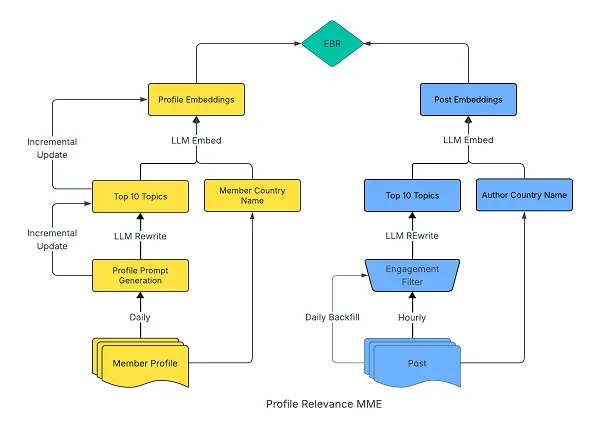
The company’s Profile Relevance model uses LLM-generated embeddings to show users more relevant posts from people they don’t follow.
LinkedIn shared insights into its evolving content recommendation system, with an overview of its improved, artificial intelligence-powered process. The platform’s system determines what content from non-connections gets displayed to users in their feed.
In a post on the LinkedIn Engineering Blog, LinkedIn engineer Shiyong Lin explained the platform’s new Profile Relevance model, which uses LLM-generated embeddings to match members and posts, based on professional context.
The process essentially summarizes each user’s profile into a prompt, taking into account each member’s profile information and posting history. It then builds a personalized guide of what they’re likely to be interested in.
On a basic level, this means that the system creates a chatbot-style summary of each user’s information, which then dictates what they get shown in the app.
Using these generated summaries, LinkedIn built a new recommendation system that measures content relevance versus each member’s summary.
As per Lin: “The system evaluates how well each post matches a member’s professional context across specific factors, including topic, location, job title, company, industry, seniority, and education.”
LinkedIn assessed these results manually before building a system that showed users more relevant posts from members they don’t follow in the app.
8% reduction in hide rate, indicating a more relevant and less noisy member experience.
Source link