Brand loyalty is the connection between a brand and a customer that drives someone to make repeat purchases from a specific brand. They stick with that brand even when alternative suppliers or products may be cheaper or more easily accessible.
The lineup outside the Apple Store to get the latest iPhone the first morning it’s available? That’s brand loyalty in action.
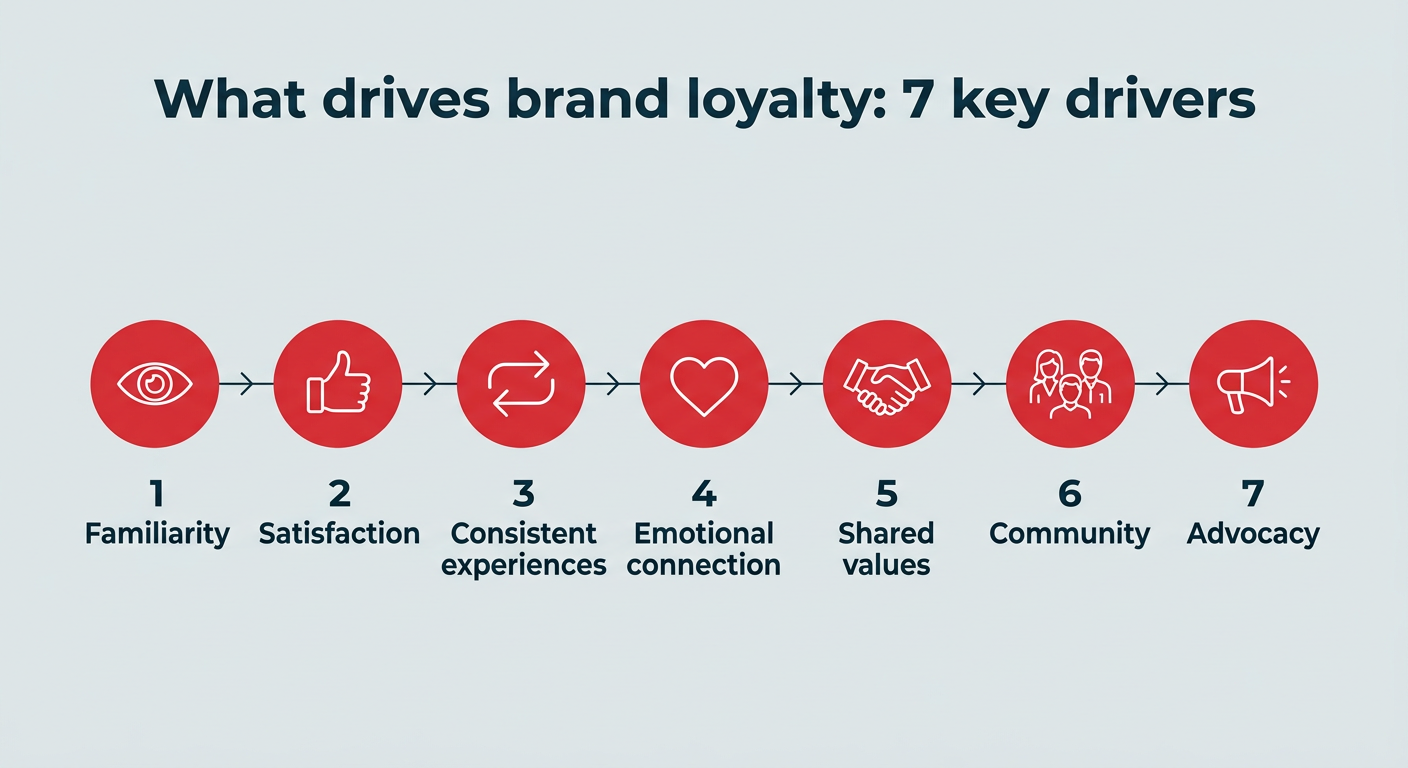
What separates loyalty from habit is the emotional connection behind the purchase. A habitual buyer picks your product because it’s there. A loyal customer picks it because it says something about who they are, and because they trust you to deliver. That trust is built over time through familiarity with your brand (also known as brand awareness), satisfying early experiences, and consistency after the sale.
Brand loyalty and customer loyalty sound interchangeable, but they come from different places. Brand loyalty is emotional and identity-driven. Customer loyalty is usually transactional, powered by price, points, or convenience. Both are worth having, but only one survives a competitor’s discount.
The brand loyalty pyramid was developed in the 1990s by David Aaker, hailed as “the father of modern branding.”
Just as the sales funnel shows how potential buyers move through the conversion process, the brand loyalty pyramid shows how customers move through the process to becoming brand-loyal.
Source: Aaker, D.A. (1991) Managing Brand Equity. The Free Press, New York.
Brand loyalty matters because it lowers what you spend to grow and raises what each customer is worth. It’s obvious that you want people to choose your brand over your competitors.
Source link