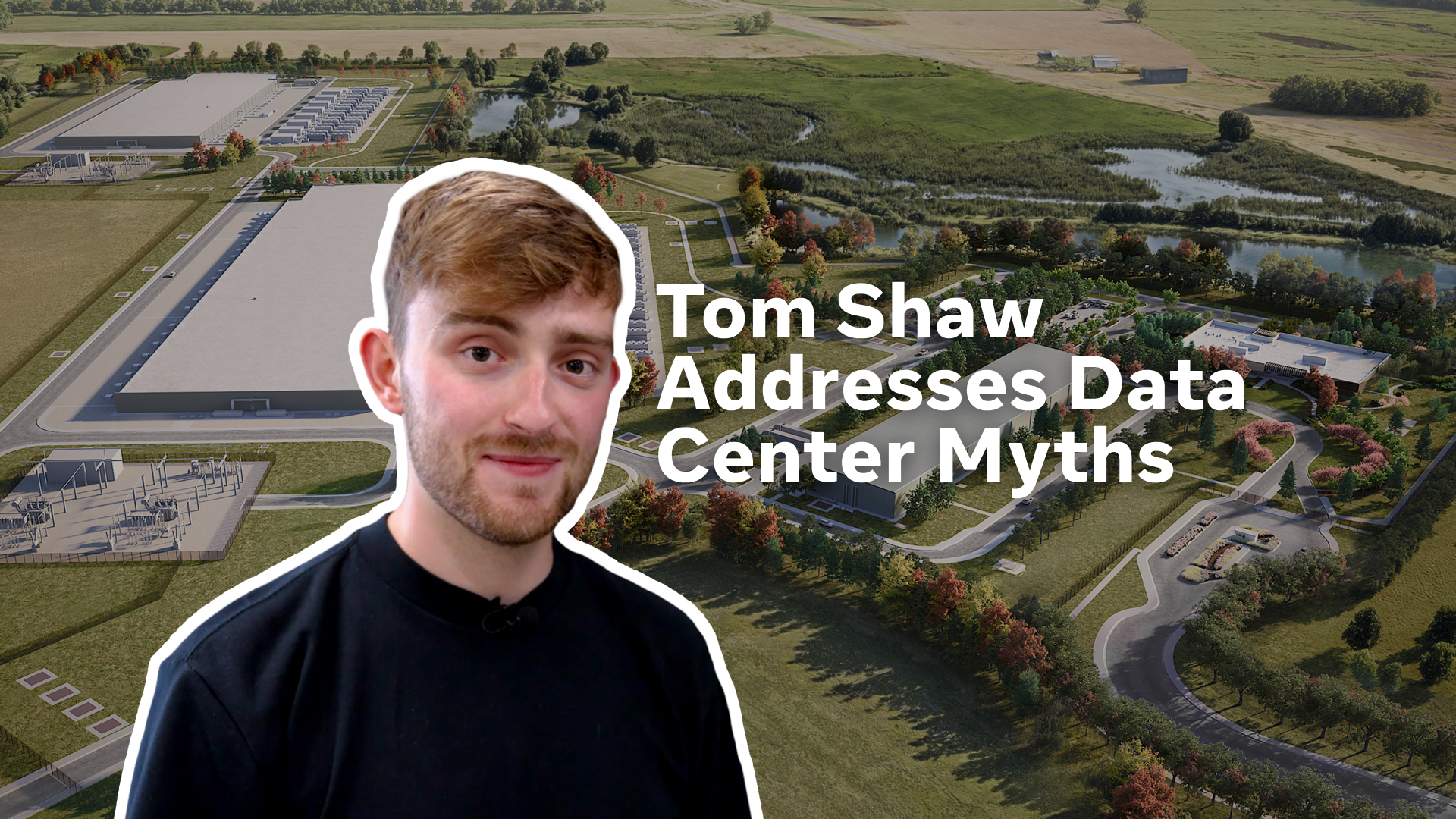
The world of technology is full of myths and legends. That’s understandable when most of the technology we rely on operates completely behind the scenes. Recently, I’ve been hearing a lot of talk around data centers, and many of the “facts” I’m hearing aren’t quite as true as some people believe.
Today, I want to address some of these myths, not to create division or try to win an argument, but instead to inform and clear up some misconceptions that are quite common within the conversation of technology and AI at the moment.
Water is a huge topic of discussion around data centers at the moment, but very few people actually know how data centers use water for cooling. I can’t speak for all data centers, but I can speak about the two types of Meta data centers that I have visited over the past few months.
So where does the water come from? The two sites I visited pulled from different places — one off the municipal system, one from a permitted on-site well. In both cases the withdrawal is permitted, metered, and counted in the local water plan, not carved out of it. The well case was the one that surprised me: the aquifer being tapped wasn’t suitable for drinking water in the first place. And in genuinely water-stressed regions, the closed-loop design I described above is the default, precisely because it barely consumes any water.
As mentioned, I can’t speak for all data center operators, but these two efficient cooling methods and the associated water usage mean that many of Meta’s data center facilities use less water annually than an average US golf course will in the same amount of time.
Source link