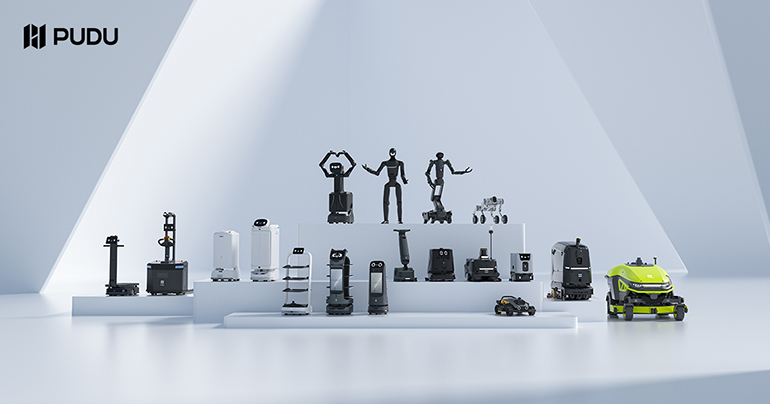
Robotics is advancing rapidly. New AI models and increasingly capable hardware are expanding what machines can perceive, understand and do, bringing more adaptable and general-purpose robots closer to practical use.
But greater capability does not automatically translate into commercial readiness. In supermarkets, hotels, airports and other working environments, robots must navigate changing conditions, operate alongside people, integrate with existing workflows and perform reliably over time. The challenge is not simply what a robot can do, but whether it can do it consistently and at scale.
That challenge was a central theme at Pudu Robotics‘ European Partner Summit in Amsterdam on November 4. Under the theme “AI in Action: Scaling Impact Across Europe — Together,” the company brought together its six product lines, spanning commercial delivery, commercial cleaning, industrial delivery, general embodied AI, commercial lawn care and home lawn care. The portfolio reflected a broader strategic direction: connecting the company’s experience in commercial robotics with its expanding work in embodied intelligence through One Brain, Multiple Embodiments.
For the robotics industry, this highlights an important relationship between two developments often considered separately: the experience of deploying specialized robots at scale, and the pursuit of more adaptable intelligence across different machines.
Real-world deployment exposes robots to challenges that controlled testing cannot fully capture. A supermarket cleaning robot must operate around shoppers and changing floor conditions. A hotel delivery robot needs to navigate shared spaces and interact with elevators. In manufacturing environments, autonomous mobile robots must move materials reliably within established workflows.
Source link