This article has been reviewed according to Science X's editorial process and policies. Editors have highlighted the following attributes while ensuring the content's credibility:
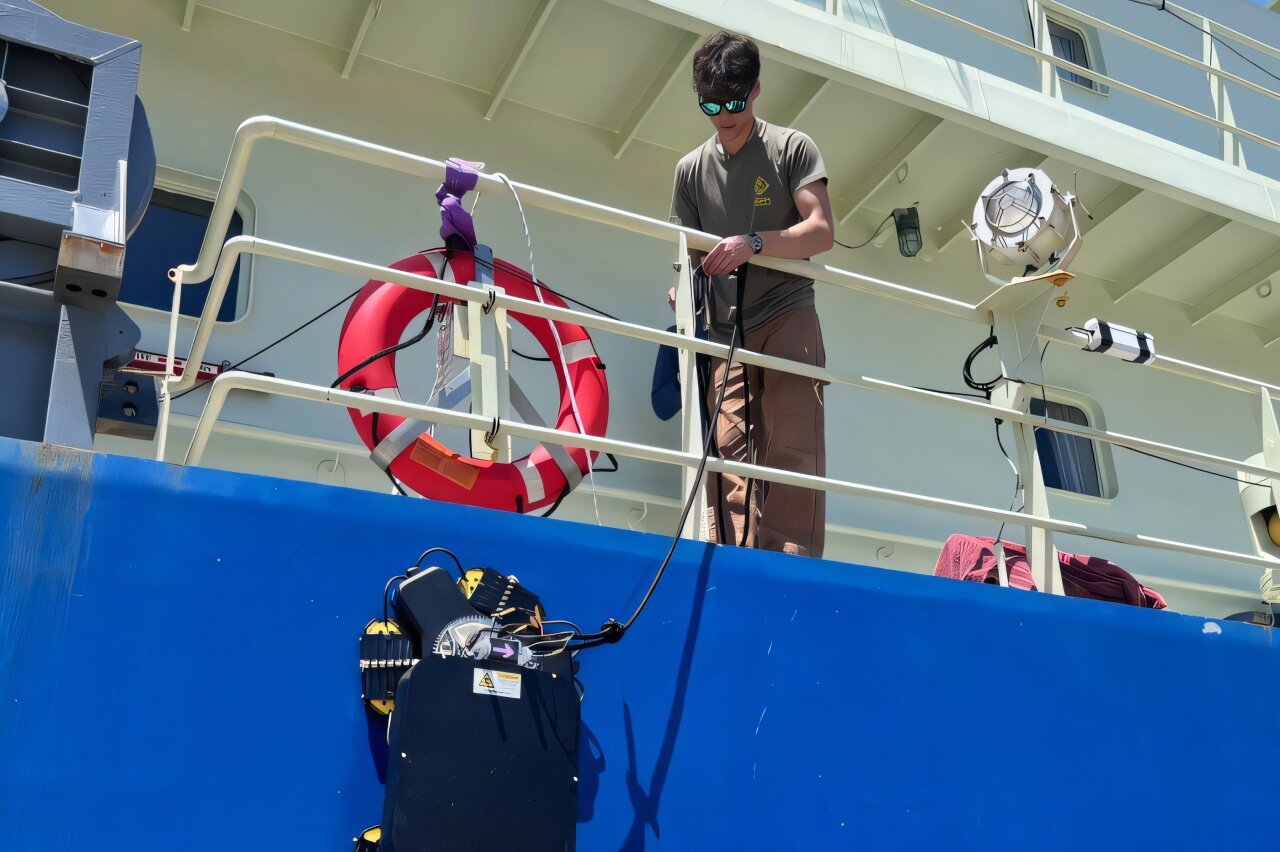
Timothy Wong didn't suspect it at the time, but his dives off the coast of Rockport and the hours he spent studying the wheels and gears of robotics were leading to one mission: figuring out a way to get unwanted sea matter off giant ships in need of cleaning.
Wong, a third-year mechanical engineering and marine science student at Northeastern University, worked as a mechanical and validation engineer at Fleet Robotics, a Boston company, while trying to come up with a modern solution. His co-op started in January 2026, lasted six months and ended in June of the same year. His sidekick in the task turned out to be a Roomba-like robot that scrubs and scrapes green sludge from the hull.
"It starts with algae, and then it becomes barnacles, mollusks, seaweed," Wong said. "All of that increases the drag along the ship, which causes the ship to burn much more fuel in order to achieve the same speed."
The extra weight results in up to $36 billion in additional fuel and antifouling paint costs across the U.S. shipping industry each year to overcome the drag, according to Sofar, an ocean sensor network.
Known as biofouling, the gunk often contains invasive species—stowaways that tag along and displace local organisms while throwing off the delicate balance of food networks. According to the International Maritime Organization , the Asian paddle crab brought the white spot syndrome virus to New Zealand's crustaceans, while the North Pacific seastar, a "voracious carnivorous feeder," wreaked havoc in the Northeast Pacific.
Source link