
This article has been reviewed according to Science X's editorial process and policies. Editors have highlighted the following attributes while ensuring the content's credibility:
University of Manchester–led researchers have unveiled a roadmap for making computer-generated evidence trustworthy enough to help regulators decide whether medical devices are safe and effective, alongside laboratory and clinical evidence.
Published in the journal Device, the framework was developed by researchers from academia, industry and the Medicines and Healthcare products Regulatory Agency (MHRA), the U.K.'s regulator for medicines and medical devices. The work was carried out through the UK Centre of Excellence on In Silico Regulatory Science and Innovation (UK CEiRSI).
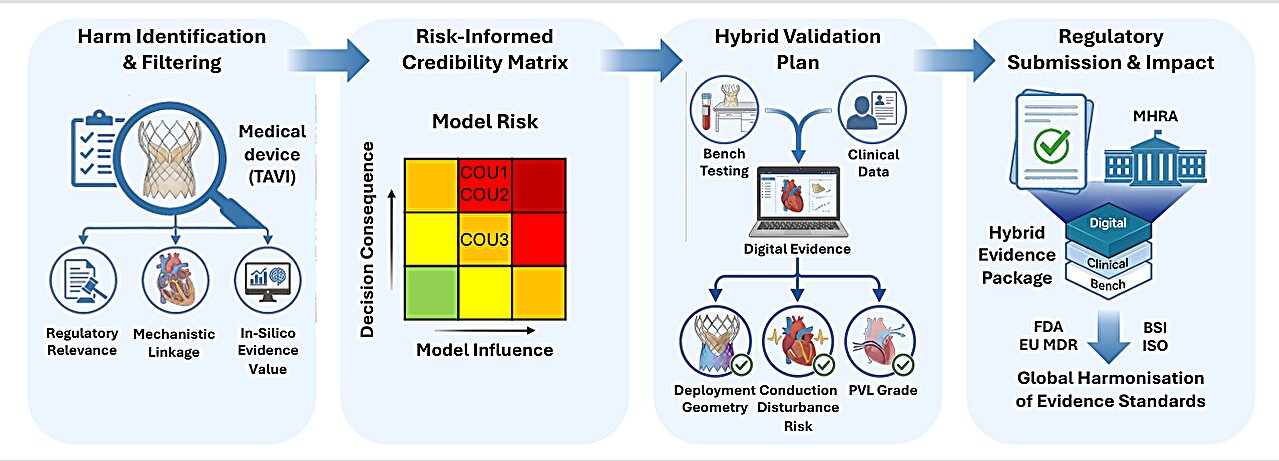
The framework sets out how computer simulations, known as in silico methods, can generate credible digital evidence for a specific regulatory decision: which questions they can appropriately inform, how much a decision relies on them and what evidence is needed to establish their credibility.
Medical devices are currently tested using laboratory experiments, animal studies and clinical trials. Results from bench and animal studies do not always predict how a device will perform in people. Clinical trials, in turn, often underrepresent groups such as women and ethnic minorities, so they may not fully reflect how a device performs in the wider patient population.
Yet these methods cannot remove all risk to patients or prevent costly failures. S. market. Even among those that make it to large pivotal trials, around four in 10 fail to gain approval. Some patient groups, such as pregnant women, are routinely excluded from clinical studies for ethical or practical reasons, while others, including children, are often underrepresented.
Source link





