
This article has been reviewed according to Science X's editorial process and policies. Editors have highlighted the following attributes while ensuring the content's credibility:
Researchers at Hokkaido University, in collaboration with an international team of scientists led by the University of South Florida Health and Tampa General Hospital, have uncovered an important mechanism behind immune evasion in metastatic colorectal cancer (mCRC). Their findings challenge a 30-year-old theory about cancer.
Thirty years ago, the "rheostat" model proposed that elevated sphingosine-1-phosphate (S1P) promotes tumor cell growth, whereas higher ceramide levels trigger cell death. Under this traditional model, scientists thought that cancer cells used this internal mechanism to control their own fate, turning up S1P to grow uncontrollably or turning down ceramide to avoid dying, just like a physical rheostat, or dimmer switch, controls electrical current by increasing or decreasing resistance.
The new, multi-institution study, published in the Journal of Experimental & Clinical Cancer Research, showed that the rheostat does not primarily function within the cancer cells themselves. Instead, the imbalance of increasing S1P and decreasing long-chain ceramide occurs within the tumor microenvironment, where S1P creates a localized biochemical barrier that prevents the immune system from attacking the tumor.
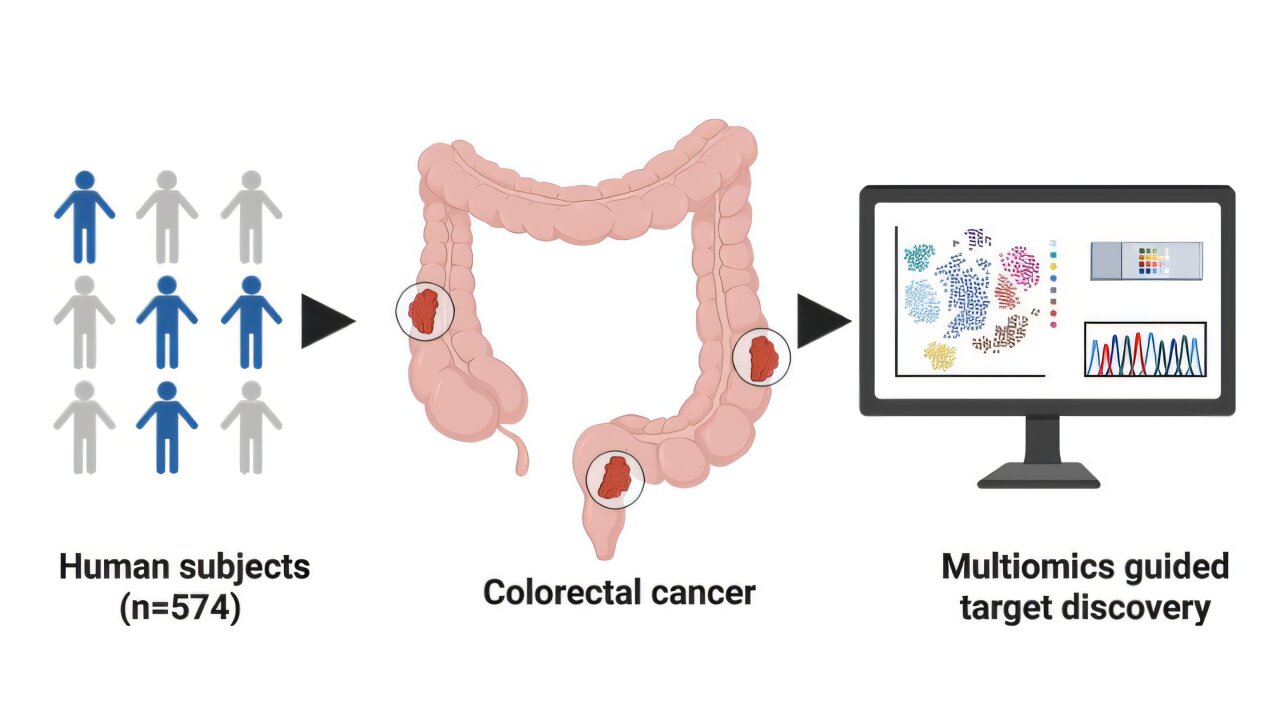
By examining 574 human colon cancer tissue samples with advanced mapping technology, the team found that as colorectal cancer spreads, levels of lipids that promote cancer growth increase, whereas levels of the lipid that kills cancer cells drop significantly.
The old theory assumed this chemical balancing act was happening inside the tumor cells.
Source link





