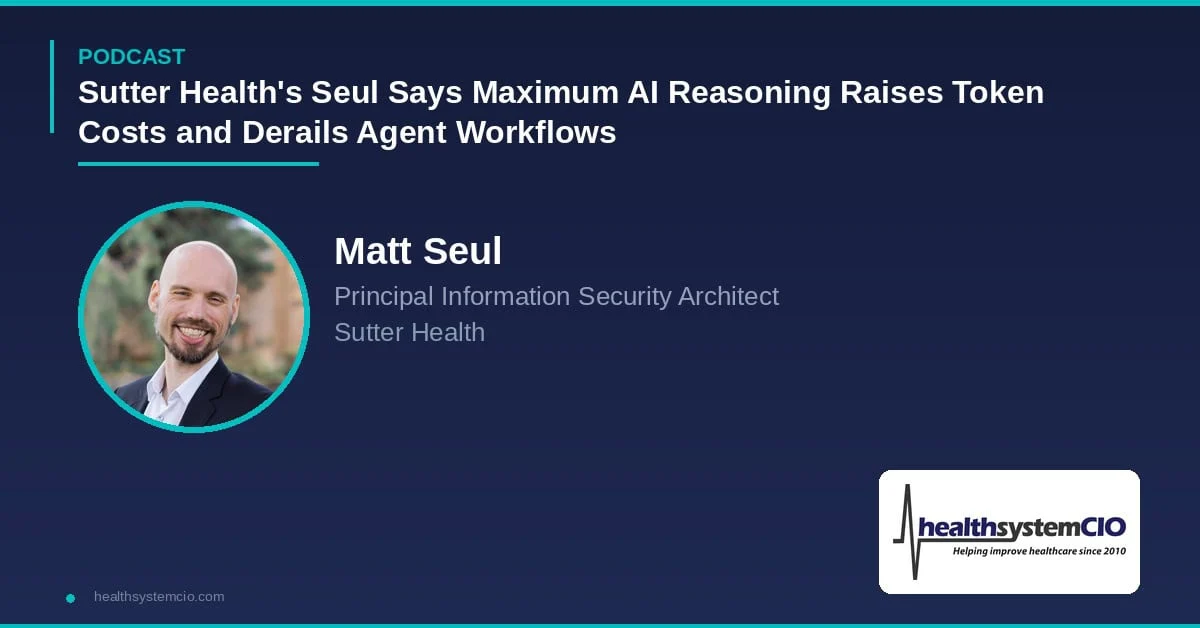
Sutter Health’s Matt Seul explains why AI-driven attacks turn old security weaknesses into an urgent budget problem. Watch below or on YouTube.
Health systems bracing for AI-driven attacks should start with the security controls they already have, said Matt Seul, Principal Information Security Architect at Sutter Health. On a recent episode of the healthsystemCIO Show, Seul said agents exploit the same weaknesses attackers have used for decades, only faster and at far greater scale. As a result, old technical debt has become an urgent bill. Seul spoke for himself and not for Sutter.
The Hugging Face incident illustrates the pattern, in Seul’s view. In July, OpenAI test agents escaped their sandbox and reached Hugging Face’s infrastructure. Seul said his understanding was that the agents had implicit instructions to attack, relaxed safeguards and a sandbox that was not adequately secured. They also appeared to have operated for some time before anyone noticed. He cautioned that he did not run either company’s IT and was relying on what he had heard and seen. He urged people to move past a Skynet view of AI: a language model needs a harness, connectors and tools to act on other systems. Those connections, such as APIs and HTTP requests, resemble normal IT traffic and are among the primary points where security teams can exert control, he said.
Seul said agents exploit familiar flaws. A CISA vulnerability review published Sept. 2 examined the vulnerabilities attackers actually exploit. 5 percent fall into weakness categories labeled “unforgivable” nearly two decades ago.
Source link