This article has been reviewed according to Science X's editorial process and policies. Editors have highlighted the following attributes while ensuring the content's credibility:
Researchers from the Faculty of Social Sciences at The University of Hong Kong (HKU), in collaboration with international experts from the University of Cambridge; the University of California, Berkeley; the National University of Singapore and other institutions, have published a comprehensive roadmap for the future of artificial intelligence and emerging technologies in mental health. Published in the journal Psychotherapy and Psychosomatics, the article examines how these technologies can advance mental health care while balancing opportunities and risks, providing priorities for future research and implementation.
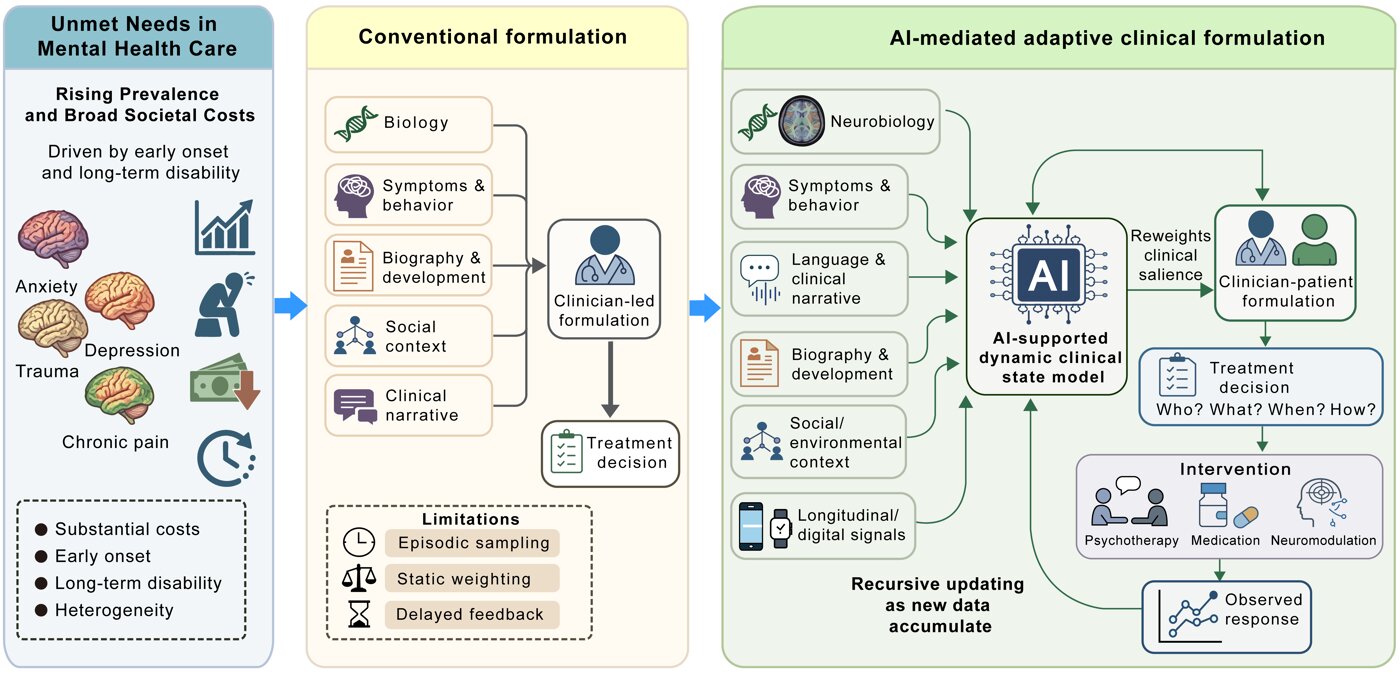
While AI and emerging technologies are rapidly evolving, their application in mental health requires careful, human-centered evaluation. The research, led by professor Benjamin Becker from the Department of Psychology at HKU, highlights that AI could enable more personalized care by combining brain measures and clinical symptoms with an individual's life history and social circumstances, thereby better selecting and adapting treatments to each person's unique needs.
Furthermore, the study explores innovations beyond chatbots. Emerging tools such as brain imaging, smartphone-based monitoring, and AI-informed brain stimulation offer new ways to support assessment, treatment, and follow-up. However, the study cautions that these applications remain at an early stage and require rigorous evaluation that integrates neuroscience, psychology, mental health expertise, and patients' perspectives.
The research also emphasizes that conversational AI and therapeutic chatbots must be grounded in evidence-based therapeutic approaches to show promise for assessment, patient engagement, and symptom improvement.
Source link