This article has been reviewed according to Science X's editorial process and policies. Editors have highlighted the following attributes while ensuring the content's credibility:
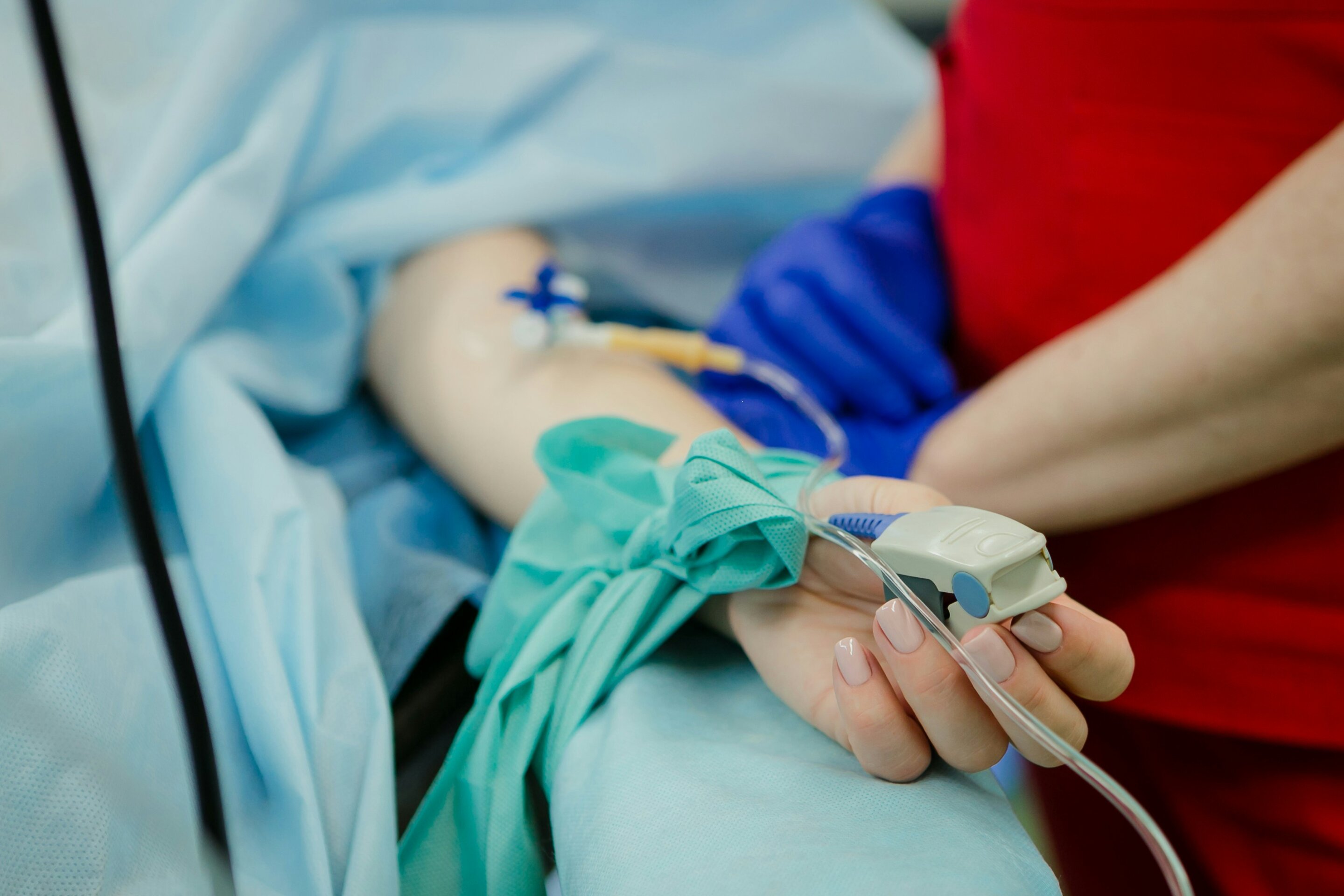
Most people remember the sharp sting of removing a bandage from the knee. For people with fragile skin, however, this moment can be more than brief discomfort. In neonates, older adults and critically ill patients, repeated attachment and removal of medical adhesives can cause irritation, epidermal damage and even skin stripping.
A research team led by Professors Jin-Tae Kim and Seok Kim in the Department of Mechanical Engineering at POSTECH, with integrated MS-Ph.D. students Uhyeon Kim and Hyein Jung, together with Professor Chang-Hee Son at Texas Tech University, has developed a medical adhesive patch that attaches securely during use but can be removed with markedly reduced force when needed.
The work was conducted in collaboration with Professor John A. Rogers at Northwestern University and was published in Nature Communications.
Skin-mounted medical monitoring devices, including sensors that measure cardiac activity, respiration and motion, must remain stably attached to the body to acquire reliable physiological signals.
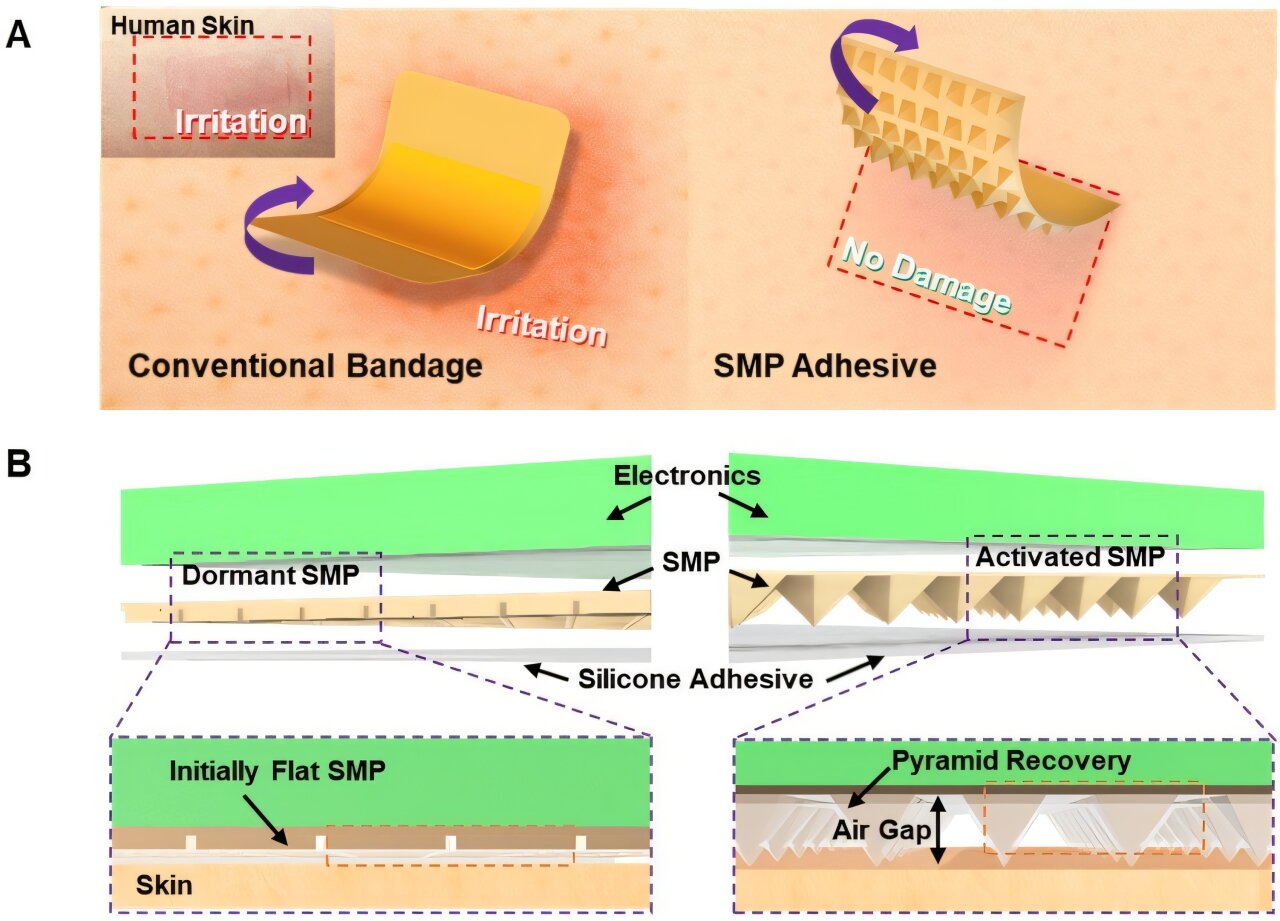
Conventional medical adhesives have therefore been designed primarily to maximize adhesion. The challenge arises during removal. Strong adhesion can generate large peeling forces and stress concentrations at the skin surface, which may lead to medical adhesive-related skin injury (MARSI), particularly in patients with vulnerable or repeatedly contacted skin.
The research team addressed this problem using a shape memory polymer (SMP), a material that can recover a programmed shape when exposed to a specific temperature.
Source link