This article has been reviewed according to Science X's editorial process and policies. Editors have highlighted the following attributes while ensuring the content's credibility:
Sleep disturbances affect up to 60% of people after primary cancer treatment, and they are often waved away as the price of treatment, or of age. For older men in particular, science has had little to offer. Most research on behavioral treatments for insomnia has studied women with breast cancer.
A team led by Evelyn Arana-Chicas of Rutgers Cancer Institute set out to close part of that gap. Their peer-reviewed randomized controlled trial, published in Brain Medicine, asked a plain question with an ancient practice at its center: could tai chi and qigong help older male cancer survivors sleep better? The paper is titled "Effects of Tai Chi Qigong on sleep quality in older male cancer survivors: A randomized controlled clinical trial."
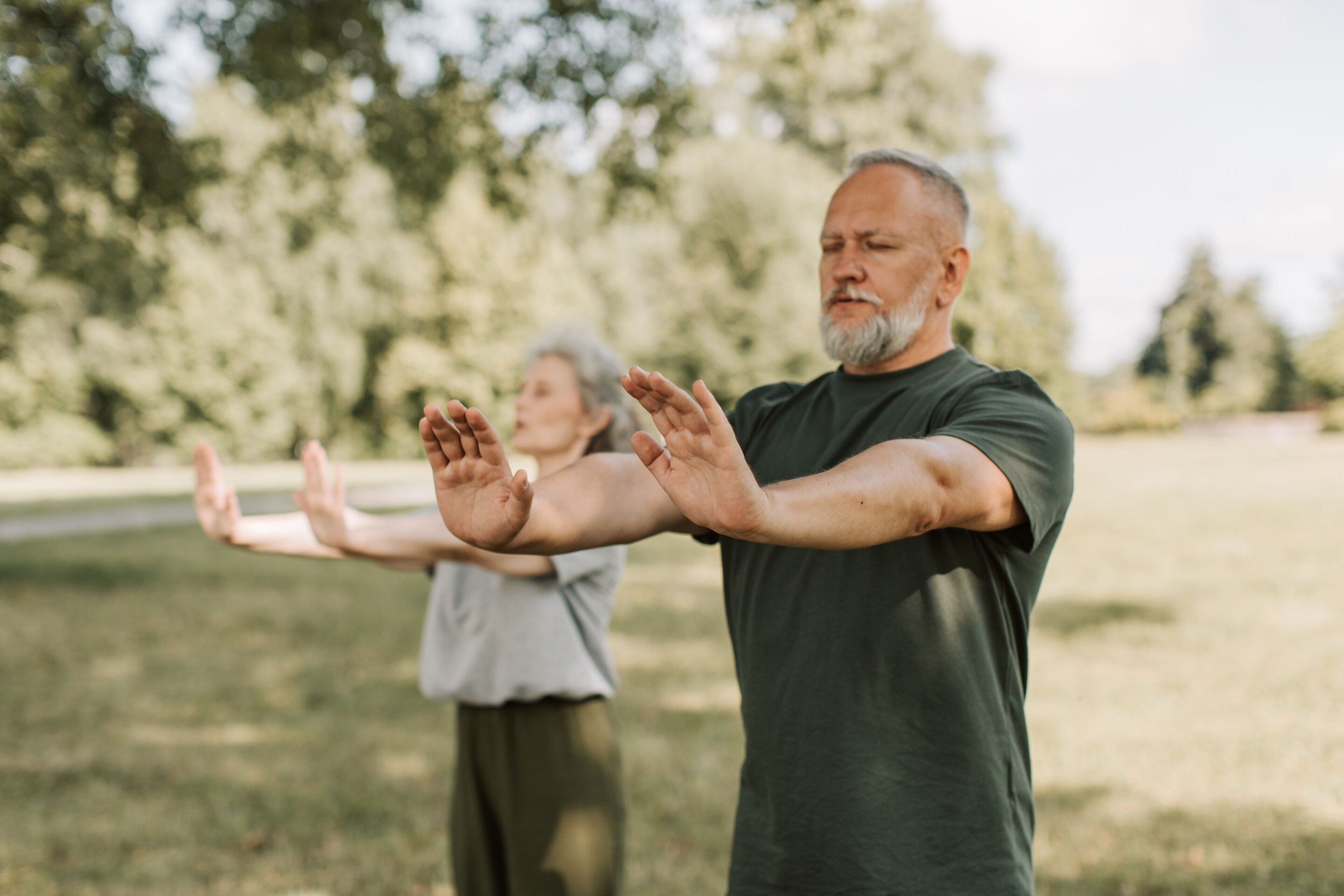
Tai chi and qigong, both meditative movement traditions rooted in Chinese medicine, combine gentle postures, deep breathing, and meditation. They are low in intensity, which makes them well suited to older bodies. But any study of a gentle practice faces an awkward problem. Is it the meditation that helps, or simply the act of getting off the couch twice a week and moving in a room full of other people?
The researchers built their trial to pull those two apart. Men aged 55 and older who had finished primary treatment for cancer, and who were living with clinically significant fatigue , were randomized to one of three groups.
Source link