
This article has been reviewed according to Science X's editorial process and policies. Editors have highlighted the following attributes while ensuring the content's credibility:
Our bodies contain immune cells called macrophages. Normally, these cells attack and suppress bacteria and cancer cells. However, when macrophages infiltrate tumors, they can become tumor-associated macrophages (TAMs) and can switch to an immunosuppressive, anti-inflammatory state.
While "anti-inflammatory" sounds beneficial, in the context of cancer, it means the immune response is suppressed, allowing tumors to grow. Colorectal cancer patients with high levels of anti-inflammatory TAMs tend to have a poorer prognosis.
Researchers at Nagoya University in Japan and their colleagues found that the sialic acid sugar structures on the surface of macrophages change significantly as these cells shift from a tumor-fighting (pro-inflammatory) to a tumor-promoting (anti-inflammatory) state.
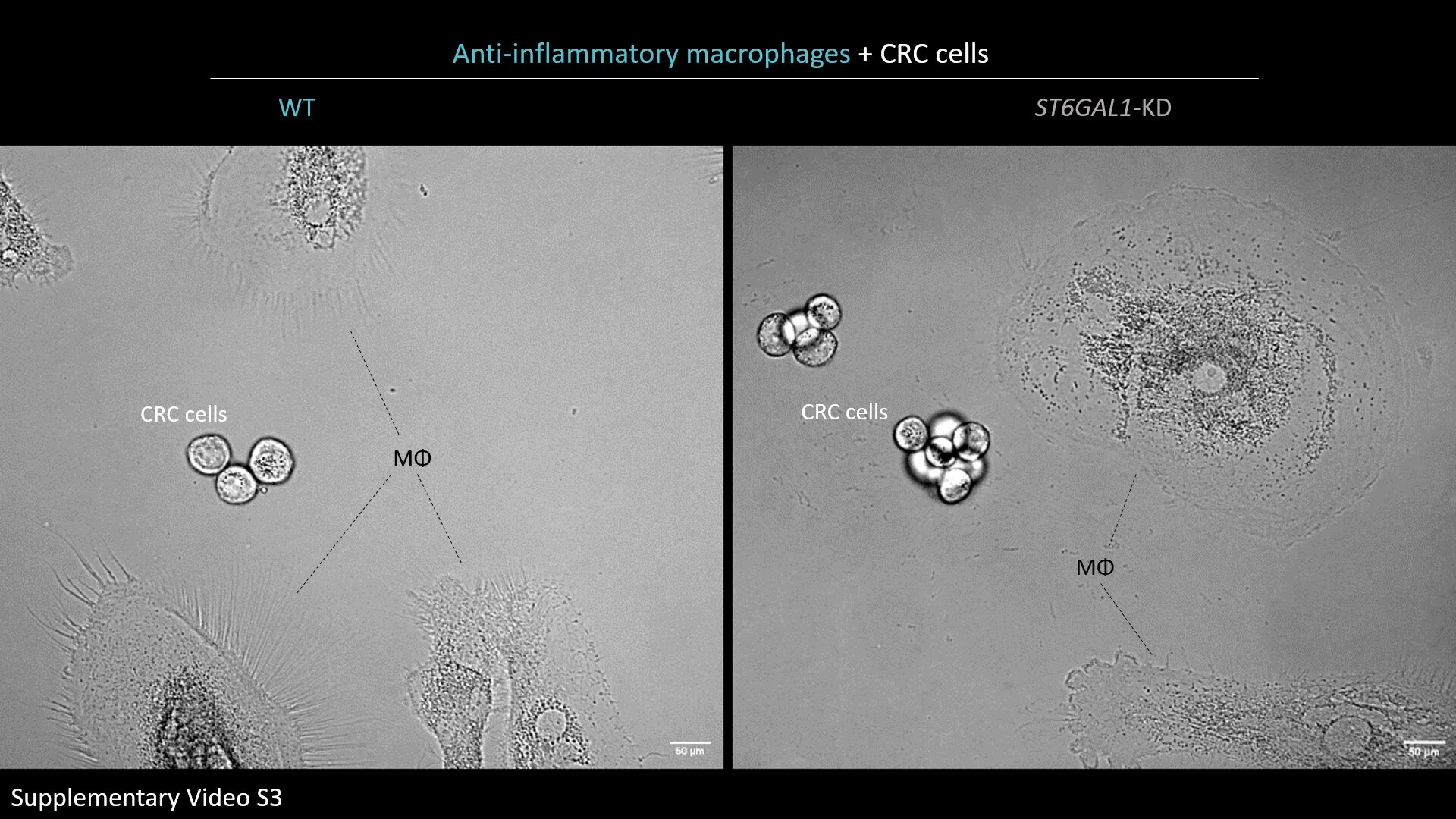
The researchers identified an enzyme called ST6GAL1 as a key driver of this change. When they suppressed ST6GAL1 in tumor-promoting macrophages, colorectal cancer cells grew much more slowly in laboratory co-cultures. This suggests that suppressing ST6GAL1 may shift these macrophages toward a tumor-fighting state, rather than helping cancer cells grow.
These findings are published in the Proceedings of the National Academy of Sciences.
The cell surface is covered by the glycocalyx, a layer of proteins and lipids coated with sugar chains. These chains act as mediators of cell communication.
These sugar chains are capped with sialic acid and mainly form two linkage types: α2,3 and α2,6. Altered sialylation is known to help cancer cells evade the immune system, but how these sugars change as macrophages polarize remained unclear.
Source link





