
This article has been reviewed according to Science X's editorial process and policies. Editors have highlighted the following attributes while ensuring the content's credibility:
Neuroblastoma is the most common solid tumor found outside the brain in children, yet why some children respond well to treatment while others do not has remained poorly understood. St. Jude Children's Research Hospital scientists and their collaborators built one of the most comprehensive datasets of neuroblastoma cells to date, using it to define the tumor's cell types and identify a gene signature marking a malignant cell population tied to poor prognosis.
The team also created patient-derived models that capture this population, which older laboratory cell lines had missed. The findings, published today in Cancer Cell, give researchers a new framework and a set of tools to study high-risk neuroblastoma.
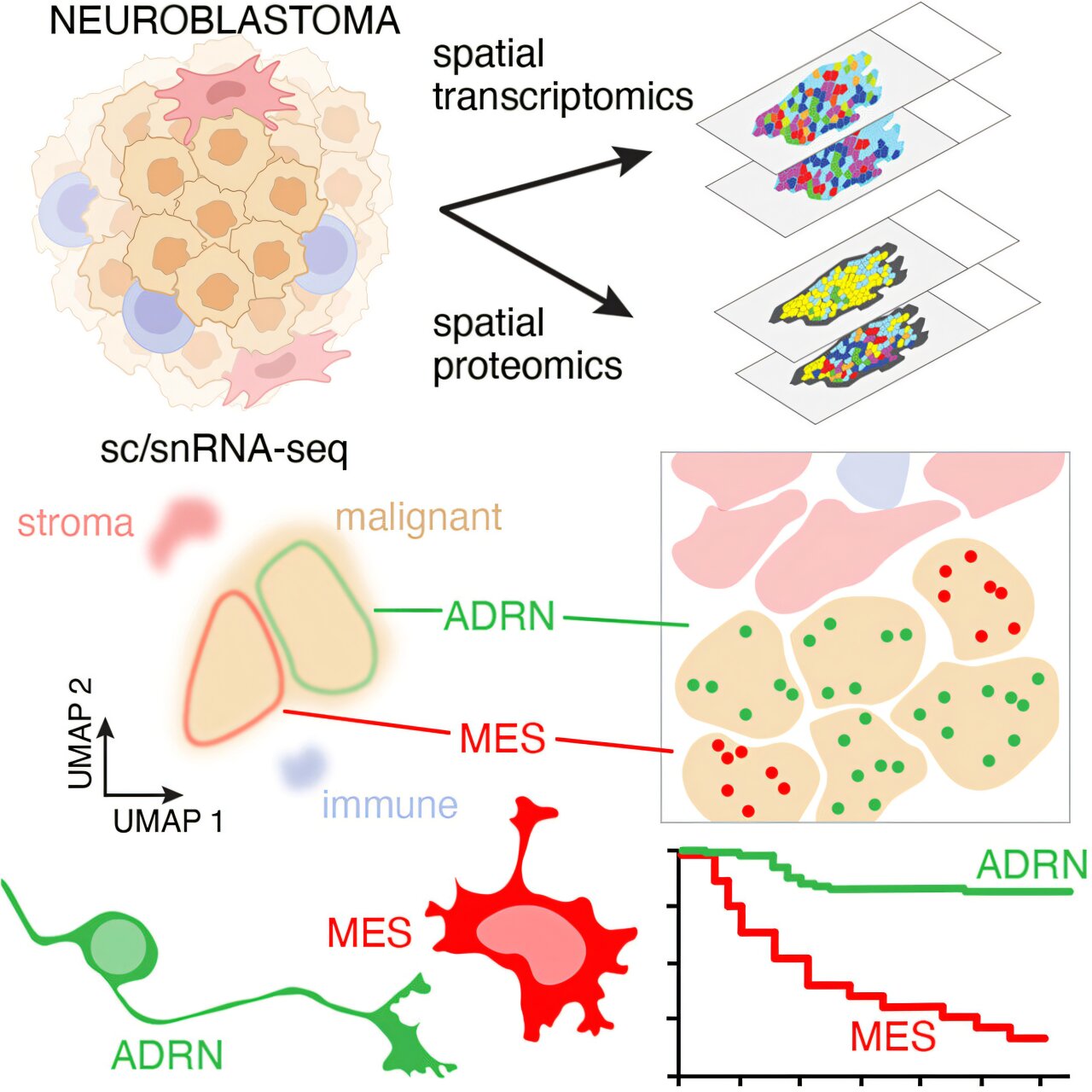
Neuroblastoma cells are divided into two cell states: adrenergic cells (which are associated with low-risk disease) and mesenchymal cells (which are associated with high-risk disease, treatment resistance and poor outcomes). However, directly identifying cancer-related mesenchymal cells in patient tumors has been challenging because the body also contains healthy mesenchymal cells, which can be mistaken for their malignant counterparts, complicating efforts to study them.
To find a better way to identify these treatment-resistant cancer cells, the researchers looked at 54 tumors from 50 patients. The scientists constructed one of the most comprehensive datasets of neuroblastoma cells to date, incorporating multiple cutting-edge technologies, including single-cell RNA sequencing and spatial omics.
By leveraging patient-derived xenografts , which are patient tumor cells grown within mice, the team isolated a clear gene expression profile connected to malignant mesenchymal cells.
Source link





