
This article has been reviewed according to Science X's editorial process and policies. Editors have highlighted the following attributes while ensuring the content's credibility:
Researchers have identified patterns of gene activity associated with severe COVID-19 in children that are shared with other serious respiratory infections.
The findings, published in BMC Infectious Diseases, offer early clues about how the immune system responds to severe infections, which children are at higher risk and potential targets for treatment.
Lower respiratory tract infections, including COVID-19, respiratory syncytial virus (RSV) and pulmonary tuberculosis (PTB), are major causes of childhood illness and death, particularly in low- and middle-income countries.
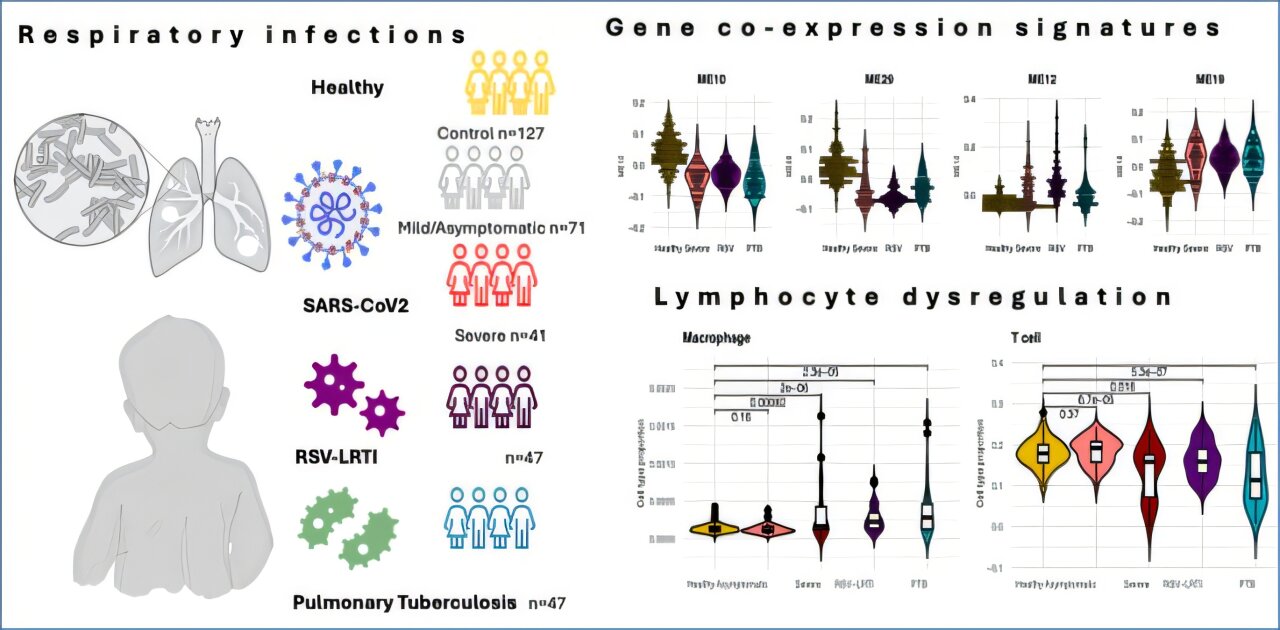
Researchers from the University of Southampton and the University of Cape Town, together with international partners, have analyzed gene expression in blood samples from 333 children from South Africa.
The team compared samples from children hospitalized with severe COVID-19, RSV and PTB infections with those from children with only mild or asymptomatic COVID-19 and a control group of healthy children.
They identified more than 5,000 genes expressed differently in children with severe infections. They also discovered 10 groups of genes that were expressed in a similar pattern across the different lower respiratory tract infections. These were linked to immune responses, cell regulation and other biological processes involved in infection.
The researchers also identified 82 genes that helped distinguish mild or asymptomatic COVID-19 infection from severe cases, suggesting that gene expression patterns could be used as an indicator of disease severity.
Dr.
Source link





