This article has been reviewed according to Science X's editorial process and policies. Editors have highlighted the following attributes while ensuring the content's credibility:
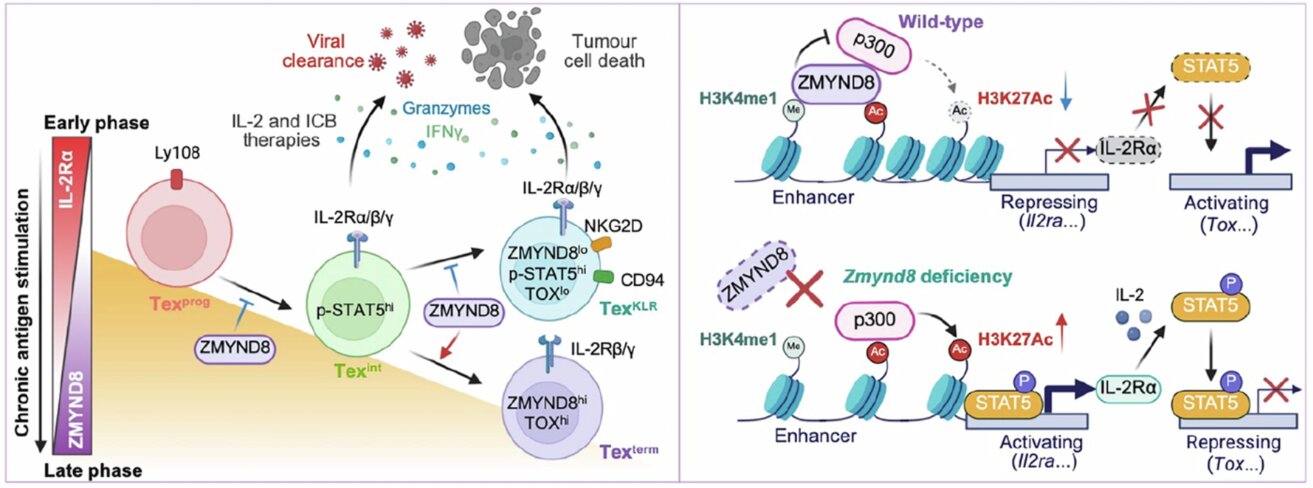
Immunotherapy, which uses a patient's immune system to treat disease, has increased survival for some adults and children with cancer. However, it has had limited success against many pediatric solid tumors, in part because T cells can become functionally impaired or "exhausted." St. Jude Children's Research Hospital scientists published results in Nature showing that the gene ZMYND8 is a major regulator of CD8+ T-cell exhaustion. The results also showed that removing the gene improves antitumor and antiviral responses on its own and may have a synergistic effect with immunotherapy.
The immune system uses CD8+ T cells to attack virally infected or cancerous cells. However, when CD8+ T cells are exposed to disease-related signals for too long, such as those from solid tumors or chronic viral infections, they can become overstimulated. That overstimulation causes CD8+ T cells to be activated less effectively by a T-cell-stimulating signal called interleukin-2 (IL-2). The T cells enter an exhausted state with limited function, unable to stop the tumor or infection from progressing.
St. Jude investigators searched for the molecular link between overstimulation and exhaustion to see whether they could prevent exhaustion and increase immune control of these diseases. They found their answer in ZMYND8.
, chair of the St. Jude Department of Immunology.
Source link