
This article has been reviewed according to Science X's editorial process and policies. Editors have highlighted the following attributes while ensuring the content's credibility:
Metabolic dysfunction-associated steatotic liver disease (MASLD) is a common liver condition that can follow very different paths among patients. Although fibrosis is a key indicator, some patients without advanced fibrosis can still develop serious liver-related events. This variation led researchers to investigate whether distinct clinical subtypes of MASLD could reveal additional clues about disease progression and risk.
Lecturer Takefumi Kimura led a research team along with doctoral student Shun-ichi Wakabayashi and professor Naoki Tanaka, from the Division of Gastroenterology at Shinshu University School of Medicine in Nagano, Japan.
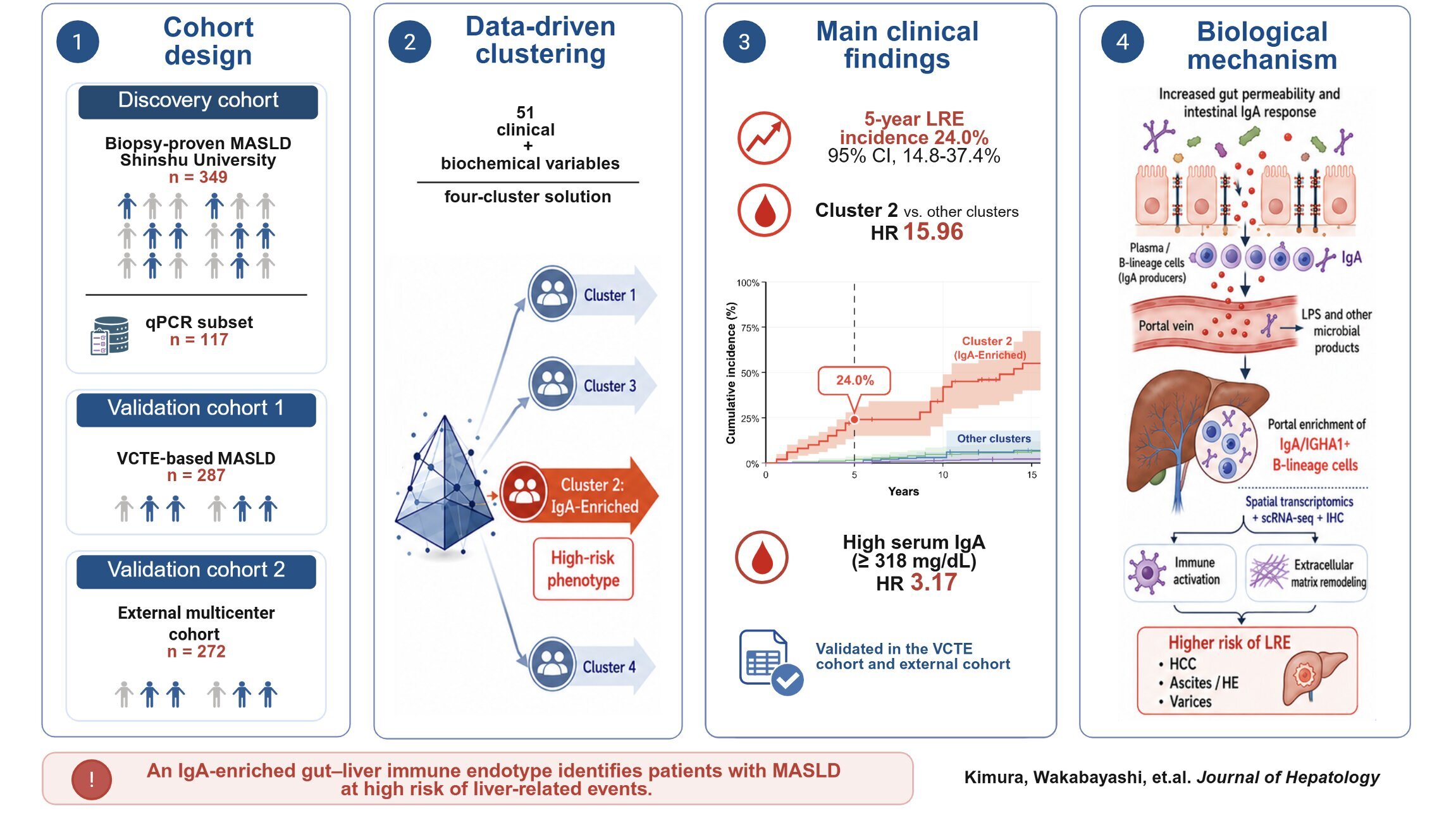
The team analyzed clinical and laboratory information from 349 patients with biopsy-proven MASLD and used unsupervised clustering to identify groups with different characteristics. Four subgroups emerged. The researchers then used liver tissue analysis, single-cell RNA sequencing, spatial transcriptomics and immunohistochemistry to examine the high-risk group.
One subgroup, Cluster 2, stood out because patients had higher blood levels of immunoglobulin A (IgA), an antibody involved in immune defense, along with older age, lower platelet counts and more frequent diabetes. This group also had the highest prevalence of advanced fibrosis. During a median follow-up of 6.8 years, 20 liver-related events were recorded.
The five-year cumulative incidence of liver-related events in Cluster 2 was 24.0%. A blood IgA level of 318 mg/dL or higher independently predicted liver-related events even after accounting for advanced fibrosis.
Source link





