
This article has been reviewed according to Science X's editorial process and policies. Editors have highlighted the following attributes while ensuring the content's credibility:
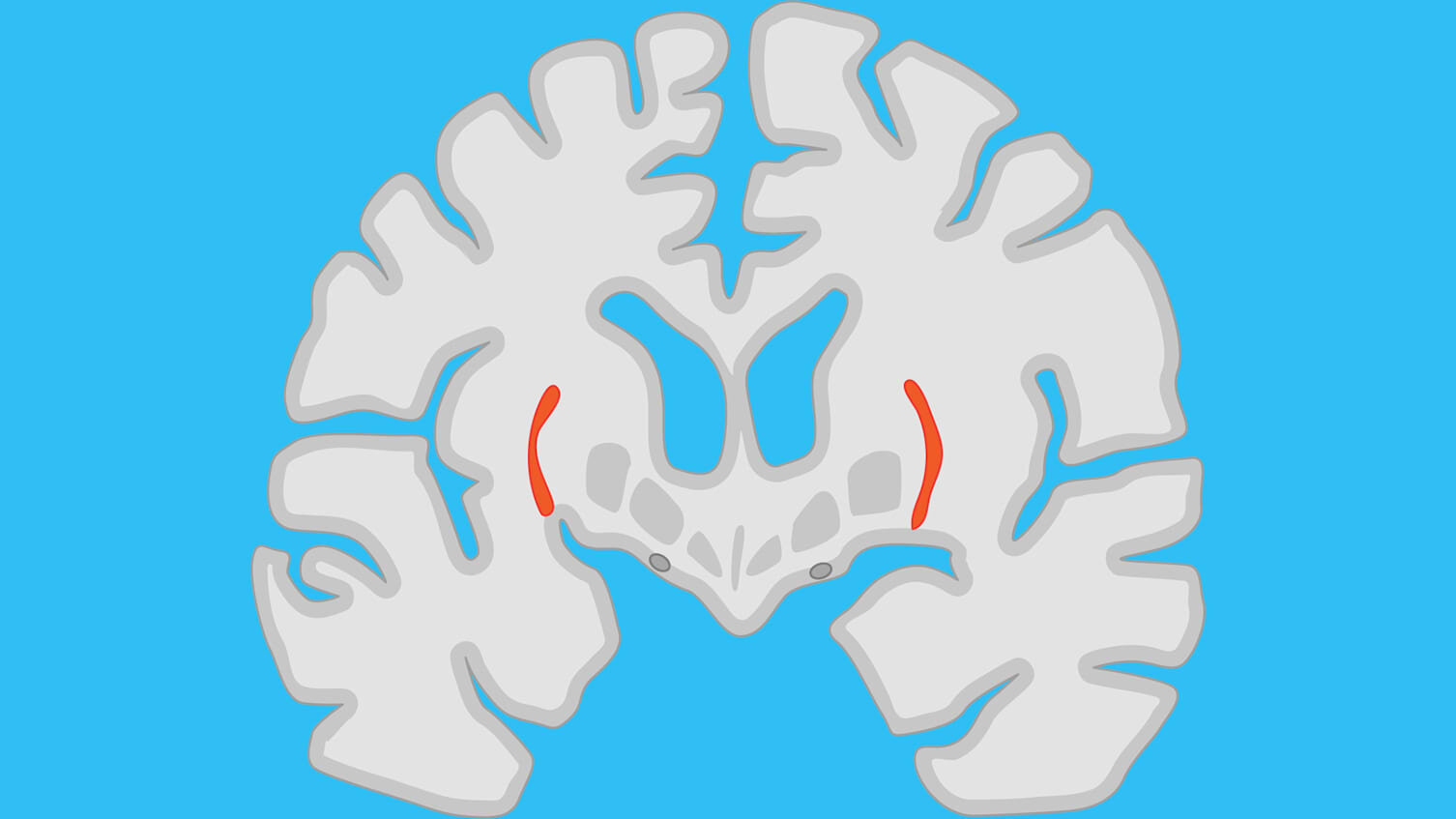
The claustrum is a thin sheet of neurons buried deep within the cerebral cortex. The structure is so small and hidden that neuroscientists once found it very difficult to access, let alone investigate. Now, researchers at Yale School of Medicine have not only found a way to peer into this enigmatic structure but have also discovered its surprising role in how humans learn and adapt to uncertainty.
In a study published Oct. 6 in Nature Neuroscience, researchers recorded the activity of the claustrum for the first time in seven patients undergoing epilepsy surgery.
For their epilepsy treatment, the patients had electrodes implanted on various parts of their brains to identify the precise regions that trigger their seizures. Because typical electrodes are too big for the claustrum, the scientists deployed tiny, 40-micrometer wires at the tips of the electrodes. These wires are small enough to target a single neuron.
Claustrum neurons have been shown to wrap around the entire brain of a mouse, but data in humans are incomplete. "It is the most connected region of the entire brain, yet it is also extremely easy to miss," says Eyiyemisi "Yemi" Damisah, M.D., assistant professor of neurosurgery at Yale School of Medicine and senior author of the study.
She first encountered the human claustrum while implanting an electrode on her patient's brain, which made her wonder what the claustrum does.
Source link





