
This article has been reviewed according to Science X's editorial process and policies. Editors have highlighted the following attributes while ensuring the content's credibility:
Skeletal muscles are capable of regenerating themselves following an injury, a process that depends on muscle stem cells. In healthy resting muscle, these cells are predominantly in a quiescent state. However, following an injury, they are activated, begin to proliferate and subsequently start to develop into specialized skeletal muscle cells (differentiation). These cells then fuse with one another or with existing muscle fibers, generating new or repaired muscle fibers.
This entire process is critically important for the repair and regeneration of skeletal muscle tissue. However, the ability to regenerate declines with increasing age. Diseases can also impair the formation of new muscle fibers. The exact molecular switches determining when a muscle stem cell transitions from its resting state into differentiation are still only partially understood.
A research team led by Dr. Alessandro Ori of the Leibniz Institute on Aging—Fritz Lipmann Institute (FLI) in Jena and professor Julia von Maltzahn of the BTU Cottbus-Senftenberg investigated the changes that occur in the overall protein profile of a muscle stem cell as it becomes a differentiated skeletal muscle cell. Their work is published in the journal eLife.
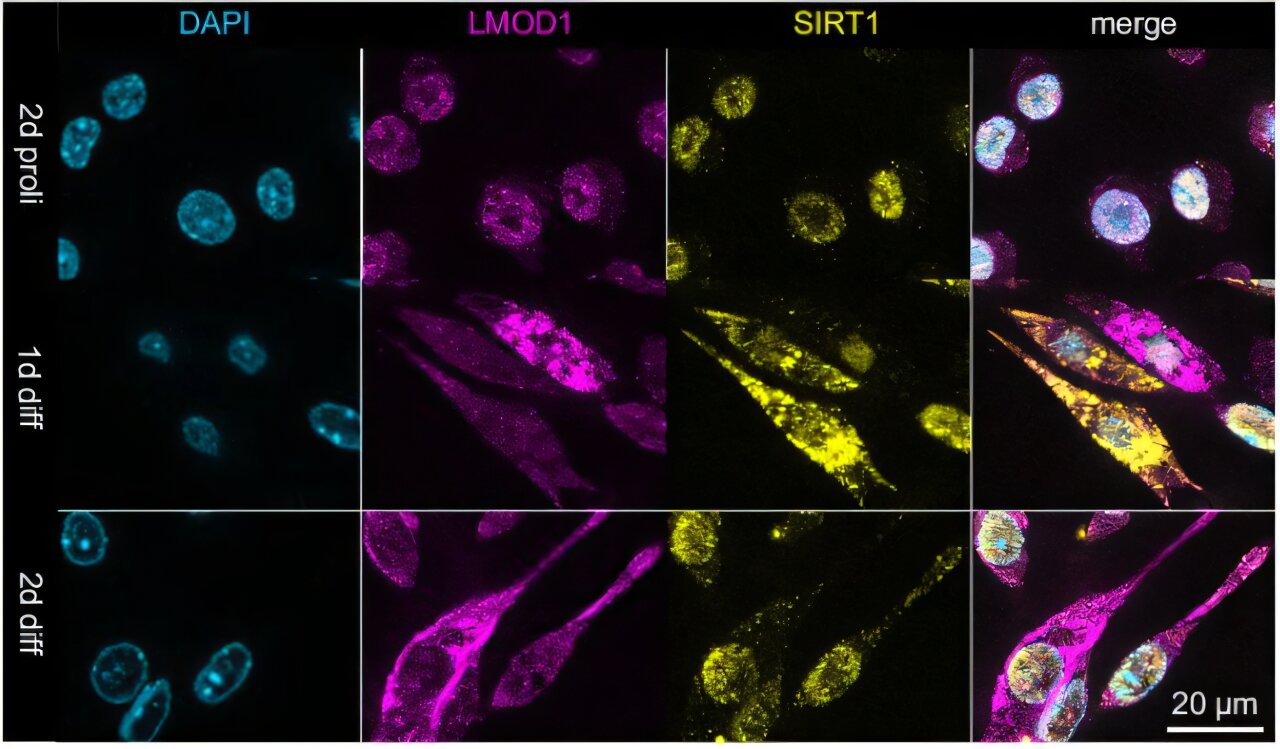
For their study, the researchers used mass spectrometry–based proteomics to analyze more than 6,000 proteins in primary mouse muscle cells at various stages of differentiation. This allowed them not only to identify which proteins were present but also to track how their levels changed during the development of the muscle cells.
Source link





