This article has been reviewed according to Science X's editorial process and policies. Editors have highlighted the following attributes while ensuring the content's credibility:
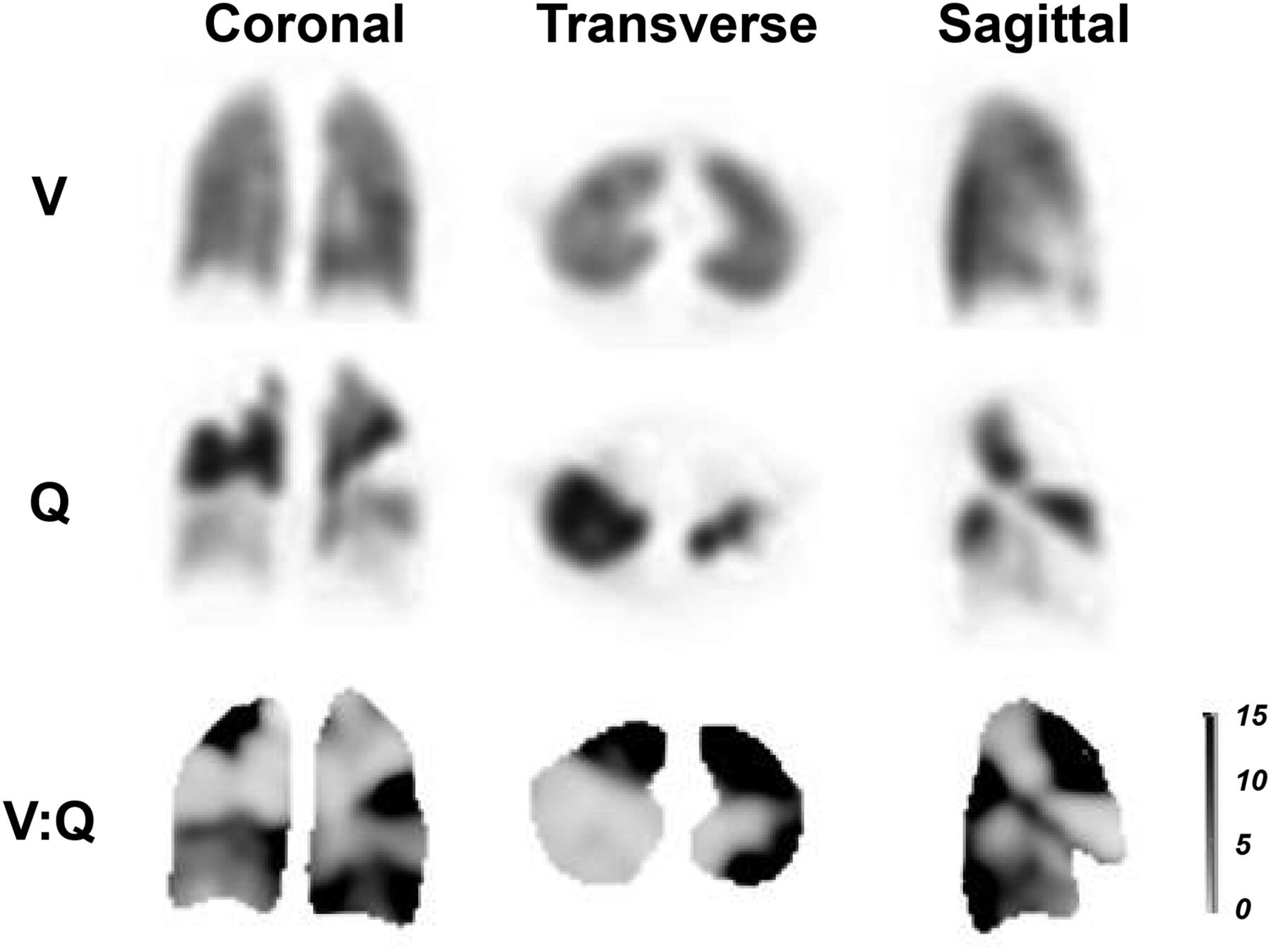
The Society of Nuclear Medicine and Molecular Imaging (SNMMI), European Association of Nuclear Medicine (EANM), American College of Nuclear Medicine (ACNM) and Australian and New Zealand Society of Nuclear Medicine (ANZSNM) have issued a new procedure standard/procedure guideline for performing and interpreting lung imaging studies. The standard/guideline, published in the September issue of The Journal of Nuclear Medicine Technology, provides a framework for clinical applications and standardization of ventilation–perfusion (V/Q) scintigraphy, ventilation-only scintigraphy and perfusion-only scintigraphy.
Lung scintigraphy is a fundamental diagnostic procedure used to evaluate a range of pulmonary pathologies, including pulmonary embolism. Recent advances in imaging technology, including the transition from planar imaging to single-photon emission computed tomography (SPECT), co-registration with computed tomography (CT) and the widespread adoption of ⁹⁹ᵐTc-based ultrafine aerosolized carbon nanoparticles (i.e., Technegas) for ventilation imaging, have enhanced the diagnostic accuracy and clinical utility of lung scintigraphy.
The standard/guideline provides nuclear medicine practitioners with updated, evidence-based recommendations for conducting and interpreting lung imaging, incorporating both established techniques and recent technological advances. It is intended to ensure standardized imaging protocols to facilitate consistent, high-quality diagnostic outcomes across various clinical settings.
With the new standard/guideline, the authoring organizations hope to enhance understanding of the clinical utility of lung scintigraphy beyond pulmonary embolism, promoting comprehensive patient assessment in a range of pulmonary diseases. They also aim to facilitate the integration of SPECT (and SPECT/CT) imaging with newer ventilation agents, improving diagnostic accuracy, reproducibility and patient outcomes.
Source link