
This article has been reviewed according to Science X's editorial process and policies. Editors have highlighted the following attributes while ensuring the content's credibility:
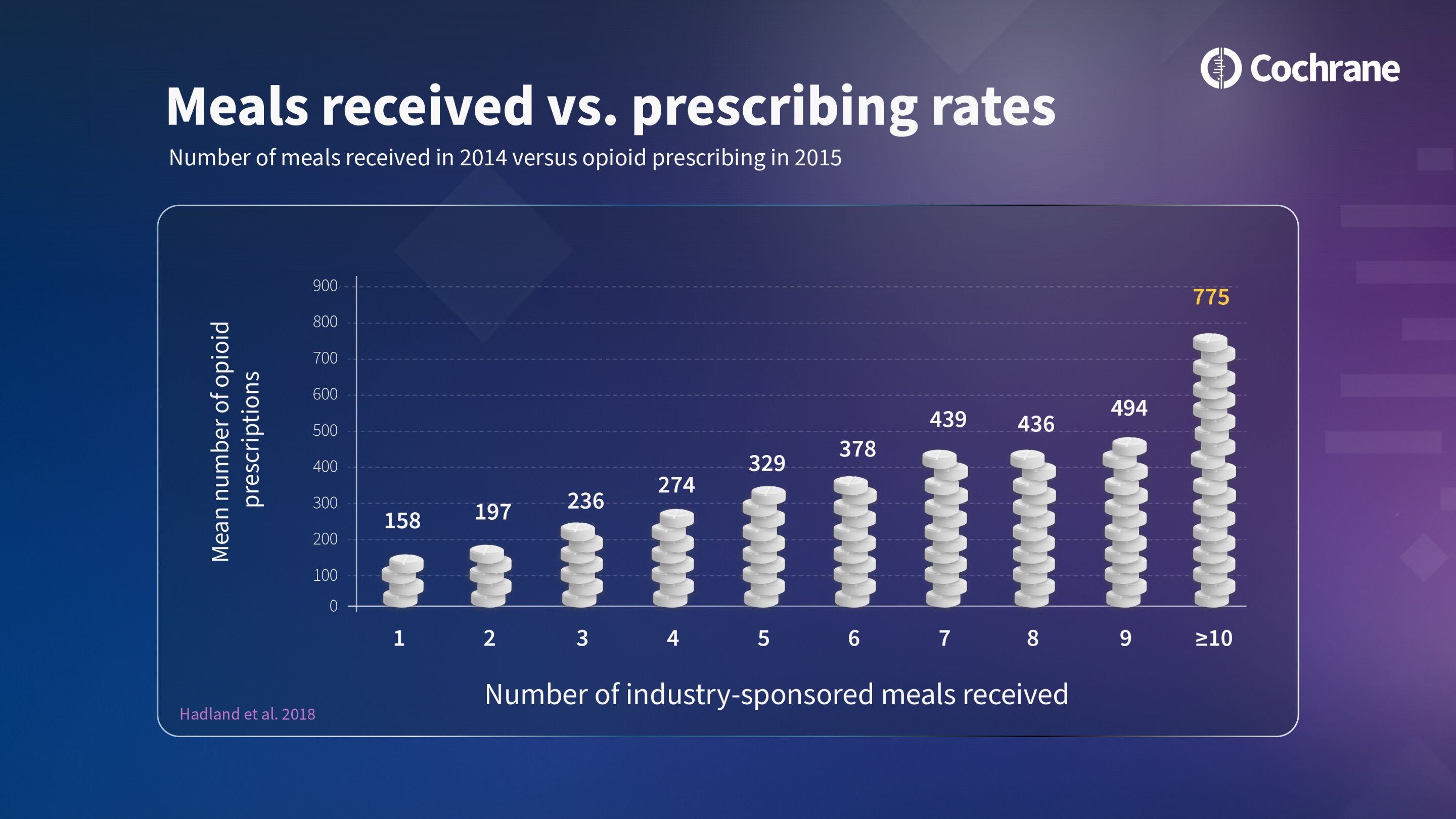
Doctors' prescribing habits are heavily influenced by payments, gifts and free meals from pharmaceutical companies, leading to more prescriptions for more expensive, less appropriate drugs, a new Cochrane review finds. This can seriously harm both individual patients and health systems.
Pharmaceutical companies use a variety of strategies to market and promote their drugs. These can include one-on-one visits by sales reps to doctors' offices and hospitals; gifts and payments, including paid meals, travel costs to conferences, entertainment, consulting fees and honoraria for participation on advisory boards; and advertising.
For all new medicines, pharmaceutical companies target prescribers with offers of free meals and other gifts and payments. These payments and gifts lead to prescribing of the company's promoted drug, which may not always be needed or be the most appropriate or affordable medicine for each patient.
Published in the Cochrane Database of Systematic Reviews, the review included 93 studies involving a number of different study types. Almost all of these studies observed real-world prescribing patterns rather than running controlled experiments. The majority of the studies (88%) came from the United States, in part because the Sunshine Act (2010) requires pharmaceutical companies to publicly report details of all payments to doctors, which are compiled in a publicly searchable and analyzable database.
Analyzing data on millions of prescribers, the authors grouped industry interactions into three distinct categories to examine how each one affects a doctor's prescribing habits.
Source link





