
This article has been reviewed according to Science X's editorial process and policies. Editors have highlighted the following attributes while ensuring the content's credibility:
Researchers at the Johns Hopkins Sidney Kimmel Comprehensive Cancer Center have identified a distinct type of prostate cell that may help solve the long-standing mystery of why benign prostatic hyperplasia (BPH)—a noncancerous enlargement of the prostate that commonly affects men as they age—develops almost exclusively in one region of the prostate.
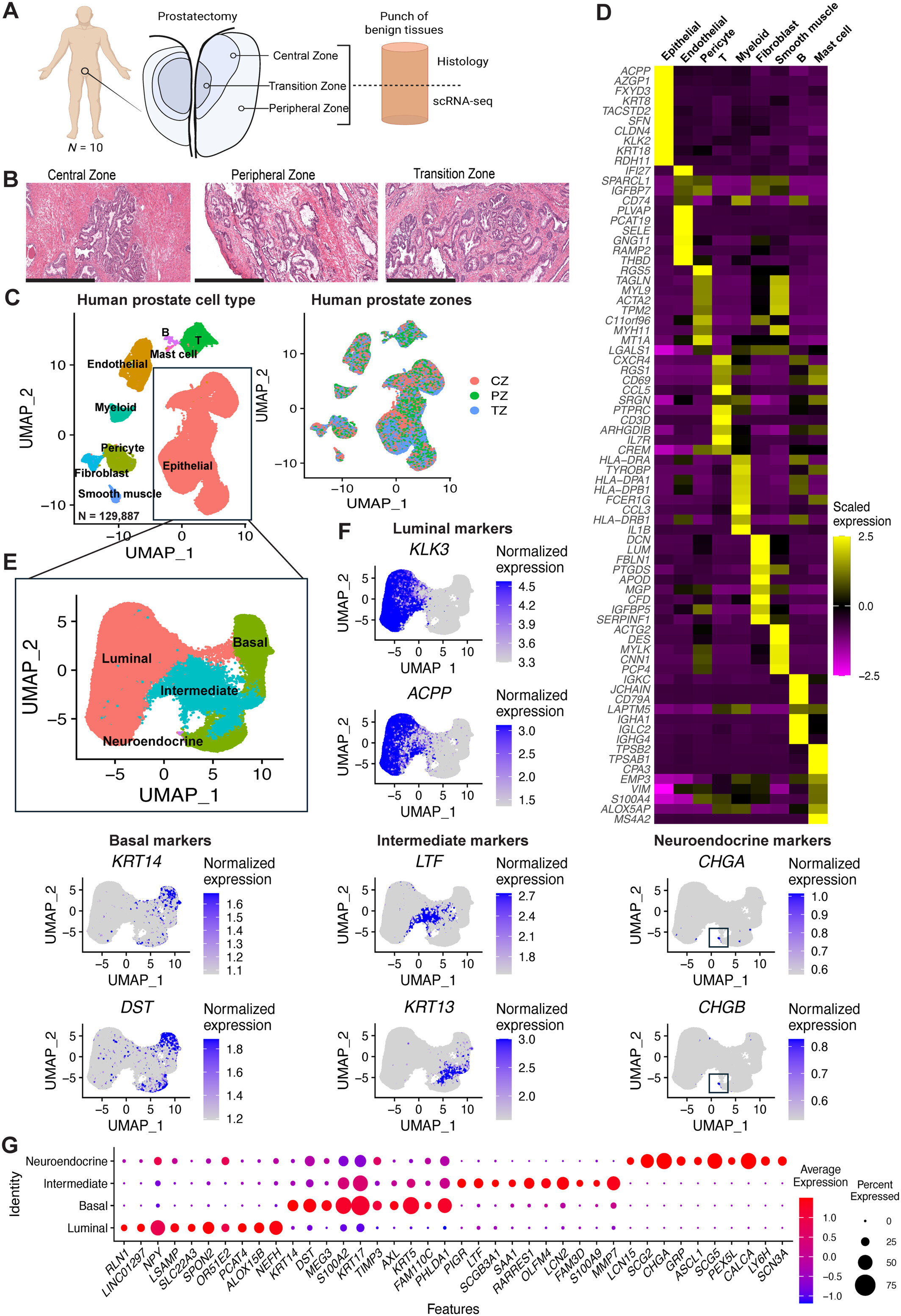
Using single-cell RNA sequencing, a technology that allows researchers to examine which genes are active in individual cells from different regions of the human prostate, the researchers identified a previously unrecognized subtype of basal epithelial cell that was highly concentrated in the region surrounding the urethra where BPH typically develops. The region, known as the transition zone, contained cells that had high expression of a gene called WIF1, and these cells were significantly more abundant in prostate tissue from men with BPH.
The findings, published Sept. 10 in The Journal of Pathology, could provide new clues about the biological processes that cause BPH and ultimately point to more precise ways to prevent or treat the condition.
BPH is characterized by an overgrowth of prostate cells that becomes increasingly common with age. As the prostate enlarges, it can squeeze the urethra and interfere with the flow of urine, causing symptoms including frequent or nighttime urination, a weak urine stream and difficulty completely emptying the bladder.
, professor of oncology, pathology, and radiation oncology and molecular radiation sciences at the Johns Hopkins Kimmel Cancer Center, and director of inHealth Precision Medicine at Johns Hopkins Medicine.
Source link





