
This article has been reviewed according to Science X's editorial process and policies. Editors have highlighted the following attributes while ensuring the content's credibility:
Tumors are not made up of cancer cells alone. They also contain immune cells and other support cells that interact within a complex ecosystem known as the tumor microenvironment. A doctoral thesis by Linglong Huang at the Karolinska Institutet's Department of Oncology-Pathology suggests that the spatial organization of cells in solid tumors may provide clinically relevant information about patient outcomes.
A key part of the work was the development of a new method for analyzing tissue images. Unlike conventional techniques, it does not require defining exact cell boundaries, a challenge for irregularly shaped cells such as fibroblasts. The approach can be used to analyze spatial patterns across different cell types and tissue contexts.
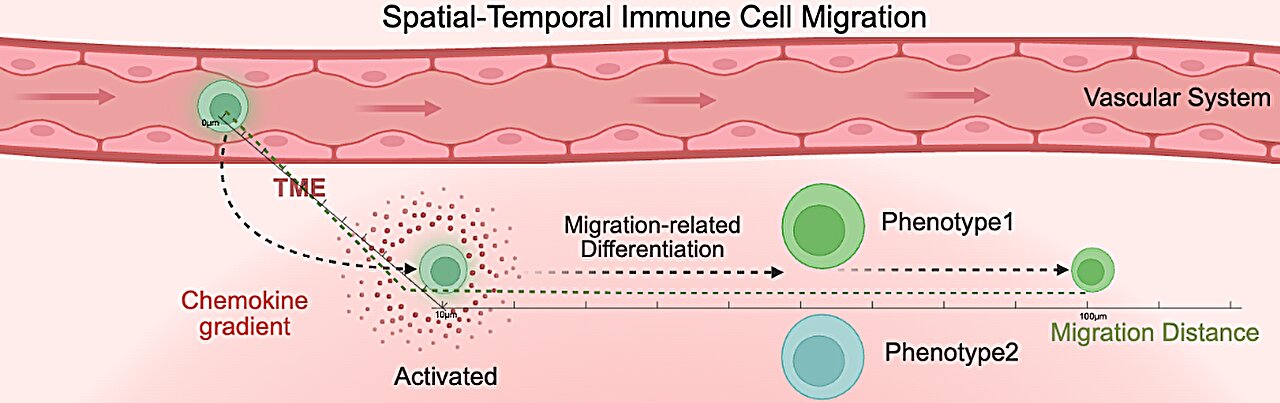
Using this method, researchers found that cells surrounding blood vessels in colorectal tumors were organized in distinct layers, and certain patterns were linked to poorer patient outcomes. The analyses also showed that macrophages, a type of immune cell, are not randomly distributed. By treating a static tissue section as a snapshot of an ongoing process, it was possible to reconstruct how macrophages disperse from blood vessels into the surrounding tissue. Some of these dispersal patterns were linked to shorter survival.
"Cancer research often focuses on which cells are present in a tumor. In this work, we were also interested in where the cells are located and how they are organized in space and over time," says Huang.
Source link





